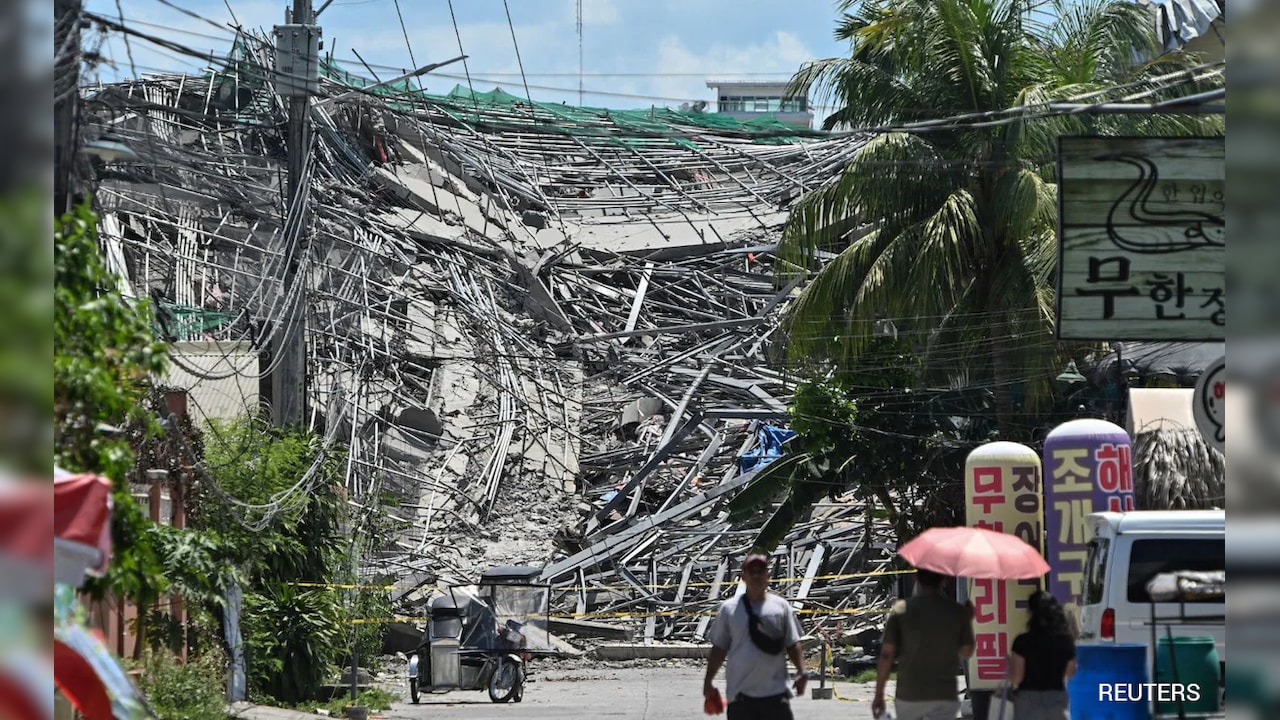
The morning air in the southern Philippines usually smells of roasting coffee beans, woodsmoke, and the salty humidity of the Bohol Sea. At that specific hour, the light is long and gold. It hits the corrugated tin roofs of coastal houses, turning poverty and resilience alike into a temporary, glowing theater.
Then, the sound arrives.
It is not a bang. It is a growl. It starts deep in the basaltic throat of the earth, a sub-audible vibration that rattles the ribcage before it reaches the ears. Dogs stop barking. Birds lift from the coconut palms in a sudden, panicked gray cloud.
And then the ground loses its mind.
The Physics of Sudden Terror
To understand a 6.3-magnitude earthquake is to understand the absolute arrogance of human permanence. We pour concrete. We drive steel pilings into mud and coral. We hang family portraits on drywall and trust that the wall will be there tomorrow.
Seismologists measure these events on logarithmic scales, numbers that sound neat and clinical on a morning news broadcast. 6.3. A moderate-to-strong tremor. But numbers do not capture the kinetic reality of subduction zones, where the Philippine Sea plate grinds relentlessly westward beneath the Eurasian plate, locking, straining, and finally snapping like an over-tightened violin string.
Imagine standing on a rug while someone violently yanks it from underneath your feet. Now imagine that rug is the solid earth, and you weigh nothing at all.
When the 6.3 struck off the southern coast, the energy released was equivalent to thousands of tons of high explosives, radiating outward in concentric rings of kinetic violence. In provincial towns, small grocery stores watched canned goods launch from shelves like shrapnel. In wooden houses built on stilts, the structural joints groaned, screaming a language of stress no architect wants to hear.
The Human Echo
Consider Maria, a hypothetical shopkeeper whose real-world counterpart exists in every barangay from Davao to General Santos. She was wiping down her wooden counter when the tremors hit. Her first instinct was not statistical. She did not calculate the depth of the hypocenter or check her seismograph app.
Her hands flew to her throat. She ran.
In earthquakes of this magnitude, the danger is rarely just the initial jolt. It is the cascading panic. It is the second-story balcony shearing away from a hastily built apartment block. It is the transformer exploding down the street, showering blue sparks over wet asphalt. It is the terrifying, irrational fear that the earth might simply open its mouth and swallow the neighborhood whole.
We live our lives cushioned by assumptions. We assume the floor will hold. We assume the bridge will span the river. When a 6.3-magnitude shockwave rolls through, those assumptions turn to dust in seconds.
Yet, resilience in these islands is as old as the fault lines themselves.
Minutes after the shaking subsided, before the dust had even settled on the dirt roads, doors crept open. Neighbors stepped outside, pale-faced, checking for bloodied knees and fallen power lines. No massive structural collapse dominated the initial reports, but the psychological toll was immediate. People huddled in public plazas, staring nervously at the sky, refusing to walk back under concrete overhangs. They knew the golden rule of tectonic reality: where the earth breaks once, it is remembering how to break again.
The sirens began their wailing whine in the distance, a mechanical counterpoint to the quiet weeping of children clinging to their mothers' skirts.
The earth quieted down. The plates locked back into their slow, invisible dance of pressure and time. But out there, under the blue water of the southern sea, the memory of the snap remains.