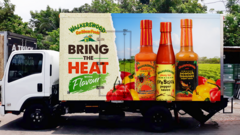
The bottle sits on the edge of the laminate table, its plastic cap crusted with a dried, neon-orange ring. Inside, a viscous slurry of Scotch bonnet peppers, vinegar, and mustard seeds shimmers under the fluorescent lights of a standard Brooklyn diner. To most people, it is a condiment. To anyone who grew up with the salt air of the Antilles in their lungs, it is infrastructure. It is the baseline frequency of survival.
But the bottle is nearly empty. And the replacement is going to cost you.
Across the Caribbean, a quiet, scorching crisis is unfolding in the soil. The regional hot sauce industry, a vibrant economic engine fueled by generations of smallholder farmers and family-owned bottling operations, is hitting a wall of catastrophic proportions. It is not a sudden, dramatic disaster like a category-five hurricane flattening a capital city. It is worse. It is the slow, grinding reality of a changing climate, broken supply chains, and skyrocketing agricultural costs that threaten to turn a global culinary staple into a luxury item.
To understand how a bottle of pepper sauce goes from a Caribbean backyard to a global deficit, you have to look at the dirt. You have to look at people like Devon.
Devon is a hypothetical amalgamation of the dozens of independent farmers currently sweating through the dry season in places like Trinidad, Jamaica, and Dominica. He wakes up at four in the morning, before the Caribbean sun turns the sky into an open furnace. For thirty years, Devon has grown Scotch bonnets. He knows the exact shade of green the leaves turn when they are thirsty, and the precise, terrifying hue of yellow that signals a pest infestation.
Lately, Devon’s fields look like a graveyard.
The Scorched Earth of the Supply Chain
The math of agricultural survival has turned brutal. Over the past twenty-four months, the Caribbean basin has experienced unprecedented heat waves paired with erratic, unpredictable rainfall. When the rain does come, it arrives in torrential downpours that wash away the topsoil. When it stays away, the ground bakes into a concrete crust.
Scotch bonnet peppers are notoriously finicky. They require a delicate balance of moisture and heat. Push them too hard, and the blossoms drop off the vine before they can fruit. That is exactly what is happening. Production yields across major pepper-producing nations in the region have plummeted by as much as forty percent in some sectors.
The scarcity hits the bottling plants next. Consider the journey of a single bottle of traditional Caribbean hot sauce. The peppers are harvested by hand, mashed with salt, and stored in large drums to ferment. This mash is the lifeblood of regional brands like Baron, Chief, and Walkerswood.
When the mash dried up this year, processors were forced to look elsewhere. But you cannot simply swap a Jamaican Scotch bonnet for a Mexican jalapeño or an Asian bird’s eye pepper. The flavor profile—that distinct, fruity, slow-building burn that defines Caribbean cuisine—is bound entirely to the terroir of the islands.
Then comes the secondary crush: the cost of everything else.
The invisible stakes of this shortage are buried in shipping manifests and utility bills. The price of glass bottles has surged worldwide. The cost of importing vinegar, salt, and preservatives has ticked steadily upward, driven by global inflation and high maritime freight rates. For a small producer in St. Lucia or Barbados, these overhead increases are not metrics on a corporate spreadsheet to be absorbed by a rainy-day fund. They are existential threats.
The Price of Heat
What happens when a regional staple becomes scarce? The economic ripple effect is immediate and unforgiving.
Regional hot sauce manufacturers have issued warnings that consumers will soon see noticeable price hikes on grocery shelves, coupled with rolling shortages of specific product lines. Some brands have already begun rationing supplies to international distributors. If you are accustomed to buying a standard bottle of Caribbean pepper sauce for three dollars, you need to prepare yourself for a world where that same bottle costs six or seven. If you can find it at all.
But the real problem lies elsewhere, far beneath the retail price tag.
The Caribbean hot sauce industry is built on a delicate social contract. Major processing plants rely on networks of hundreds of independent, small-scale farmers. These farmers do not have corporate backing, automated irrigation systems, or crop insurance. When a crop fails, or when the price of fertilizer doubles—as it has over the last few years due to global supply disruptions—the farmer simply absorbs the loss until they can no longer afford to plant.
When the farmers stop planting, the cultural fabric begins to fray.
Hot sauce in the Caribbean is not an optional additive. It is a preservative, a culinary signature, and a historical archive. The recipes are oral histories passed down through grandmothers, containing the specific migratory patterns of the people who ended up on those islands. The French-infused creole sauces of Martinique, the heavy mustard bases of Barbados, the searing, pure mash of Trinidad—these are expressions of identity.
To lose access to them because of an economic chokehold is a form of cultural erasure.
The Ripple Effect Across the Diaspora
Consider what happens next: the crisis does not stay in the Caribbean. It travels along the same shipping lanes that carry the bottles.
In London, Toronto, New York, and Miami, Caribbean diaspora communities rely on these sauces to maintain a tangible link to home. Small, immigrant-owned restaurants—the roti shops, the jerk shacks, the roadside catering businesses—operate on razor-thin margins. They cannot easily absorb a doubling of the price of their primary seasoning ingredient. They cannot pass the entire cost onto working-class customers who are already battling their own local inflation.
The dilemma is painful. Do you alter the recipe, using inferior, cheaper peppers from elsewhere, thereby compromising the authenticity of the food that built your reputation? Or do you pay the premium, watch your margins vanish, and pray the customers stay loyal?
There is a profound vulnerability in realizing how fragile our favorite things truly are. We live in an era of perceived abundance, where any ingredient from any corner of the globe can be summoned to our doorstep with a few taps on a screen. We have forgotten that behind the digital convenience is a human being standing in a dusty field, looking up at a cloudless sky, wondering if their livelihood is about to evaporate.
The current shortage is a stark reminder that flavor is a luxury of climate stability.
The Cost of Survival
Producers are scrambling for solutions. Some are experimenting with climate-resilient pepper hybrids, trying to breed a Scotch bonnet that can withstand the punishing new temperature baselines without losing its signature heat. Others are exploring automated drip-irrigation systems, though the capital required for such upgrades remains out of reach for the average smallholder farmer.
Governments in the region are beginning to step in with agricultural subsidies and fertilizer grants, recognizing that the hot sauce industry is a major source of foreign exchange and tourism branding. But bureaucratic machinery moves slowly, and the sun bakes the soil quickly.
This is the friction point of modern agriculture. The transition from a traditional, heritage-based farming model to a high-tech, climate-insulated system is expensive, sterile, and slow. In the gap between the old world and the new, the bottles on the shelves will continue to dwindle.
The next time you reach for that bottle of Caribbean pepper sauce, look closely at the liquid inside. Notice the seeds suspended in the bright, fiery orange vinegar. That bottle is not just a combination of agricultural commodities. It is a miracle of survival. It is the product of a farmer who defied a drought, a processor who fought a broken shipping network, and a culinary tradition that refuses to be quieted by the economics of a warming planet.
Enjoy every drop. The next one will cost you.