The air inside the Torrington gopher museum always smelled faintly of aged felt, old sawdust, and the particular kind of quiet that only settles over small-town eccentricities when the afternoon sun hits the linoleum just right.
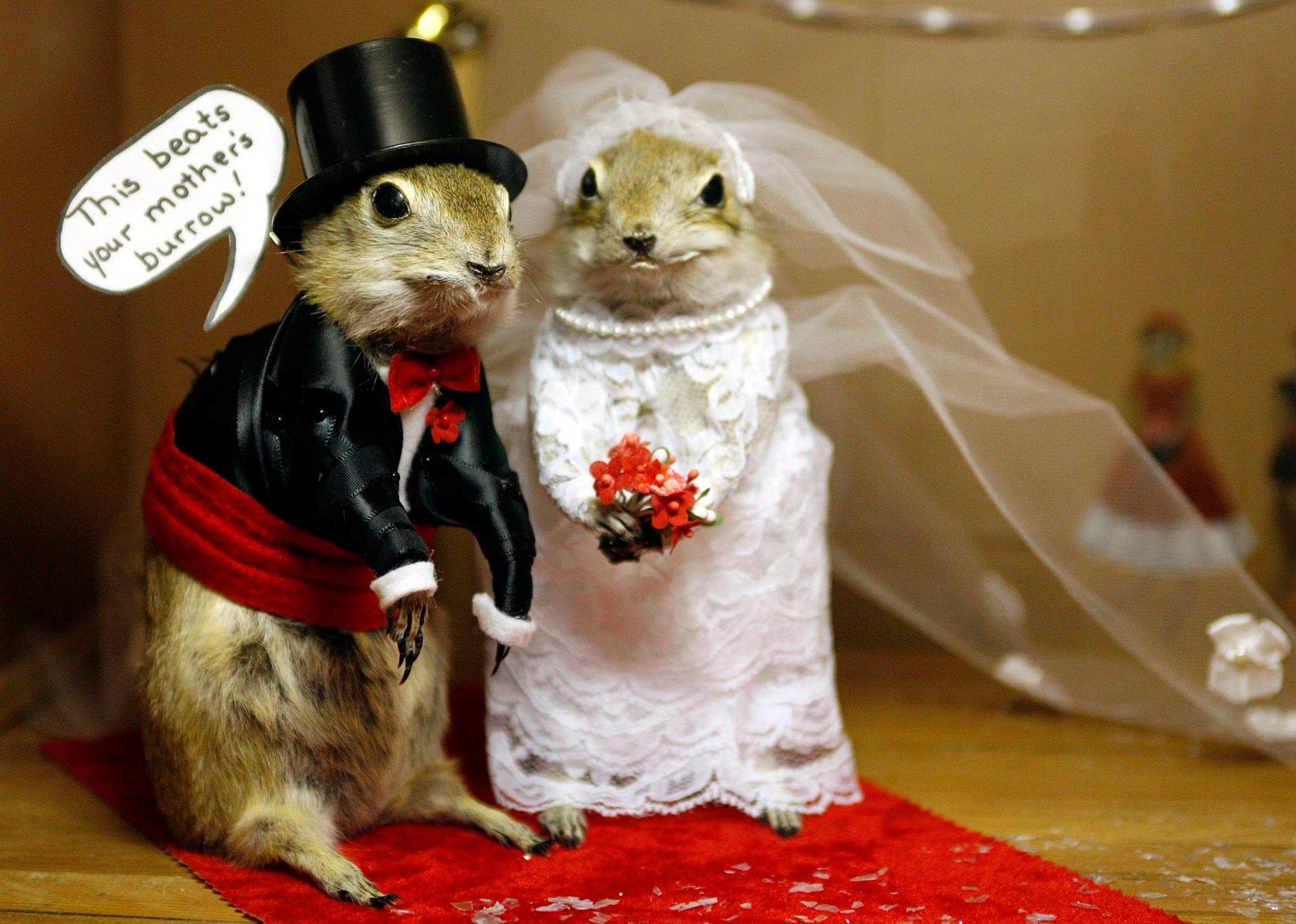
For decades, this modest building on the edge of an Alberta prairie highway held a mirror up to human nature, reflecting our strange compulsion to project our own mundane dramas onto tiny, preserved rodents. Here stood "Gladys the Gopher," meticulously posed behind miniature glass windows, dressed in a hand-sewn gingham apron while tending a microscopic stove. Next door, a taxidermied sheriff pinned a badge to his furry chest, staring down a desperado whose glass eyes caught the harsh glare of fluorescent bulbs.
It was ridiculous. It was brilliant. It was deeply, achingly human.
And now, the burrows are empty. The miniature furniture is packed into cardboard boxes, wrapped in bubble wrap, and stored away in the dark.
The Torrington Gopher Hole Museum has closed its doors. The founders, aging and weary, are looking for a new home, a new burrow where someone else might take up the mantle of dressing up dead rodents in tiny trousers. But the closure of a roadside attraction is rarely just about real estate or rising operational costs. It is about the slow, creeping erasure of our cultural weirdness. It is about what happens when the weird little corners of the world get sanded down by the relentless pursuit of sleek, homogenized efficiency.
Consider what we lose when these places vanish.
To understand the appeal of a museum dedicated entirely to stuffed gophers posing as human citizens, you have to understand the prairie psyche. Driving through rural Alberta, the horizon stretches in every direction until the sky feels less like a dome and more like an infinite ocean. In places where the nearest neighbor might be three miles down a grid road, imagination becomes a survival tool. You populate the vast, empty spaces with stories. You notice the small things because the big things—the sky, the flat earth—are too vast to comprehend.
In 1996, a group of local volunteers decided to lean hard into that prairie absurdism. They didn't build a monument to oil wealth or agricultural machinery. They built a monument to whimsy. They trapped local Richardson ground squirrels—pests to farmers, canvases to artists—and spent hundreds of hours crafting tiny props out of toothpicks, scraps of fabric, and polymer clay.
Visitors came by the busload. Not because they expected the Louvre, but because they wanted to smile at the audacity of it. They wanted to see a gopher hair salon complete with a blow-dryer made from a ballpoint pen casing. They wanted to remember that life does not always have to be optimized, monetized, or taken seriously.
Yet, time is an unforgiving accountant.
The original creators grew older. Volunteers became harder to recruit in a digital age where youth migration to larger cities leaves rural towns hollowed out, filled mostly with ghosts and echoes. Maintenance on aging dioramas requires patience that modern life rarely affords. When the announcement came down that the museum was permanently shutting its current doors unless a buyer or a new home could be found, it felt like a minor tragedy for anyone who prefers their history a little rough around the edges.
This is the hidden cost of progress.
We build gleaming shopping centers and streamlined digital archives, but we starve the soil of local folklore. We trade the specific, greasy-fingered charm of a community project for the clean, algorithmic predictability of globalized culture. A gopher dressed as a curling player might not be high art, but it was theirs. It was forged by neighbors who laughed together over cups of instant coffee while gluing miniature brooms into the paws of a rodent.
That kind of authenticity cannot be manufactured in a corporate boardroom. It cannot be prompted into existence by an artificial intelligence looking for a quirky anecdote. It requires human stubbornness. It requires people who care enough about a vanished afternoon to spend their retirement sewing trousers for squirrels.
The owners are currently searching for a savior. A buyer. A new burrow. They want to pass the torch to someone willing to keep the dioramas intact, someone who understands that keeping a town’s weird history alive is a form of civic stewardship.
Whether anyone will step forward remains an open question. The economics of nostalgia are brutal. Rent goes up. Tourism habits shift. People zoom past small towns on four-lane highways at a hundred and twenty kilometers per hour, chasing bigger thrills, bigger screens, and faster coffee.
If you slow down long enough to look out the window, however, the landscape tells a different story. It tells you that every abandoned building, every boxed-up miniature chair, and every quiet main street holds the remnants of a community trying to leave a mark against the vast indifference of the plains.
The gophers are packed away now. The glass display cases are dark. But out there in the high grass, the living ones are still digging, oblivious to the cultural weight we assign to their stuffed cousins.
The burrow is empty. The prairie wind keeps blowing. And somewhere down the highway, the next strange, beautiful idea is waiting for someone stubborn enough to give it life.