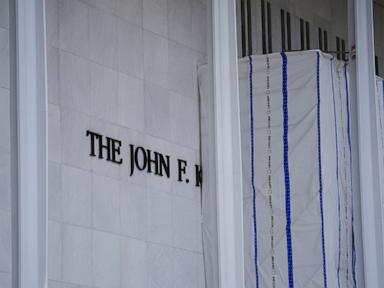
The media has spent months treating the legal wrestling match over the John F. Kennedy Center for the Performing Arts as a standard-issue partisan brawl. Headlines scream about federal judges blocking board decisions, outraged lawmakers filing emergency injunctions, and the raw institutional clash of egos. The lazy consensus is that this is simply another chapter in Washington’s endless turf war over branding, executive overreach, and real estate vanity projects.
That framing is a comfortable delusion. It completely misses the structural mechanics of how cultural institutions in the capital actually survive, rot, and get rebuilt.
I have watched public-private boards manage marquee civic properties for years, and the dirty secret nobody in the press corps wants to admit is simple: institutional preservation is almost always a polite form of slow-motion bankruptcy. When a federal judge blocks a board from altering a building's name or forcing a restructuring, the legal victory is celebrated as a defense of statutory law. It is. But statutory law does not pay for a leaky roof, outdated HVAC systems, or structural concrete remediation that runs into the tens of millions.
The real conversation should not be about whether a name belongs on a portico. The real conversation is about the complete absence of a viable funding model for monumental American infrastructure that does not rely on corporate ransom, billionaire patronage, or political extortion.
Let us look at the mechanics of the dispute. The board argued that major private-sector backing and executive alignment were the only realistic paths to secure the capital needed for massive facility overhauls. Critics countered that trading the institutional integrity of a memorial to a assassinated president for cash or political compliance is an unacceptable moral hazard. Both things can be true at the exact same time.
The baseline error is assuming that the status quo of these institutions is pristine, independent, and functional. It is not. Federal funding covers baseline operational survival, but deferred maintenance piles up like bad debt on a corporate balance sheet. When an outsider comes in and says, "Accept my terms or watch the building crumble," they are exploiting a structural vulnerability built into the design of federal cultural boards. These boards are populated by political appointees who often lack operational competence, leaving them uniquely unequipped to say no when a heavy-handed executive offers a Faustian bargain.
When federal judges step in to halt these maneuvers, they act as a vital constitutional brake. They enforce the literal text of the establishing statutes, ensuring that executive whim does not casually rewrite legislative intent. But judicial injunctions do not write checks. They do not fix a cracked foundation or modernize a theatrical rigging system. By blocking the controversial rescue plan without providing an alternative funding stream, the legal system preserves the purity of the name while leaving the physical reality of the asset to decay.
If we want to fix how monuments and cultural centers operate, we have to stop pretending that historic preservation is self-sustaining. We need to decouple capital improvement from political patronage entirely, establishing independent endowment structures that are immune to both administrative pressure and congressional budget gridlock. Until we build a funding architecture that doesn't require selling off naming rights to the highest political bidder, every single "victory" in these legal battles is just buying time before the next crisis hits.
Judge blocks Kennedy Center board from putting Trump's name on the building
This video provides direct context on the legal ruling halting the administration's efforts to alter the iconic performing arts venue.