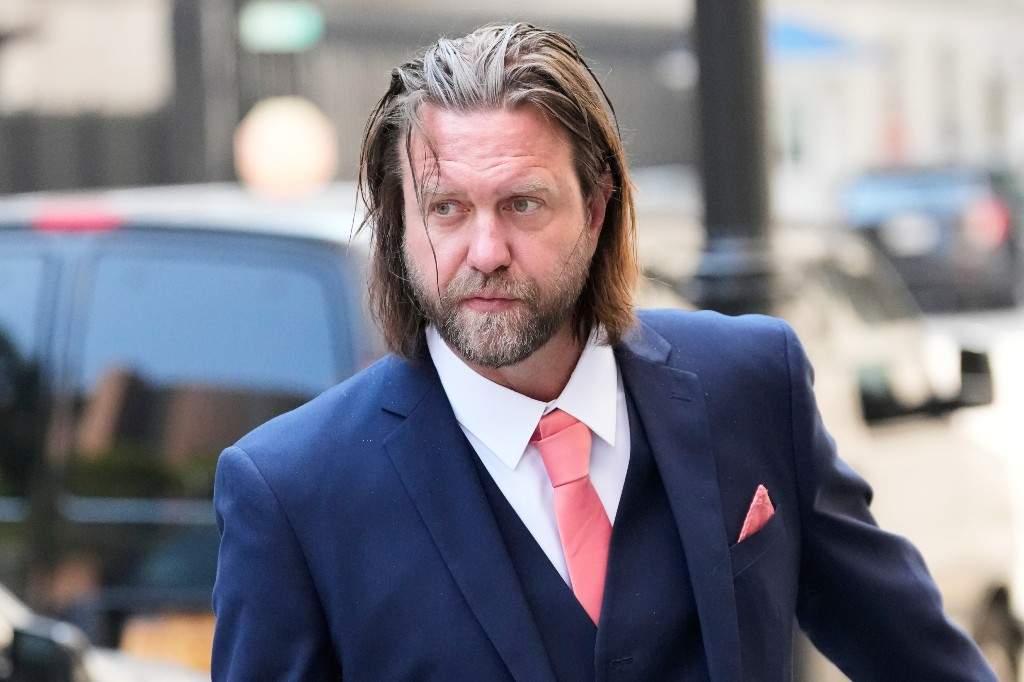
The money arrived in silence. It always does when it moves in figures that large, sliding through digital pipelines from a Silicon Valley bank account straight into the hands of a filmmaker who convinced a tech giant he possessed the future.
Netflix wanted a masterpiece. What they bought was an obsession.
Every Hollywood story requires a visionary, someone who looks at an empty room and sees a universe. Carl Erik Rinsch was supposed to be that visionary. Fresh off a big-budget studio debut, he carried the kind of erratic, intense energy that executives mistake for genius. Netflix handed him the keys to a kingdom, greenlighting a sprawling, ambitious sci-fi series called Conquest. They did not just fund a show; they funded an idea.
Then, the screens went dark.
The Price of Vision
Hollywood has always run on a specific kind of magic trick. You write a check, and in return, thousands of miles away, an army of artists constructs a dream. But the machinery breaks down when the magician stops looking at the stage and starts looking at the stock market.
Consider what happens when the line between creation and compulsion disappears.
Rinsch did not spend the production millions solely on camera lenses, sound stages, or background extras. Instead, as the pressure to deliver mounted, the funds began migrating. The capital meant to build a fictional universe devolved into a tool for real-world speculation. Millions of dollars vanished into high-stakes stock options. When those bets turned to ash, more money followed.
Imagine sitting in a production office, surrounded by unfinished scripts and restless crew members, while the broker account on your monitor flashes red. It is a psychological trap as old as currency itself. You lose, so you double down to fix the loss.
When the stock market failed him, Rinsch pivoted to cryptocurrency. Specifically, Dogecoin.
It sounds like a punchline. A digital token bearing the face of a meme-famous Shiba Inu became the reservoir for premium Hollywood production funds. But the absurdity of the asset class highlights the desperation of the moment. In a chaotic twist of luck, the crypto gamble actually paid off. The investment ballooned into tens of millions of dollars in profit.
But wealth born from panic rarely stabilizes a fragile situation. It accelerates it.
Luxury and the Empty Canvas
The tragedy of the situation lies in the contrast between what was promised and what was purchased. Netflix believed they were buying a flagship series to dominate global streaming metrics. Instead, the newly minted crypto fortune began transforming into tangible symbols of personal luxury.
The money did not go back into the visual effects budget.
- Five Rolls-Royce Cullinans.
- A Ferrari.
- A custom luxury motorhome.
- Millions of dollars in high-end watches and designer clothing.
Step into that reality for a moment. Picture a pristine garage filled with millions of dollars in exotic machinery, while across the ocean, a television series sits in pieces, completely abandoned. The cars represent a physical manifestation of a creative breakdown. They are heavy, expensive proofs of an existential pivot from artist to consumer.
The corporate apparatus eventually woke up to the silence.
Streaming platforms are built on data, algorithms, and meticulous scheduling. They can tolerate eccentric behavior, and they can even tolerate delays. What they cannot tolerate is a complete lack of a product. When the invoices did not match the footage, the illusion shattered. The legal machinery began to grind, slowly at first, then with devastating momentum.
The Final Invoice
A courtroom strips away the glamour of show business. It replaces the soft lighting of a pitch meeting with the harsh fluorescent glare of accountability.
The legal resolution arrived with a clarity that no script could match. A federal judge looked past the cinematic pedigree, past the complex financial maneuvers, and focused entirely on the breach of trust. The sentence was handed down: 30 months in federal prison for his role in the eleven-million-dollar fraud scheme against Netflix.
Beyond the prison term, the financial fallout requires restitution. The luxury vehicles and the remaining assets serve as collateral for a dream that never made it to a single subscriber's screen.
The true casualty of this story is not the bottom line of a multi-billion-dollar corporation. Netflix will survive the loss of eleven million dollars; it is a rounding error on their quarterly balance sheet. The real loss belongs to the hundreds of crew members, actors, and digital artists who poured months of their lives into an project that will never see the light of day.
They built props for a ghost. They memorized lines for an audience that will never exist.
Every film set is an act of collective faith. Thousands of people agree to believe in a lie for twelve hours a day so that an audience can believe in it for two hours on a weekend. When a director breaks that faith, the entire structure collapses. The 30-month sentence is a legal punctuation mark at the end of a long, dark chapter, leaving behind a collection of expensive cars, empty hard drives, and a stark reminder of what happens when the storyteller forgets the story.