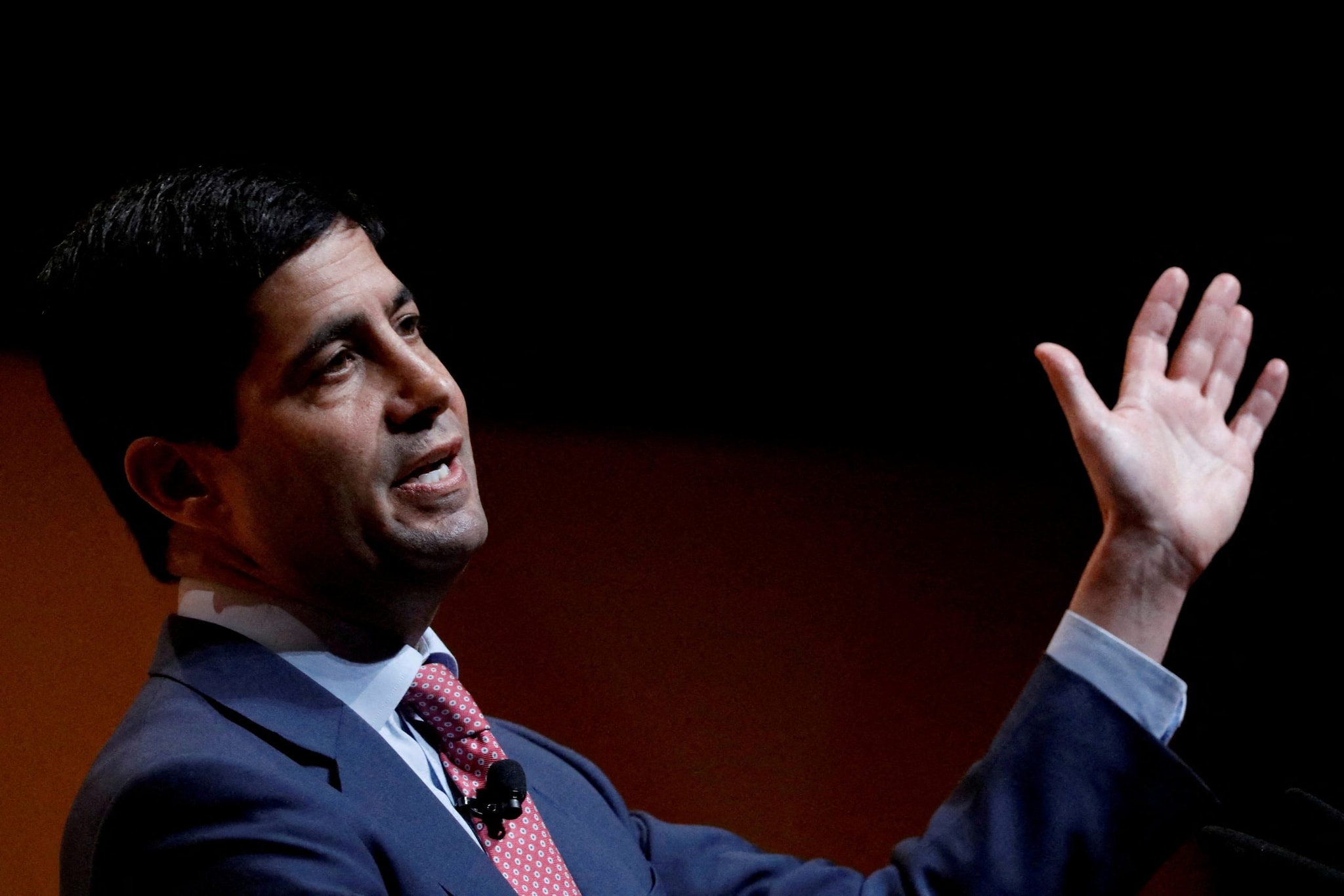
The nomination of Kevin Warsh to lead the Federal Reserve was never going to be a standard handoff of power. As he sat before the Senate Banking Committee on Tuesday, the setting felt less like a job interview and more like a high-stakes negotiation in a sprawling legal and political war. Warsh is currently trapped between a president demanding "the lowest interest rates in the world" and a sitting Fed Chair, Jerome Powell, who is refusing to vacate his post while under the shadow of a federal criminal investigation.
The primary conflict stems from a Justice Department probe into the $2.5 billion renovation of the Federal Reserve’s Washington headquarters. While the administration alleges financial impropriety and false statements to Congress, Powell and his allies view the investigation as a "political weapon" designed to force a premature exit. With Powell’s term as chair ending in May—but his seat on the Board of Governors lasting until 2028—the stage is set for an unprecedented constitutional showdown that threatens the very foundation of central bank independence.
The Weaponization of the Building Fund
For decades, the Federal Reserve has operated on a gentleman’s agreement with the White House: the president picks the leader, and the chair stays out of partisan politics. That agreement is now in ashes. The criminal probe into the headquarters renovation has provided the Trump administration with the leverage it lacked through purely economic arguments.
Skeptics on the Banking Committee, including Senator Thom Tillis, have created a legislative blockade. Tillis has vowed to halt all Fed nominations, including that of Warsh, until the legal cloud over Powell is resolved. This creates a circular crisis. Warsh cannot be confirmed until the probe ends, but the probe is widely perceived as the primary tool being used to make room for Warsh.
The strategy is clear: bypass the "for cause" legal protections that prevent a president from firing a Fed chair over interest rate disagreements. By framing the conflict as a matter of criminal oversight rather than policy friction, the administration seeks to delegitimize Powell’s tenure and force a "voluntary" resignation. Powell, however, has signaled he will not leave his board seat even if his chairmanship expires, potentially leaving the Fed with two claimants to the throne come June.
Regime Change and the Inflation Framework
During his testimony, Warsh did not shy away from the term regime change. He characterized the Fed’s performance over the last five years as the "biggest economic policy error in 40 or 50 years," specifically targeting the delayed response to the post-pandemic inflation surge.
Warsh’s proposed doctrine involves three aggressive shifts:
- A New Inflation Framework: Moving away from the flexible average inflation targeting that he argues allowed prices to spiral.
- Communication Overhaul: Scrapping or significantly altering the "dot plot" and quarterly economic projections, which he believes have "compounded" market volatility.
- Mission Narrowing: Forcing the Fed to retreat from "mission creep" into climate change and social inequality, areas he claims the bank has no authority to manage.
This is a direct rebuke of the Powell era. Warsh is positioning himself as a restorationist who will return the bank to a singular focus on price stability. However, this rhetoric creates a massive paradox. While he talks about a strict, independent focus on inflation, his benefactor in the White House is publicly demanding immediate rate cuts to fuel growth.
The Independence Paradox
Warsh faces a nearly impossible balancing act. To win over the Senate, he must prove he is not a puppet of the executive branch. To stay in the president’s good graces, he must validate the administration’s frustration with current monetary tightness.
When pressed by Senator Elizabeth Warren on his independence, Warsh leaned on a technicality, arguing that while the Fed should be strictly independent in how it sets interest rates, it is not an "appeals court for political disputes" and should remain accountable to the administration on non-monetary issues like bank supervision.
This nuance is unlikely to satisfy the markets. Investors are watching for any sign that the Fed’s $28 trillion influence over the global economy is being traded for political favor. If Warsh is seen as the man who brought the Fed "to heel," the "inflation risk premium" on long-term bonds could spike, ironically driving up the very borrowing costs the president wants to lower.
The $100 Million Conflict
Beyond the policy clashes, Warsh’s personal finances have become a central point of contention. With roughly $100 million in assets to divest, he faces a logistical and ethical minefield. He has pledged to move his wealth into "plain vanilla" assets, but the lack of transparency regarding the buyers of his current holdings has drawn fire from Democratic lawmakers.
In a climate where the Fed is already being accused of being compromised by politics, any perception of financial impropriety or opaque "sweetheart" deals during the divestment process could be fatal to his credibility. The transition from a private financier with deep ties to the global elite to the public face of the U.S. dollar requires a level of transparency that Warsh has yet to fully provide.
The Collision of May 15
Everything converges on May 15, the date Jerome Powell’s term as chair officially expires. If the Senate impasse continues, the Fed could enter a period of leaderless limbo. The Vice Chair would typically take over, but with the administration challenging the legitimacy of the entire current board, even that transition is fraught with legal peril.
The standoff is no longer just about the cost of a mortgage or the price of gas. It is a fundamental struggle over who controls the most powerful economic lever in the world. If the criminal probe into Powell is revealed to be a pretext, the damage to the Fed’s reputation will take decades to repair. If Warsh takes the helm while the "hostage" (Powell) is still in the building, the resulting internal friction could paralyze U.S. monetary policy at a moment when the global economy can least afford it.
The Fed was designed to be insulated from the whims of the mob and the demands of the monarch. Today, it is right in the middle of both.


