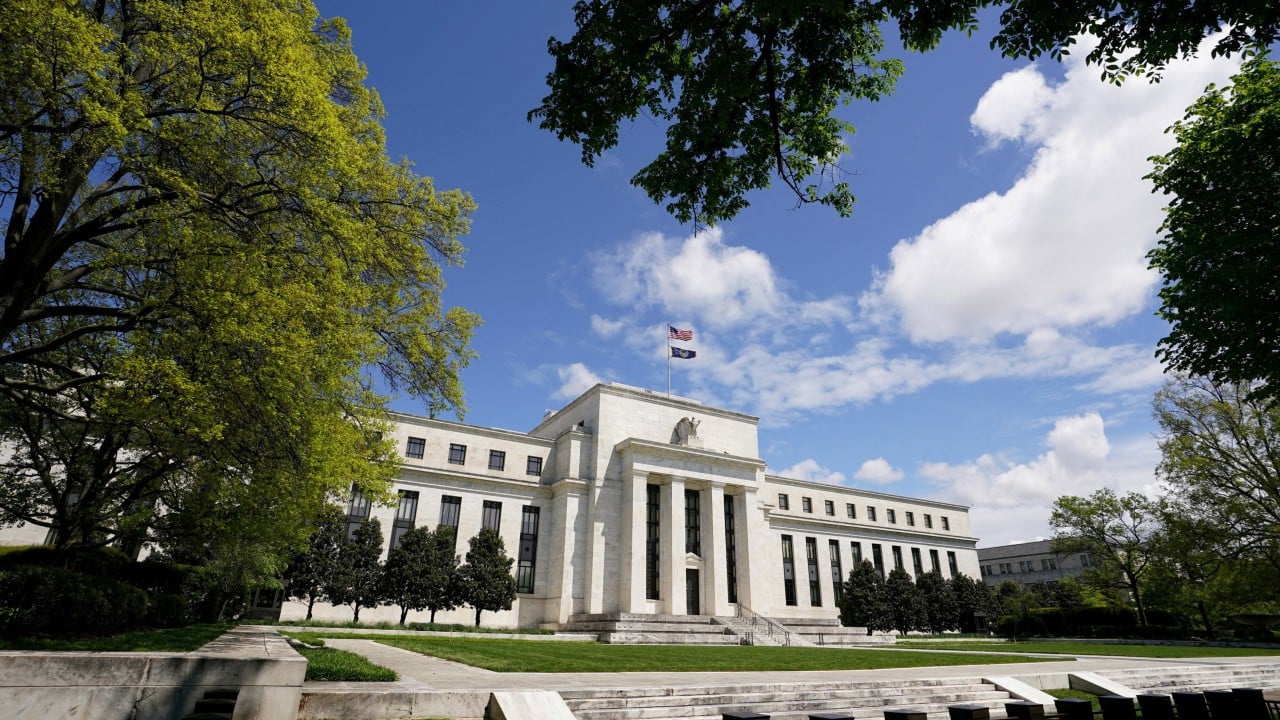
A high-ranking insider gets caught sending restricted economic data to foreign agents, lies to federal investigators, and walks away with just over three years in prison.
If that sounds like a slap on the wrist, you're not wrong.
The sentencing of former Federal Reserve Board of Governors senior adviser John Harold Rogers to 38 months in federal prison marks the end of a deeply unsettling national security saga. While Rogers was acquitted of the more severe charge of conspiracy to commit economic espionage, he was nailed for repeatedly lying to the FBI and Federal Reserve investigators about his clandestine activities.
But this case isn't just about one rogue economist. It exposes a massive, systemic vulnerability at the very heart of the American financial system.
The Secret Hotel Room Seminars
To understand how Rogers pulled this off, you have to look at the sheer duration of his double life. From 2010 to 2021, Rogers worked as a senior adviser in the Fed's Division of International Finance. He had direct access to highly sensitive, non-public information regarding monetary policy and the Federal Open Market Committee (FOMC).
According to court documents, Rogers met a Chinese intelligence operative named Hummin Lee at a conference in 2017. That meeting kicked off a multi-year, highly calculated operation.
Rogers didn't just accidentally leak information. He systematically stripped classification markings from restricted Federal Reserve documents, emailed them to his personal account, and printed out physical copies to smuggle across the border.
Once in China, he met Lee and other operatives in hotel rooms. The cover story? He was simply teaching academic "classes" to eager graduate students. In reality, these meetings were targeted debriefings where Rogers handed over exact policy insights Lee asked him to fetch.
When investigators finally cornered Rogers in February 2020 and asked if he had ever shared restricted Fed information outside the Board, his answer was simple: "Never."
He lied. And he kept lying, even under oath during his trial.
How China Can Weaponize U.S. Interest Rates
Many people look at espionage through the lens of military secrets—blueprints for stealth fighter jets or coordinates of naval bases. But in the modern geopolitical arena, economic intelligence is just as lethal.
At the time of his arrest, China held roughly $816 billion in U.S. debt. At various points during Rogers' activity, that number hovered closer to $1.5 trillion.
When you hold that much foreign debt, advance knowledge of what the Federal Reserve plans to do with interest rates is basically a license to print money.
If the Fed is about to raise interest rates, bond prices will drop. If you know this 48 hours before the rest of the global market, you can dump billions in U.S. Treasuries before the price plunges, saving your treasury untold sums. Conversely, if you know a rate cut is coming, you buy up debt early and ride the wave of soaring bond prices.
It's insider trading on a macroeconomic scale. The Department of Justice explicitly pointed out that the data Rogers leaked could allow an adversarial nation to manipulate the U.S. bond market and gain an unfair strategic advantage at the expense of American taxpayers.
The Price of Betrayal
So, what did Rogers get for trading away America's economic playbook?
The perks weren't just suitcases of cash. The Chinese intelligence apparatus played a long, relational game. They helped Rogers secure lucrative university professorships in China—including a part-time role that paid him approximately $450,000—and even assisted with personal matters regarding his new wife.
Rogers grew so dependent on his handlers that he eventually told investigators he "owed everything" to Hummin Lee.
This is a classic espionage playbook:
- The Hook: Appeal to an academic's ego through prestigious speaking engagements.
- The Escalation: Offer financial incentives disguised as legitimate consulting or teaching fees.
- The Trap: Gradually ask for more sensitive material until the target is too deeply compromised to back out.
Why a Three-Year Sentence Is a Problem
While prosecutors pushed hard for a five-year sentence, U.S. District Judge Dabney Friedrich settled on 38 months, citing his acquittal on the espionage conspiracy charge.
This highlights a glaring gap in how the U.S. legal system handles economic espionage. Proving a criminal conspiracy to commit economic espionage in court requires an incredibly high burden of proof, especially when the defendant hides behind the shield of "academic exchange."
By successfully arguing that his actions didn't technically meet the narrow legal definition of espionage, Rogers avoided a potential 15-year prison sentence. Instead, he goes down for lying to federal agents.
For foreign intelligence agencies, this outcome is a win. It demonstrates that the penalty for getting caught stealing high-level U.S. economic secrets can be remarkably light if you cover your tracks well enough to beat the specific espionage charges in court.
Federal agencies must rethink their internal security controls immediately. If a senior adviser can spend years printing out restricted files, emailing them to personal accounts, and hopscotching to China for hotel room briefings without triggering automatic red flags, the Fed's internal data security is broken.
U.S. institutions need to stop treating academic collaboration as an automatic pass for suspicious travel and financial arrangements. Security clearance monitoring must adapt to track intellectual property and policy data with the same intensity used to guard military hardware.
Federal Reserve Security Policies explains the security challenges the central bank faces when high-level insiders exploit their access.