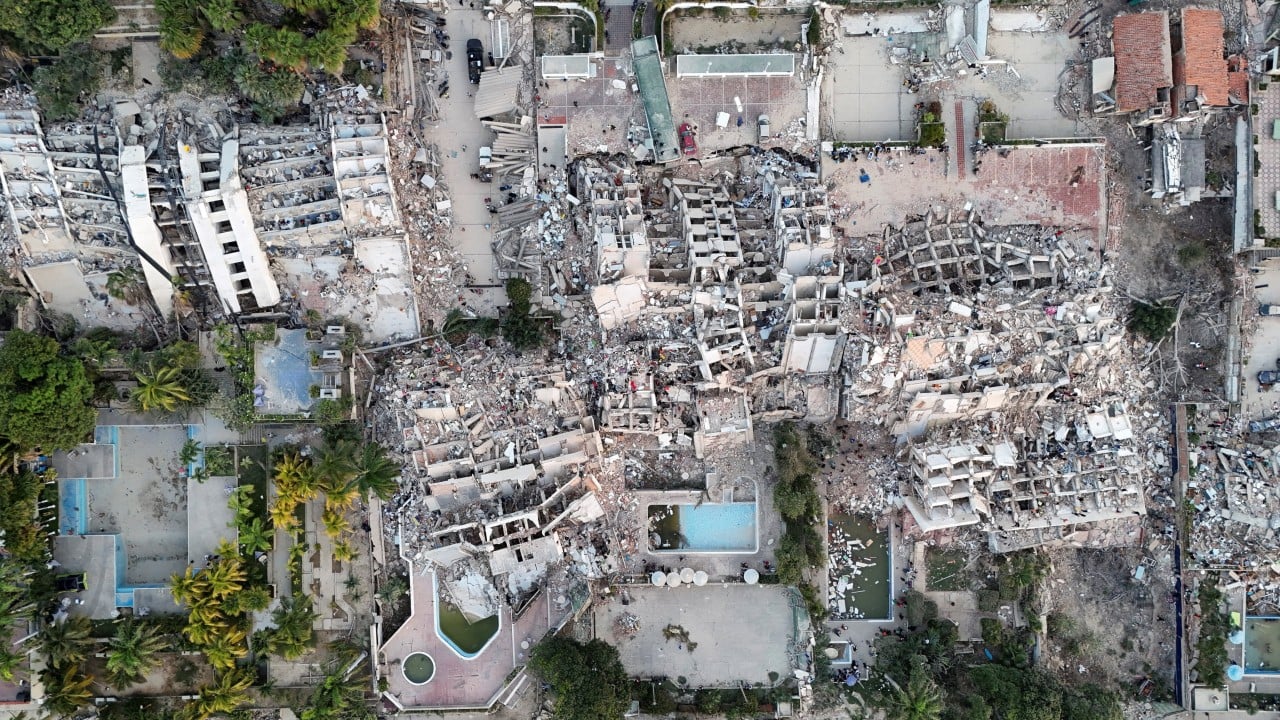
When a major earthquake strikes an urban center, the resulting destruction is rarely just a natural disaster. It is a structural audit. The catastrophic collapse of buildings during recent Venezuelan earthquakes, where multi-story concrete structures pancaked into rubble, stems from a lethal combination of geological vulnerability and decades of systemic regulatory failure. While soft, sedimentary soils inherently amplify seismic waves, the true catalyst for the devastation is the widespread evasion of building codes, the use of substandard materials, and a total lack of municipal oversight.
Venezuela sits atop a complex tectonic boundary where the Caribbean and South American plates grind past each other. This creates significant seismic risk, particularly along the northern coast where the vast majority of the population resides. When the ground shakes, the built environment is the first line of defense. In cities like Caracas, Maracay, and Cumaná, that defense has been systematically hollowed out.
The Physics of Failure on Soft Soil
To understand why Venezuelan buildings fail, one must first look at the ground beneath them. Many of the country’s major urban areas are built on alluvial basins—valleys filled with soft, loose sediments deposited by rivers over millennia.
During a seismic event, bedrock vibrates with a fast, sharp frequency. When these seismic waves transition from hard bedrock into loose, water-saturated topsoil, their behavior changes dramatically. The waves slow down. As they slow, their amplitude increases. The ground begins to move with much greater force, mimicking the action of a whip where a small movement at the handle translates into a violent snap at the tip.
This phenomenon, known as seismic amplification, transforms a moderate tremor into a destructive force. Furthermore, loose soils are highly susceptible to liquefaction. When shaken, the space between soil particles collapses, increasing water pressure and turning solid ground into a quicksand-like liquid. Buildings lose their foundational support instantly. They tilt, sink, or tip over entirely.
However, geology is only the trigger. The built environment determines the body count.
The Anatomy of a Pancake Collapse
The most lethal structural failure observed in Venezuelan earthquakes is the pancake collapse. This occurs when the vertical support columns of a building fail completely, causing upper floors to drop straight down onto the floors below. The sheer weight of the falling concrete triggers a progressive, domino-like failure down the entire height of the structure.
This specific type of failure points directly to poor engineering and non-compliance with modern seismic design principles.
The Weak Column Strong Beam Defect
In ideal seismic engineering, buildings are designed around the strong-column, weak-beam principle. Beams are engineered to flex and absorb energy during an earthquake, acting as structural fuses that deform without causing the building to fall. The columns, which carry the weight of the entire structure, must remain rigid and intact.
In many collapsed Venezuelan structures, this logic was inverted. Builders constructed thick, heavy concrete beams supported by slender, poorly reinforced columns. When the ground moved laterally, the rigid beams remained intact while the flexible columns snapped at their joints. Once a single level of columns gives way, the entire building succumbs to gravity.
Insufficient Lateral Reinforcement
Concrete is incredibly strong under compression—it can support massive amounts of downward weight. However, it is brittle and weak under tension, which occurs when an earthquake pushes a building from side to side. To withstand these lateral forces, concrete must be heavily reinforced with steel rebar.
Inside a concrete column, vertical steel bars handle the bending forces, while horizontal steel loops, called stirrups or ties, hold the vertical bars in place and prevent the concrete core from bursting outward under pressure.
Investigations into collapsed structures across Venezuela consistently reveal a fatal absence of these horizontal ties. In many cases, the ties were spaced too far apart or lacked the necessary 135-degree hooks required to anchor them securely into the concrete core. Under seismic stress, the unconfined concrete shattered, the vertical rebar buckled outward, and the column disintegrated.
The Human Element behind the Rubble
Blaming geology for urban destruction ignores the human decisions that turned hazard into catastrophe. Venezuela has a long history of engineering expertise; the Venezuelan Foundation for Seismological Research (FUNVISIS) and the national building codes (COVENIN) have historically been highly sophisticated, reflecting advanced seismic research.
The breakdown occurred not in the drafting of regulations, but in their enforcement.
Decades of economic instability and institutional decay have eroded the state's capacity to police the construction sector. Municipal engineering departments, tasked with inspecting job sites and approving structural plans, have been decimated by a lack of funding and trained personnel. Independent oversight has largely vanished.
In this regulatory vacuum, cutting corners became standard operating procedure. To offset rising material costs and hyperinflation, some developers substituted specified structural steel with cheaper, lower-grade alternatives. Concrete mixes were stretched thin by adding excess water or using unwashed, salty aggregate from nearby coastlines. This compromised the chemical integrity of the concrete, leading to internal corrosion of the steel reinforcement long before any earthquake struck.
The Threat of Informal Settlements
While commercial and residential mid-rises face severe structural risks, the most acute vulnerability lies in Venezuela’s vast informal settlements, known as barrios. Built on steep, unstable hillsides surrounding cities like Caracas, these self-constructed brick and concrete homes exist entirely outside the formal legal framework.
Barrios are built without geological surveys, engineering plans, or standardized materials. They rely on gravity-defying extensions, where new floors are stacked on top of existing ones as families expand. The foundations are often nothing more than shallow concrete pads resting on highly erodible topsoil.
A major seismic event centered near a major metropolitan area would trigger massive landslides in these informal communities. The close proximity of the structures means the collapse of a single home at the top of a hill can initiate a catastrophic slide, taking down dozens of homes below it. The lack of open roadways in these densely packed neighborhoods would simultaneously paralyze rescue efforts, driving casualties exponentially higher.
Rethinking the Urban Horizon
Fixing a structural crisis of this magnitude requires moving past emergency response toward aggressive preventative engineering. The solutions are known, but they require political will and capital that are currently in short supply.
Structural retrofitting offers a pathway to secure existing high-risk buildings. Techniques such as wrapping vulnerable concrete columns in carbon-fiber reinforced polymers can provide the lateral confinement needed to prevent buckling. Adding steel bracing systems or concrete shear walls to existing frameworks can redirect seismic forces away from weak columns.
+-------------------------------------------------------+
|  PRIORITY SEISMIC MITIGATION STRATEGIES               |
+-------------------------------------------------------+
| 1. Mandating carbon-fiber wraps on older mid-rises    |
| 2. Installing shear walls to absorb lateral forces    |
| 3. Banning new construction on known alluvial basins  |
| 4. Establishing independent, third-party inspections  |
+-------------------------------------------------------+
These technical fixes are useless without a complete overhaul of enforcement mechanisms. Municipalities must decouple building inspection departments from political influence and establish strict, legally binding third-party peer reviews for all structures over three stories tall.
If Venezuela continues to treat building code compliance as an optional bureaucratic hurdle rather than a matter of national security, the country's cities will remain trapdoors waiting to be sprung by the next shift of the Caribbean plate. The earth will inevitably move again, and the final butcher's bill will be signed by those who chose profit and neglect over steel and safety.