The recent executive order to slash joint military exercises between the United States and South Korea is being framed through the lens of fiscal restraint and diplomatic courtesy. President Trump’s stated rationale—that these maneuvers are prohibitively expensive and needlessly provocative toward an allegedly respectful North Korea—is a surface-level narrative. Beneath the rhetoric lies a more volatile reality. This move is not merely a budgetary adjustment or a goodwill gesture to Pyongyang. It is a strategic pivot that signals a fundamental shift in how the current administration manages alliances, blending transactional geopolitical punishment with an increasingly personalized approach to nuclear diplomacy.
The military logic behind these exercises has always been explicit. These are not rehearsals for an unprovoked invasion, nor are they abstract displays of force. They are functional, operational training cycles. When thousands of troops from the U.S. and South Korea conduct live-fire scenarios or coordinate maneuver logistics, they are ensuring that they can communicate and act as a unified force in the event of an existential contingency. To degrade this readiness is to introduce a friction point into the defense of the Korean Peninsula. If an emergency occurs tomorrow, the muscle memory that allows for instantaneous integration between Seoul and Washington will be slightly less sharp than it was a year ago.
President Trump’s decision to link this drawdown to South Korea’s refusal to participate in the conflict in Iran reveals the transactional heart of his doctrine. By demanding participation in a separate, middle-eastern theater as a prerequisite for maintaining the status quo in the Pacific, the administration has effectively signaled that its security guarantees are no longer ironclad. They are conditional. This introduces a dangerous instability. Allies who perceive their security commitments as subject to unrelated policy alignment will inevitably seek out other ways to hedge their bets.
Consider a hypothetical scenario where an ally begins to quietly develop independent nuclear capabilities or shifts its defense procurement away from American systems because it no longer trusts the consistency of U.S. operational support. This is the logical end state of a policy that treats military readiness as a bargaining chip for unrelated global grievances. When trust is treated as a commodity to be traded for temporary political victories, it rarely returns at the same value.
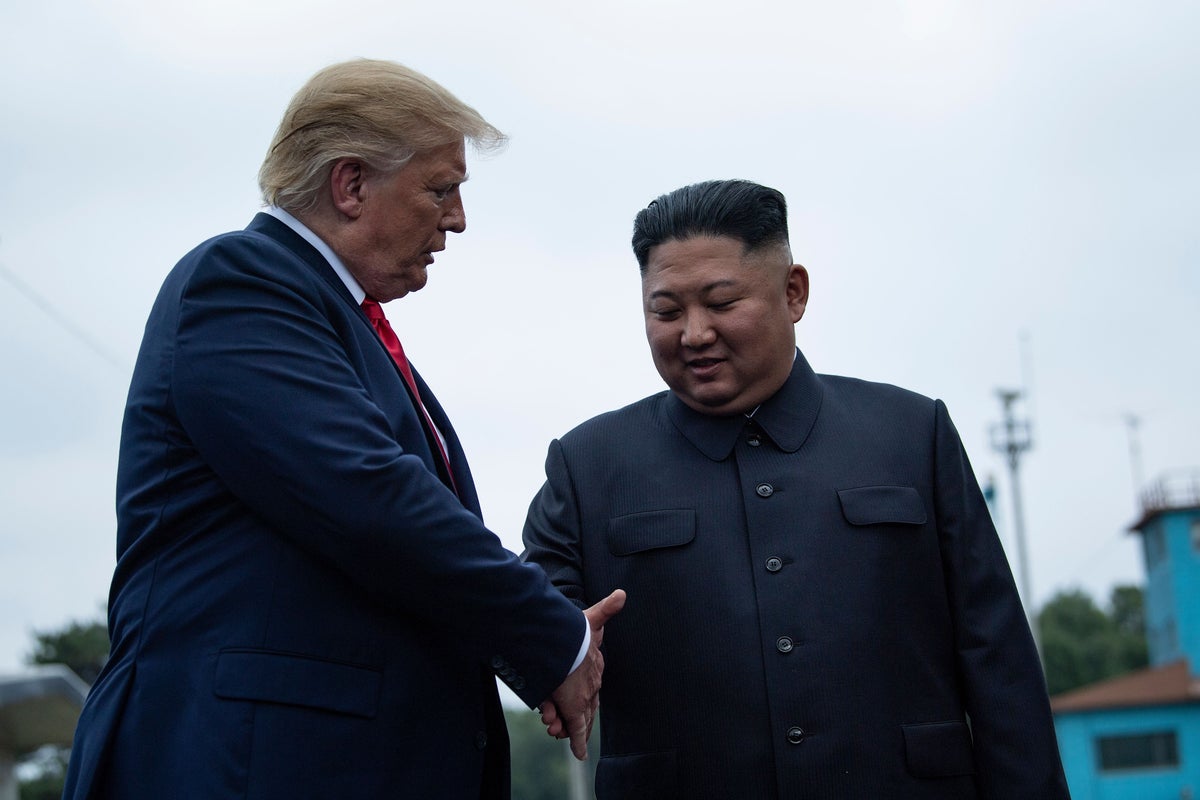
The claim that these drills are hostile to a respectful North Korea ignores the operational environment. Pyongyang’s rhetoric consistently characterizes these exercises as a precursor to war, regardless of their actual scale or defensive intent. By validating this framing, the administration has ceded the initiative to Kim Jong Un. The North Korean leader does not view the reduction of these drills as a favor to be reciprocated with genuine denuclearization. He views them as a tactical victory, proof that his long-term strategy of testing and brinkmanship successfully wears down the resolve of his adversaries.
There is also the matter of the domestic signals being sent to the Pentagon. Ordering a substantial reduction in exercises just hours before they are scheduled to commence creates a high level of operational chaos. Military leaders depend on predictability to manage logistics, morale, and unit readiness. When the Commander-in-Chief intervenes in technical training schedules based on social media posts and personal grievances, it undermines the professional continuity that defines a modern military.
The administration’s shift also risks alienating the internal security consensus in Seoul. While the South Korean government has maintained a public stance of seeking meaningful dialogue, the private frustration among its defense establishment is palpable. They are witnessing an American administration that is increasingly willing to trade regional security for personal summits and disjointed diplomatic goals. The result is an alliance that is drifting, losing its focus on the primary deterrent mission that has kept the peace since 1953.
As this drawdown proceeds, look for North Korea to push further. They are opportunistic actors. If the U.S. and South Korea continue to retreat from the field, Pyongyang will almost certainly accelerate its testing programs, utilizing the reduced visibility and lowered readiness levels to mask advances in missile precision and conventional capabilities. They will continue to test the boundaries of what is acceptable, knowing that the primary obstacle to their ambitions is no longer as firmly committed to active deterrence as it once was.
This is not a story of cost savings or diplomatic genius. It is a story of erosion. Every time a major exercise is curtailed for the sake of political optics or transactional leverage, a small piece of the foundation of the Pacific security order is dismantled. Replacing professional readiness with personal rapport might feel effective in the short term, but it leaves the next crisis without the necessary tools to handle a conventional military escalation. History does not reward nations that trade their hard-won readiness for the fleeting comfort of a smile in a photograph. When the next test of strength arrives, the reality of these decisions will be measured not in budget dollars, but in the lost capacity to act with speed and decisiveness.