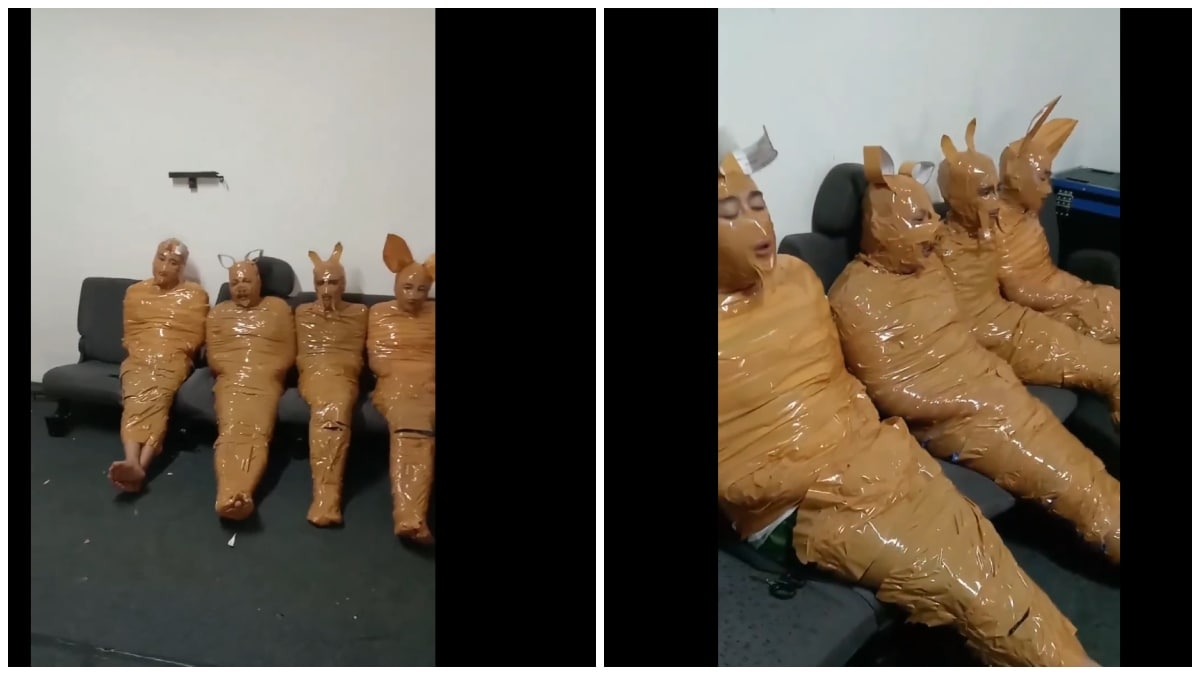
A viral video circulating across social media platforms claims to show retail thieves in South America bound with duct tape and forced to watch the children's television show Teletubbies on a loop as a form of vigilante punishment. The footage is entirely fake, generated by artificial intelligence tools. While the premise sounds like a bizarre dark comedy, the reality behind its rapid spread exposes a coordinated, profit-driven ecosystem that exploits human voyeurism and failing platform moderation.
The video surged through algorithmic feeds, racking up millions of views before fact-checkers could flag it. Users debated the ethics of extrajudicial punishment, unaware they were arguing over pixels synthesized by software. This is not an isolated incident of digital trickery. It represents a lucrative industry where automated content factories weaponize the grotesque and the absurd to harvest ad revenue from unsuspecting users.
Anatomy of a Synthesized Hoax
To understand how this specific video fooled millions, one must look at the mechanics of modern generative AI video tools. High-fidelity video generators can now produce consistent human figures, complex textures like shiny duct tape, and specific atmospheric lighting with minimal prompting.
The creators of the Teletubby punishment video preyed on existing real-world tropes. Vigilante justice videos—often coming from regions with high crime rates and distrust in local law enforcement—frequently go viral on Telegram and X. By mimicking the shaky, low-quality aesthetic of a smartphone camera, the perpetrators bypassed the immediate skepticism usually reserved for pristine, cinematic AI outputs. They added artificial digital noise, compression artifacts, and muffled ambient audio to anchor the lie in reality.
The choice of the Teletubbies was a calculated engagement hook. It blended the psychological horror of forced sensory deprivation with nostalgic, surreal imagery. This contrast triggered the exact emotional cocktail required to force a user to stop scrolling, comment, and share.
The Machinery of Mass Deception
The individuals producing these videos are not rogue artists or political saboteurs. They are digital arbitrage farmers.
Operating largely out of low-income regions, these content syndicates run networks of hundreds of automated accounts. The business model relies on a simple mathematical formula: generate high-volume, shock-inducing content at near-zero cost, distribute it across platforms with creator monetization programs, and collect payouts from the impressions.
- Production Costs: Free or low-cost subscription tiers of AI video generation tools.
- Distribution: Automated bots that cross-post the same file across TikTok, X, Instagram Reels, and YouTube Shorts within minutes.
- Monetization: Platform creator funds, programmatic ad revenue sharing, and redirection to sketchy e-commerce links or malware-laden blogs in the bio.
When a video like the Teletubby hoax takes off, it triggers algorithmic amplification. Recommendation engines do not measure truth; they measure retention. If a user watches a video three times to figure out if it is real, the algorithm registers that as deep engagement and pushes the video to thousands more.
The Collateral Damage of Vigilante Fiction
The normalization of these hyper-realistic fakes carries severe societal consequences that extend far beyond digital media literacy.
When audiences are continuously fed a diet of synthesized vigilante justice, it alters public perception of crime and order. It desensitizes viewers to violence while fostering a false narrative that institutional justice systems are entirely broken, suggesting that absurd, localized torture is the only effective deterrent.
Furthermore, this trend creates a dangerous environment for real victims of crime. As the internet becomes flooded with synthetic atrocities, genuine footage of human rights abuses, war crimes, or local corporate negligence faces immediate dismissal as "just another deepfake." Skepticism is weaponized, protecting bad actors in the real world who can now claim plausible deniability behind the shield of AI.
The Systematic Failure of Platform Moderation
Big Tech companies frequently tout their deployment of advanced AI classifiers designed to catch and label synthetic media. The Teletubby video proved that these defenses are inadequate against motivated actors.
Most automated moderation systems look for specific metadata or known digital watermarks left behind by popular commercial AI tools. Content farms easily circumvent these defenses by running the generated video through secondary editing software, changing file formats, adding heavy filters, or subtly altering the frame rate. This process strips away the digital fingerprints that automated moderators rely on.
Human moderation teams, severely downsized across the tech sector over the past several years, are left overwhelmed. A human reviewer spending three seconds on a clip might miss the subtle geometric anomalies—like a hand with an extra digit or a duct tape pattern that melts into a wall—that expose the file as a forgery.
Spotting the Synthetic Grift
Audiences cannot rely on social media platforms to protect them from fabricated realities. Developing an eye for digital forgery requires looking past the shocking narrative and analyzing the physical inconsistencies inherent in current-generation AI models.
Spatial Continuity and Geometry
AI struggles with structural permanence. In the viral video, the edges of the duct tape binding the supposed thieves shift and blur during rapid camera movements. Watch how objects interact with the environment; if a rope or restraint seems to phase through clothing or flesh, the scene is simulated.
Lighting and Shadows
Generative models often fail to calculate complex ray tracing accurately. Look closely at the light emitting from the television screen playing the children's show. In a real environment, that flickering light would cast dynamic, corresponding shadows across the faces and bodies of the people in the room. In the fake video, the ambient lighting remains unnaturally static.
Sensory Desynchronization
Audio remains a major hurdle for automated video generation. The background audio in these hoaxes is almost always an overlaid loop of generic crowd noise, static, or detached crying that does not match the chest movements or breathing patterns of the individuals on screen.
The fake Teletubby punishment video is a warning sign of an unfolding crisis in information integrity. As the tools to fabricate reality become cheaper and more sophisticated, the internet will continue to fill with synthesized chaos designed to exploit human emotion for fractions of a cent per view. Verifying the source, questioning the emotional bait, and recognizing the financial incentives of the poster are the only effective tools left to combat the synthetic grift.