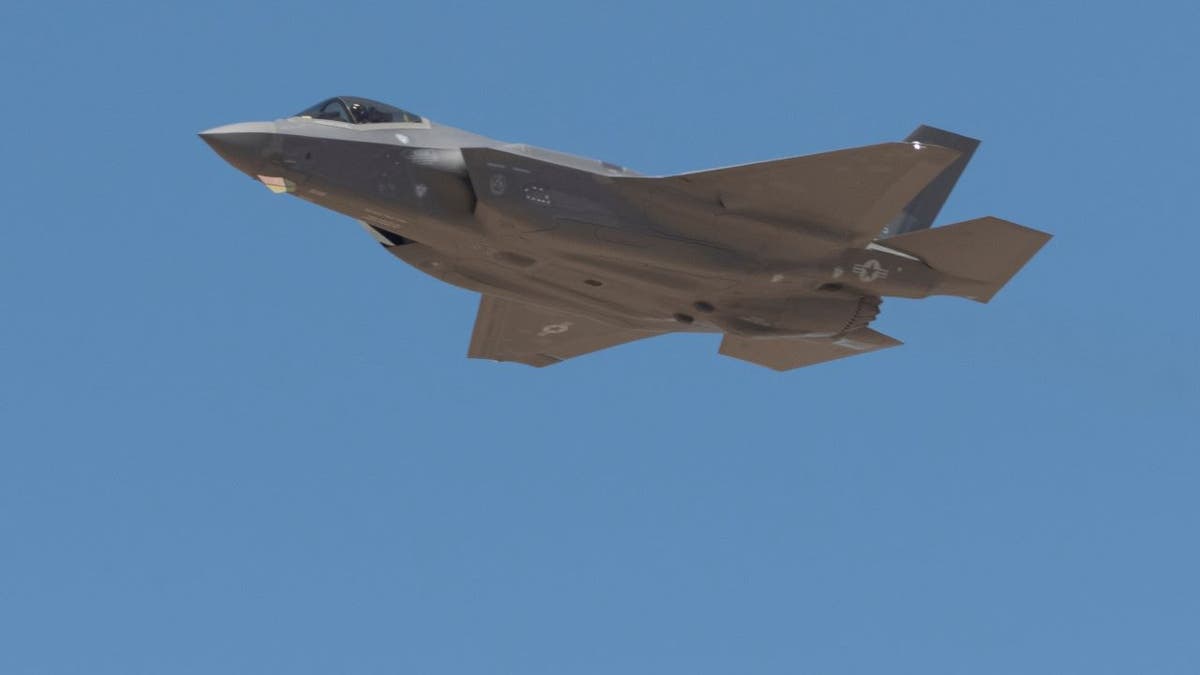
A single F-35 Lightning II makes an emergency landing, and suddenly the geopolitical commentariat loses its collective mind. Iran claims a "world first" kinetic hit on a fifth-generation stealth fighter. Western officials mumble about "technical malfunctions." The internet erupts in a binary war of propaganda versus cope.
They are both wrong.
The obsession with whether a missile physically touched a fuselage is a 20th-century preoccupation. It misses the brutal reality of modern electronic warfare (EW). If you are looking for shrapnel, you are looking for the wrong evidence. We have entered an era where "hits" are measured in lines of code and frequency disruption, not twisted aluminum. The F-35 didn't need to be hit by a missile to be defeated; it just needed to be seen.
The Stealth Tax and the False Security of RCS
The "lazy consensus" among defense analysts is that stealth is a binary state: you are either invisible or you are dead. This is a fairy tale sold by defense contractors to justify $1.7 trillion program costs.
Stealth, or Low Observability (LO), is not an invisibility cloak. It is a delay tactic. It reduces the Radar Cross Section (RCS) to the size of a metal marble, theoretically allowing the pilot to engage a target before the enemy's fire-control radar can achieve a "lock."
But here is the nuance the headlines ignored: Stealth is frequency-dependent.
The F-35 is optimized against X-band radars—the high-frequency systems used by fighter jets and SAM batteries for precision tracking. It is significantly less "stealthy" against L-band and UHF surveillance radars. Iran, contrary to the "backwards" trope often pushed by Western media, has spent decades perfecting a "Passive Coherent Location" (PCL) network. They aren't looking for the jet; they are looking for the hole the jet makes in the ambient electromagnetic soup of cellular signals and radio waves.
If the F-35 was forced into an emergency landing, it wasn't because an Iranian S-300 suddenly turned into a god-tier sniper. It was likely because the aircraft's Mission Data Files (MDF)—the "brain" of its electronic warfare suite—encountered a signal environment it didn't recognize, causing a systems cascade.
The Software-Defined Kill Chain
The F-35 is a flying supercomputer. That is its greatest strength and its terminal weakness.
When you hear "emergency landing," don't think of a smoking engine. Think of a Blue Screen of Death at 30,000 feet. The jet relies on the AN/ASQ-239 Barracuda system for electronic warfare. This system is designed to sense, identify, and jam enemy signals. However, for the Barracuda to work, it needs to know what it’s looking at.
I’ve seen how these systems fail in high-stress environments. In simulations, if a sensor receives a "non-deterministic" input—a signal that doesn't match the library of known threats—the system can prioritize the wrong data, leading to a "sensor fusion" overload.
The Likely Scenario
Imagine a scenario where a multi-static radar array (using multiple transmitters and receivers spread across a geography) hits an F-35 from an angle the aircraft’s skin isn't shaped to deflect. The jet’s internal diagnostic tools detect that it is being tracked with high fidelity. The pilot, realizing the "stealth" advantage is gone, is forced to burn fuel and maneuver aggressively, or use active jamming that screams "I am here" to every sensor in the region.
If that maneuver leads to a mechanical failure or an engine surge, did the enemy "hit" the plane?
- The Kinetic Purist says: No.
- The Industry Insider says: Absolutely.
The goal of air defense isn't always to turn the plane into a fireball. It is to deny the mission. If the jet is on the ground and not in the air, the mission is denied. Iran’s claim of a "hit" is a semantic victory, but the technical reality—that an F-35 was forced out of the sky in a contested environment—is a massive red flag for the Pentagon.
The Logistics of the "Technical Failure" Excuse
Whenever a high-value asset fails, the default PR move is to blame a "technical malfunction." It’s the "it’s not you, it’s me" of military diplomacy. It preserves the aura of invincibility for the hardware while admitting a temporary, fixable flaw.
But look at the data. The F-35’s availability rates have hovered around 50-60% for years. The F135 engine, built by Pratt & Whitney, has faced chronic cooling issues. The jet uses its fuel as a heat sink. If the electronics are running hot because they are fighting off a sophisticated electronic attack, the engine’s thermal management system is pushed to the brink.
We are witnessing the "Complexity Trap." We built a machine so sophisticated that the environment itself becomes a weapon against it. You don't need a missile to down a 5th-gen fighter; you just need to make its computer think it’s dying.
The Myth of Global Air Superiority
The competitor's article treated this event as a fluke or a propaganda win for a rogue state. That is a dangerous misunderstanding of the current arms race.
We are seeing the democratization of "Counter-Stealth." China, Russia, and yes, Iran, are sharing data on electronic signatures. The F-35’s "stealth" is a depreciating asset. Every time it flies near a contested border, it is being "vaped"—its electronic emissions are being recorded, analyzed, and uploaded to machine-learning algorithms designed to strip away its invisibility.
The real story isn't the landing. The real story is the Signal Intelligence (SIGINT) harvest that occurred during the flight.
Why Your "Facts" Are Obsolete
- "Iran's air defense is old": Irrelevant. Digital signal processing (DSP) upgrades can be applied to 40-year-old dishes. It’s the computer at the end of the wire that matters.
- "The F-35 is the best plane ever built": Maybe. But it is also the most integrated. A bug in the ALIS (Autonomic Logistics Information System) can ground a fleet faster than a squadron of interceptors.
- "US officials confirmed an emergency landing": This is the "tell." US officials rarely confirm anything unless the physical evidence is already on social media. They are controlling the narrative to ensure the word "missile" isn't used, but they can't hide the fact that the platform failed in the field.
The Brutal Truth About 5th Gen Warfare
If you think air warfare in 2026 is about dogfights, you are watching too many movies. It is about Electromagnetic Spectrum Superiority (EMS).
The F-35 is a sensor node. If the node is jammed, spoofed, or forced to cycle its systems, it becomes a $100 million liability. The "hit" Iran is claiming might not be a physical impact, but a successful "cyber-kinetic" disruption. They found a hole in the logic of the sensor fusion, and the aircraft's safety protocols did exactly what they were programmed to do: they forced the pilot to land before the "malfunction" became a catastrophe.
We are entering a period where "mission kills" are the new "hard kills."
Stop looking at satellite photos for craters. Start looking at the software update logs. The era of the "unbeatable" stealth fighter ended the moment we started trusting the software more than the physics. The F-35 didn't fail because of a lack of technology; it failed because it has too much of it, and our adversaries have finally learned how to use that weight against us.
The emergency landing was a warning shot. Not from a missile, but from the reality that the invisible man is finally casting a shadow.
The Pentagon's biggest fear isn't that Iran has a better missile. It's that the F-35's "invincibility" is a software patch that just expired.