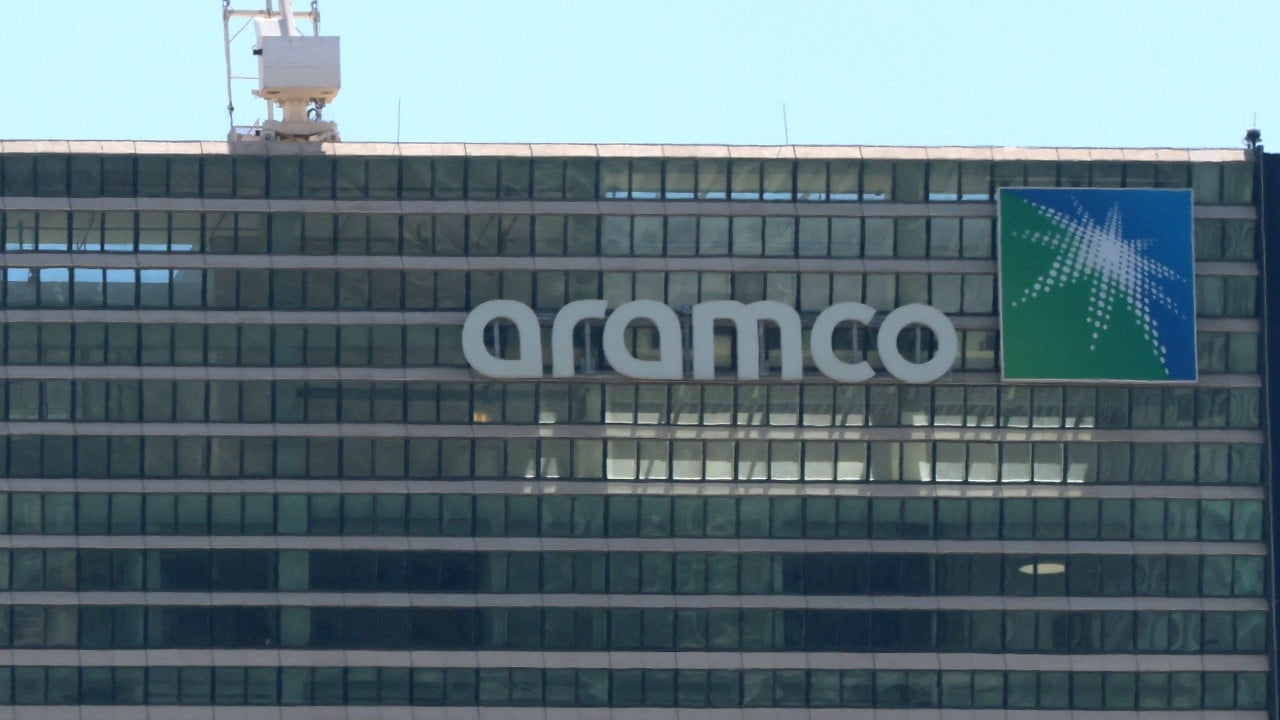
Mainstream outlets love a smoking building. They point a camera at shattered glass in Riyadh, slap a breaking-news banner across the screen, and immediately start hyperventilating about global crude supplies and impending energy Armageddon.
It is lazy journalism. Worse, it is dangerous analysis. For another look, read: this related article.
When reports broke that a Saudi Aramco building in Riyadh sustained damage in an attempted attack, the financial press instantly fell back on its favorite reflex. Pundits dusted off the 2019 Abqaiq-Khurais playbook, drew straight lines to Brent crude futures, and warned of imminent supply shocks. They treated an administrative facility in a landlocked capital city as if it were a primary export terminal on the Persian Gulf.
They are completely missing the point. Related reporting on this trend has been published by The Motley Fool.
If you are watching oil barrels per day after an incident in Riyadh, you are looking at the wrong scoreboard. The target wasn't crude production. The target was investor psychology, regional deterrence, and the fragile illusion of urban invulnerability that Vision 2030 relies upon to attract foreign capital.
The Geography of Misdirection
Let’s establish basic physical reality first, because half the commentary class seems to have misplaced their maps.
Riyadh is not Dhahran. It is not Ras Tanura. It is not Abqaiq.
The beating heart of Saudi oil production sits hundreds of miles to the east, along the Persian Gulf coast in the Eastern Province. That is where the mega-fields like Ghawar and Safaniya pump, where the stabilization plants strip out sour gas, and where the massive tankers load up for Asian and European markets.
Riyadh is the political and administrative capital. Aramco facilities in the capital house corporate offices, regional distribution hubs, logistics coordinators, and domestic fuel depots. Damaging a building in Riyadh does not shut off the spigot to global energy markets. At worst, it temporarily disrupts local refined product distribution or forces white-collar staff to work remotely for a week while contractors sweep up drywall.
Yet, within minutes of the news hitting the wires, algorithmic trading desks and cable news anchors reacted as though a pipeline had just ruptured. Why? Because financial markets have developed a Pavlovian conditioning to the word "Aramco."
I have sat in risk-management meetings where senior energy analysts couldn't tell the difference between a Riyadh distribution center and the East-West Pipeline. They see the corporate name, assume immediate barrel-loss, and hit the sell button on equities while buying front-month crude calls. It is an amateurish conflation of corporate branding with physical infrastructure.
What the Lazy Consensus Gets Wrong
The conventional wisdom surrounding attacks on Gulf energy infrastructure rests on three flawed assumptions. Every single one of them needs to be dismantled.
1. The Myth of the Instant Supply Shock
In September 2019, coordinated drone and missile strikes hit the Abqaiq processing facility and the Khurais oil field, temporarily knocking out roughly 5.7 million barrels per day of production—about five percent of global supply. That event permanently scarred the market's psyche.
Since then, every minor incident involving Aramco gets viewed through the Abqaiq lens. The consensus argues that any kinetic strike on Saudi soil equals immediate physical scarcity.
This ignores how Aramco spent the last seven years hardening its actual production nodes. Air defense batteries—Patriot, THAAD, and localized counter-UAS systems—are heavily concentrated around the Eastern Province export infrastructure. Furthermore, Aramco maintains massive redundant capacity and strategic storage hubs specifically designed to absorb localized hits without missing a single tanker loading window.
An attempted attack on a Riyadh building isn't a failure of oil field security; it is proof that attackers are shifting toward softer, symbolic targets because the hard targets have become too expensive to hit.
2. Misreading the Attacker's Balance Sheet
Western analysts constantly evaluate asymmetric warfare through a conventional military mindset. They ask: How many barrels did they take offline? How much physical damage did they inflict?
Asymmetric actors—whether state-backed militias, rogue drone operators, or regional proxies—do not care about destroying concrete. Concrete is cheap. Aramco has tens of billions of dollars in free cash flow; it can rebuild an office wing or a domestic storage tank without blinking.
The attacker's return on investment is measured entirely in asymmetric cost imposition.
Imagine a scenario where a group launches three low-cost, long-range one-way attack drones costing roughly $20,000 apiece. Even if Saudi air defenses intercept two of them using interceptor missiles costing $1 million to $3 million each, and the third causes superficial damage to a building facade in Riyadh, the attacker wins the financial exchange by orders of magnitude. They force the defender to burn millions in munitions, trigger global headlines, and rattle corporate boardrooms—all for the price of a used sedan.
3. Ignoring the Real Target: Vision 2030
If you want to understand why a strike in Riyadh matters, stop reading energy reports and start reading foreign direct investment (FDI) metrics.
Crown Prince Mohammed bin Salman’s entire economic transformation plan—Vision 2030—hinges on turning Riyadh into the undisputed commercial, financial, and diplomatic hub of the Middle East. Under the Regional Headquarters (RHQ) program, the Kingdom effectively told multinational corporations: Move your regional headquarters to Riyadh, or lose out on lucrative Saudi government contracts.
Hundreds of global firms—from tech giants to Wall Street banks and consulting powerhouses—have reluctantly packed up executives from Dubai and London and relocated them to Riyadh’s King Abdullah Financial District (KAFD).
Those executives did not sign up to live in a conflict zone.
When an explosion rocks an Aramco facility inside the capital city, it doesn't matter that global oil exports remain untouched. What matters is that a Vice President at a major European bank looks out their Riyadh apartment window, hears air defense interceptors booming overhead, and immediately calls corporate security in Zurich to ask for an evacuation plan.
That is the real vulnerability. Not oil. Confidence.
Answering the Questions Investors Are Too Afraid to Ask
When incidents like this occur, search engines light up with predictable, surface-level queries. Let’s strip away the corporate PR and answer what is actually happening beneath the surface.
Is Saudi Aramco's oil supply actually at risk from attacks in Riyadh?
No. Unless an attack hits the East-West Petroline pump stations—which transport crude from the Eastern Province across the peninsula to the Red Sea port of Yanbu—incidents in the central Riyadh region have virtually zero impact on export volumes. Domestic fuel supplies in the capital are backed by vast underground storage caverns and redundant trucking networks. If you are trading oil futures based on structural damage in Riyadh, you are providing exit liquidity for smarter traders who understand midstream logistics.
Why do air defenses sometimes fail to stop every single projectile?
Because perfection in air defense does not exist, and anyone who tells you otherwise is selling defense contracts. Modern low-altitude drones fly below traditional radar horizons, utilize terrain masking, and possess minimal radar cross-sections. Even the most sophisticated layered air defense networks in the world—including Israel's Iron Dome and U.S. Navy Aegis systems—operate on probability of kill ($P_k$) metrics, not 100% guarantees. Intercepting 90% of an incoming swarm is a massive tactical success, yet the remaining 10% that leaks through dominates every front page on Earth.
How does this affect Aramco's valuation and dividend?
It doesn't. Aramco’s dividend is backed by the lowest upstream lifting costs on the planet—roughly $3 per barrel—and a sovereign mandate to fund the Saudi state budget. A damaged administrative building in Riyadh doesn't even register as a rounding error on a balance sheet generating hundreds of billions in annual revenue. However, it does increase the geopolitical risk premium baked into Saudi sovereign debt and local equities on the Tadawul exchange.
The Structural Flaw in Modern Corporate Risk Modeling
I have watched multinational corporations spend eight-figure sums on geopolitical risk consultants, only to get blindsided by basic asymmetric threats. Why? Because corporate risk models are built by lawyers and finance executives who mistake compliance for resilience.
They look at physical security through a checklist:
- Do we have blast-resistant glazing? Check.
- Are perimeter bollards installed? Check.
- Do we have a crisis communications template ready? Check.
This check-the-box mentality completely fails when dealing with modern aerial threats. You cannot build a concrete wall high enough to stop a loitering munition, and you cannot PR-spin away the psychological impact of debris falling in a residential district.
The harsh reality that boardrooms refuse to admit is that geographical diversification is the only real hedge against asymmetric warfare, and Riyadh’s RHQ mandate actively forces companies to do the exact opposite. By centralizing regional leadership into a single capital city to satisfy government procurement rules, multinational firms have created a massive single point of failure for their human capital.
The Contrarian Playbook for Operating in High-Tension Hubs
If you are running operations, managing capital, or advising leadership in the Gulf right now, stop reacting to the news cycle and start restructuring your operational posture:
- Decouple Executive Presence from Operational Execution. You can maintain a compliant Regional Headquarters in Riyadh to satisfy legal mandates without concentrating 100% of your senior decision-makers in one zip code. Keep core technical, trading, and operational teams distributed across multiple jurisdictions—Dubai, Abu Dhabi, Doha, or Manama—while maintaining a lean, high-level diplomatic and sales presence in Riyadh.
- Fade the Initial Geopolitical Spike. Every time a headline breaks about an attempted strike in Saudi Arabia, algorithmic traders bid up crude oil and defense stocks within seconds. Unless satellite imagery from firms like Planet Labs or Maxar confirms kinetic damage to primary processing trains at Abqaiq or export manifolds at Ras Tanura, those spikes almost always mean-revert within 48 to 72 hours. Patience pays; panic bleeds.
- Audit Supply Chains for Domestic Bottlenecks, Not Export Shutdowns. While global crude exports are heavily insulated, domestic logistics inside the Kingdom are far more fragile. If you operate manufacturing, construction, or logistics businesses inside Saudi Arabia, your primary risk isn't an oil embargo—it's temporary airspace closures, heightened security checkpoints slowing down road freight, and localized refined-fuel rationing if a domestic distribution depot goes offline. Build 14-day buffer inventories on critical inputs locally.
- Drop the "Zero-Incident" Illusion. Security briefings that promise total protection are pure fiction. If your business continuity plan relies on air defenses intercepting every incoming threat, you don't have a plan—you have a wish. Design your facilities and workforce protocols assuming occasional kinetic disruptions will occur, ensuring that a damaged building never halts your digital infrastructure or revenue collection.
The Uncomfortable Truth About Deterrence
Let’s acknowledge the obvious flaw in any contrarian dismissal of these attacks: complacency kills.
Just because an attempted attack in Riyadh didn't crater global oil supplies today does not mean the threat is trivial. History is littered with "harmless" probing attacks that served as live-fire reconnaissance for something far more catastrophic six months later. Every intercepted drone gives the attacker valuable electronic intelligence—mapping radar frequencies, measuring response times, and identifying blind spots in the defensive grid.
Furthermore, normalization is its own form of defeat. If minor strikes on corporate buildings in a G20 capital become background noise—treated as routine weather events rather than major escalations—then deterrence has already eroded.
Mainstream commentators want you to believe this story is about oil prices because oil prices are easy to put on a ticker at the bottom of a television screen. It is a clean, simple narrative that requires zero understanding of Gulf geopolitics, asymmetric economics, or urban security.
Ignore the ticker. Watch the corporate relocation numbers, watch the insurance premiums on commercial real estate in Riyadh, and watch whether foreign executives keep their families in the city or quietly fly them back to Europe for an "extended summer."
Barrels of oil are replaceable. Once you lose the trust of the people writing the checks, no amount of air defense will bring them back.