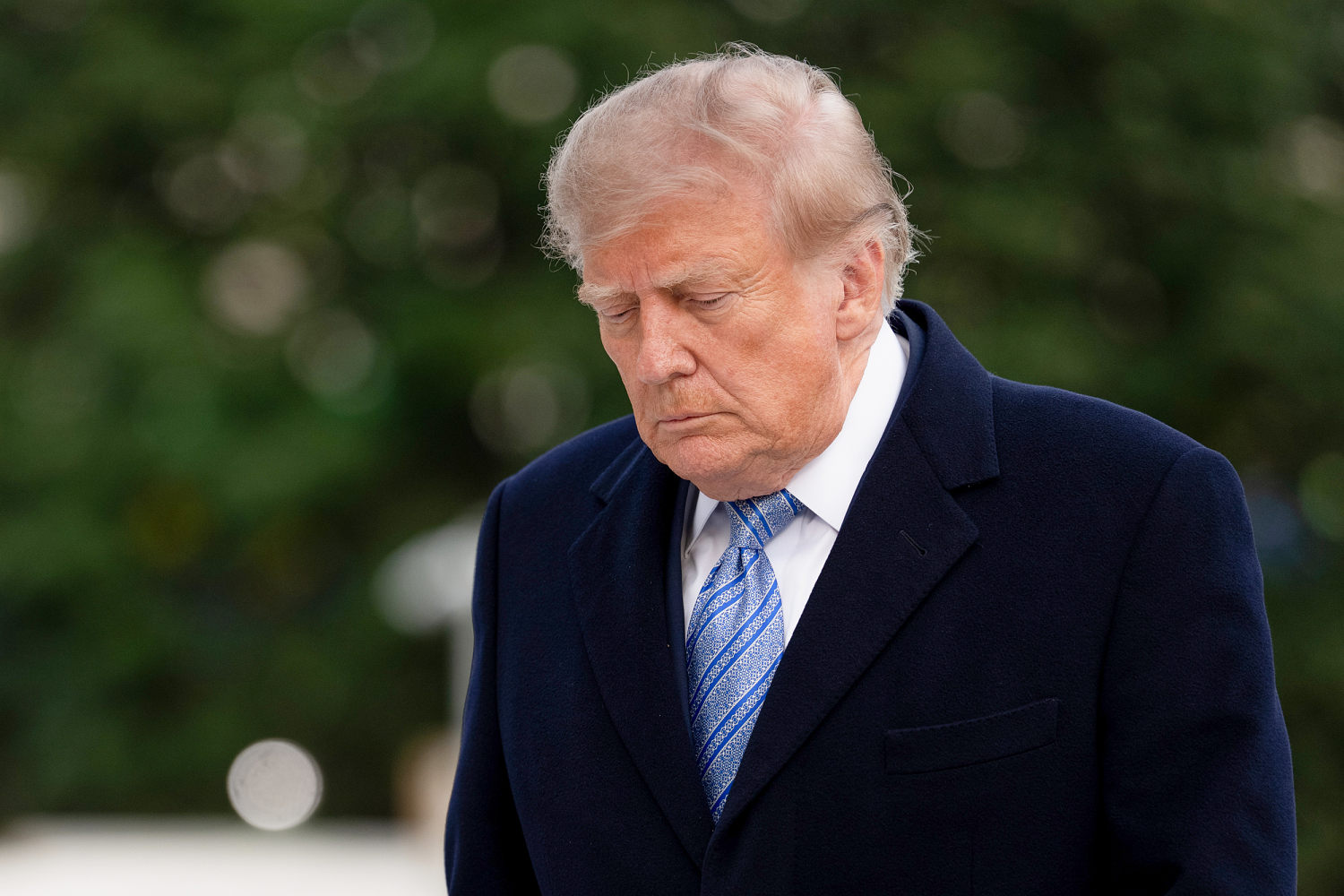
When President Donald Trump sits down with Silicon Valley's most powerful executives to talk about AI safety, don't expect a polite academic seminar. It's a high-stakes negotiation over who controls the future of American computing, power grids, and national defense.
Most coverage treats these White House tech summits like photo ops or sudden ideological pivots. They aren't. If you look at the policy shifts from Washington over the past two years, a much clearer picture emerges. The administration wants American artificial intelligence to dominate globally without getting bogged down in red tape, while top labs are quietly desperate for federal clarity—and massive amounts of electricity—to keep training frontier models.
I've spent years watching tech policy bounce between Capitol Hill and San Francisco, and the dynamic right now is unlike anything from the last decade. Back in 2016, tech executives walked into Trump Tower looking stiff and defensive. Today, the same industry leaders are actively courting the White House, framing AI safety not as a brake on innovation, but as a national security necessity that only American companies can solve.
Why AI Safety Means Something Totally Different in Washington
Ask an academic researcher in Berkeley about AI safety, and they'll talk about alignment, existential risk, and preventing autonomous systems from going rogue. Ask a policymaker in Washington right now, and you'll get a completely different answer.
In the current administration, AI safety primarily means national security, infrastructure resilience, and beating China.
That distinction matters. Shortly after taking office in January 2025, Trump revoked the Biden-era Executive Order 14110, which had mandated strict safety reporting requirements and algorithmic bias audits for companies training large models. Critics argued the Biden rules slowed down domestic startups and handed open-source advantages to foreign competitors. By scrapping those mandates, the White House signaled that bureaucratic compliance wouldn't dictate how fast U.S. labs move.
Yet safety concerns didn't vanish. They just changed shape.
Instead of worrying about whether a chatbot might generate offensive text, defense officials and White House advisors are focused on hard risks. Can frontier models be used to engineer biological weapons? Will an adversary hijack American cloud infrastructure to train rival systems? What happens to the U.S. electrical grid when five different tech giants try to build gigawatt-scale data centers at the exact same time?
These are the real questions driving the guest list whenever Trump hosts tech leaders.
Who Actually Gets a Seat at the Table
You can tell a lot about an administration's priorities by who gets invited into the room—and who gets left outside.
When Trump convenes tech executives around AI, the power dynamics center on a few distinct camps:
- The Frontier Lab Builders like OpenAI's Sam Altman, Anthropic's Dario Amodei, and Google's Sundar Pichai. Even when their politics clash with the White House, these leaders have to be there. They control the foundational models that both Wall Street and the Pentagon rely on.
- The Infrastructure and Hardware Kings such as Nvidia's Jensen Huang and Microsoft's Satya Nadella. You can't talk about AI safety or scaling without talking about silicon supply chains and export controls.
- The Defense and Hard-Tech Disruptors including figures like Palmer Luckey of Anduril and Alex Karp of Palantir. Unlike legacy Silicon Valley, these companies built their businesses around military contracts and openly embrace an "America First" approach to defense technology.
- Elon Musk and xAI, whose dual role as a competitor in the AI race and a close advisor to the president complicates every single conversation in the room.
Notice the friction built right into that lineup. Sam Altman wants massive federal backing for domestic data centers while protecting OpenAI's lead. Elon Musk has repeatedly clashed with Altman over whether AI labs should be closed-source profit engines or open platforms. Meanwhile, Jensen Huang needs to keep selling chips globally without getting crushed by sweeping export bans.
Putting these personalities in one room guarantees fireworks, even behind closed doors.
The Hidden Agenda Behind the Safety Talk
If you only read the official press releases after a White House summit, you'll miss the real horse-trading happening underneath. Tech leaders aren't showing up just to talk about guardrails. They're bringing a shopping list.
1. Federal Preemption Over State Laws
Right now, tech companies face a regulatory nightmare at the state level. California's push for aggressive AI safety legislation—sparked by bills like SB 1047—terrified both startups and tech giants. If California, New York, Texas, and Illinois all pass conflicting AI safety laws, building software in America becomes practically impossible.
Tech CEOs want Trump and a Republican-led Congress to pass federal preemption—a single national standard that overrides messy state-by-state rules. They'll gladly agree to voluntary national security testing with federal agencies if it means killing state-level liability laws.
2. Energy and Permitting Reform
Training next-generation AI models takes obscene amounts of power. You can't run a 5-gigawatt data center on good intentions and solar panels alone.
Tech executives need fast-tracked federal permits for natural gas plants, nuclear restarts, and high-voltage transmission lines. Trump's push for energy dominance aligns directly with Silicon Valley's sudden hunger for baseload power. When tech leaders talk to the president about "keeping AI safe and secure on American soil," half the time they're really asking for help getting local utilities to hook up their server farms.
3. Export Controls and Chip Chokepoints
Washington's main lever over global AI development isn't software regulation—it's hardware. Through the Bureau of Industry and Security, the U.S. restricts advanced Nvidia chips from reaching China and allied intermediaries.
Tech leaders want predictable rules here. Overly broad export restrictions hurt American chipmakers' revenue, which in turn reduces the R&D money they have to stay ahead of foreign rivals. Finding the sweet spot between locking down hardware and starving U.S. companies of global sales is one of the toughest balancing acts on the table.
Where Silicon Valley and the White House Still Clash
It's a mistake to assume everyone at these meetings is suddenly best friends. Deep, unresolved tensions sit right beneath the surface, and they flare up the moment specific policies get drafted.
Take open-source AI. Meta's Mark Zuckerberg has bet billions on releasing open-weight models like Llama, arguing that open ecosystems prevent a few companies from monopolizing intelligence. Many in Trump's orbit like this idea because it stops big tech firms from acting as censorship gatekeepers. However, national security hawks inside the administration worry that open-weight models make it trivially easy for foreign adversaries—or bad actors—to strip out safety filters and weaponize the code.
Then there's the issue of political bias in AI outputs. Conservatives have spent years accusing major tech platforms of baking ideological guardrails into their models. Trump has explicitly targeted what he calls "woke AI," pushing for federal procurement rules that require government-purchased AI systems to be ideologically neutral. For labs like Google and Anthropic, which spent years building strict content moderation systems to avoid bad press, stripping out those guardrails without letting their models generate toxic garbage is a massive technical headache.
And let's be honest about antitrust. Even with a deregulation-friendly White House, big tech monopolies aren't off the hook. Populist conservatives distrust giant tech conglomerates almost as much as progressive Democrats do. Smaller AI startups are actively lobbying the administration to make sure Microsoft, Google, and Amazon don't use their cloud dominance to choke out competition under the guise of "AI safety standards."
What Actually Happens After These Summits
If you're running a business, investing in tech, or building software, don't wait around for a sweeping, European-style AI Act to come out of these meetings. That's not how Washington operates right now.
Instead, watch for three concrete outcomes over the next few months:
- Voluntary Commitments Become De Facto Standards. Rather than passing heavy-handed laws, the White House prefers handshake deals backed by federal agencies like the U.S. AI Safety Institute (now housed under NIST). Expect top labs to sign updated agreements to share pre-deployment safety evaluations for national security risks—specifically cyber offense and bio-risks—before releasing their biggest models.
- Pentagon Contracts Shift Toward Commercial AI. The Department of Defense is moving fast to integrate frontier models into intelligence analysis, logistics, and autonomous drones. Tech leaders who play ball with White House national security priorities stand to win billions in federal compute and software contracts.
- Energy Deals Accelerate. Keep an eye on joint announcements involving nuclear power providers, utility regulators, and hyperscalers. Clearing the permitting bottleneck for AI data centers is the easiest political win both sides can claim.
How to Read the Next Headline
The next time you see breaking news about Trump hosting tech executives to discuss AI safety, look past the cameras and the political theater.
Check who's sitting closest to the president, pay attention to whether energy secretaries or defense officials are in the room, and watch what happens in Congress the following week regarding state preemption. In 2026, AI safety isn't a philosophical debate about killer robots anymore—it's industrial policy, plain and simple.
If you're making decisions around AI adoption in your own company, stop worrying about sudden federal bans on commercial AI tools. Focus instead on data privacy, vendor lock-in, and watching how state-level rules evolve in places like California and Texas, because that's where the real compliance headaches will live until Washington finally draws a single national line.