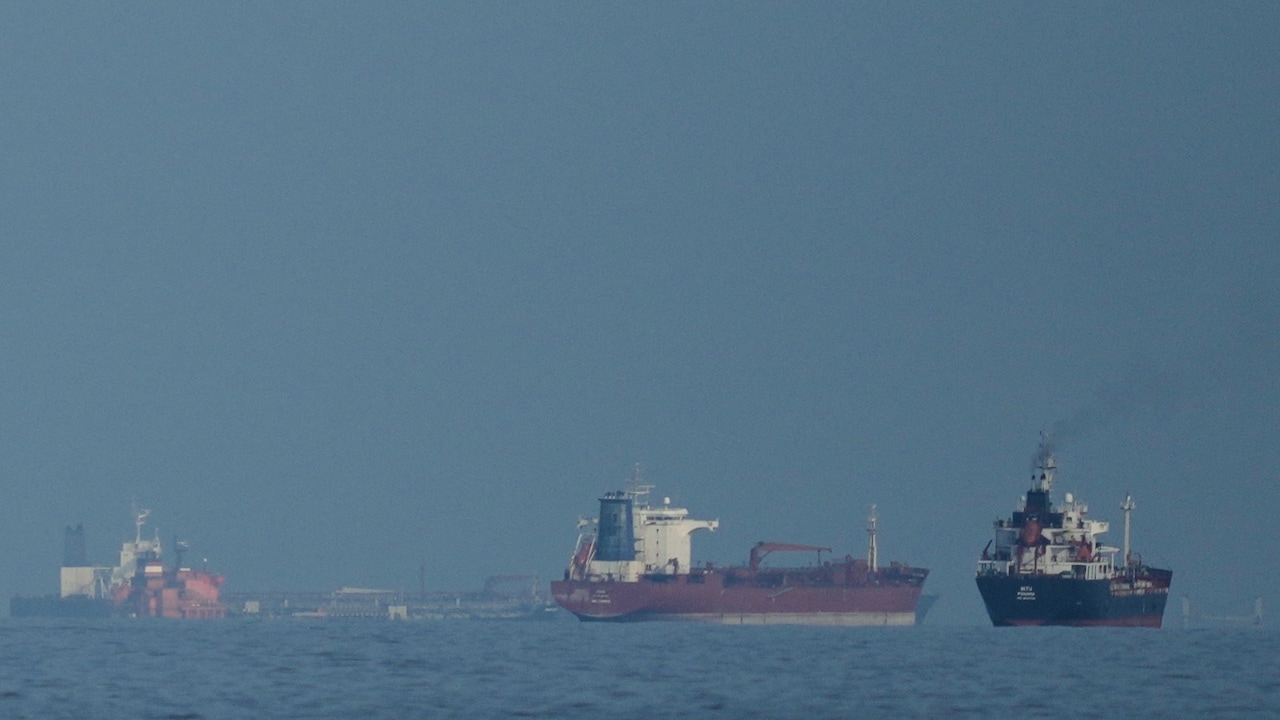
Every single defense analyst writing about twenty warships near the Strait of Hormuz right now is missing the entire plot. The headlines scream about impending kinetic strikes, tactical maneuvering, and the delicate dance of semi-negotiations behind closed doors in Washington and Tehran. It is a comforting narrative for television ratings. It provides a clean, easily digestible script of escalation management.
It is also completely wrong.
I have spent decades watching superpowers project phantom force while actual geopolitical leverage is won or lost in ledger entries, cyber logistics, and quiet trade adjustments. A carrier strike group sitting off the coast of a hostile peninsula does not represent an active military option. It represents a recurring administrative cost designed to keep defense contractors happy and domestic cable news networks supplied with B-roll. When you look at the deployment logs, the logistics chains, and the actual economics of modern naval blockades, the entire premise of an imminent Hormuz showdown falls apart under basic scrutiny.
Stop looking at the hulls on the water. Start looking at the balance sheets.
The Lazy Consensus of Gunboat Diplomacy
The standard media line goes something like this: Washington deploys a massive naval armada to the Gulf, signaling a red line against Iranian provocation. Tehran responds with bellicose rhetoric, speedboats swarm the shipping lanes, oil prices spike by a few percentage points, and the world holds its breath until backchannel diplomats strike a temporary ceasefire.
This is lazy thinking dressed up as geopolitical analysis.
The lazy consensus assumes that physical proximity equals coercive power. It assumes that twenty warships—destroyers, cruisers, amphibious assault ships—are loaded weapons pointed directly at the regime's head. But military hardware in the twenty-first century does not function like a loaded pistol in a dark alley. It functions more like a multi-billion-dollar billboard.
Let us be precise about what these twenty hulls can actually achieve. A modern carrier strike group is designed to project power against weak state actors or deter massive conventional invasions. It is not designed to sit inside a narrow, confined body of water like the Persian Gulf while thousands of shore-based anti-ship cruise missiles, loitering munitions, and coastal defense batteries track its every movement from concealed underground bunkers.
Placing capital ships inside the Strait of Hormuz during a high-tension standoff is not a display of dominance. It is an administrative liability. Iran knows this. The Pentagon knows this. The only people who do not know this are the pundits writing breathless columns about imminent blockades.
The Economics of a Paper Tiger
To understand why these deployments are mostly theatrical, you have to look at the math of modern naval warfare and energy markets.
Imagine a scenario where a total closure of the Strait of Hormuz is actually attempted by Tehran, and the United States Navy attempts to clear it using those twenty deployed warships. Within forty-eight hours, the cost per operational hour of maintaining that fleet presence begins to dwarf the economic disruption caused by a temporary drop in regional oil flows. More importantly, the global energy market has mutated beyond the simple calculations of the nineteen-eighties.
North American shale production, shifting Asian supply chains, and subterranean pipeline bypasses mean that a bottleneck in the Gulf is no longer an absolute economic strangulation device for the West. It is a localized price shock. Yet, media outlets continue to dust off tropes from the Tanker War of the nineteen-eighties as if global supply chain resilience has not evolved by orders of magnitude over the past forty years.
When leaders talk about semi-negotiations, they are not negotiating under the shadow of twenty warships because those warships can dictate terms. They are negotiating because both sides are trapped in a domestic political theater that requires continuous external posturing to justify internal budgets and ideological posturing.
The warships are props. Expensive, nuclear-powered, heavily armed props, but props nonetheless.
Dismantling the Myth of the Chokepoint
Let us address the core question that every pundit loves to ask: Can Iran choke off global commerce, and will the US Navy stop them?
The premise of the question is flawed from the start. It frames the relationship between Iran and the United States as a binary choice between total war and total capitulation. It treats the Strait of Hormuz as a fragile glass bridge that can be smashed by a single regional actor at will.
In reality, neither side can afford a total closure of the strait, and neither side wants one. For Iran, ninety percent of its state budget relies on oil exports moving through those exact same waters. Sinking a tanker in your own driveway is economic suicide. For the United States, an open-ended regional conflagration in the Middle East drains resources, political capital, and military stockpiles that are desperately needed elsewhere on the global chessboard.
So what are the twenty warships actually doing?
They are performing electronic intelligence gathering. They are maintaining signal presence to reassure nervous regional allies like Saudi Arabia and the United Arab Emirates that Washington hasn't completely abandoned the neighborhood. They are serving as floating sensors.
But a sensor is not a sword.
When you confuse a reconnaissance platform with an invasion force, you misread every diplomatic signal that follows. When Washington announces semi-negotiations while parking a fleet offshore, it is signaling weakness disguised as strength. It says: We cannot fix this through policy, so we are going to park a lot of steel here and hope the other guy blinks first.
The Cost of Strategic Laziness
I have seen organizations, corporations, and governments blow millions on vanity projects that look impressive in a slide deck but achieve nothing operationally. The current naval buildup in the Gulf is the geopolitical equivalent of buying a fleet of sports cars to impress your neighbors while your house leaks from the roof.
The real levers of power in this standoff have nothing to do with naval artillery. They have to do with SWIFT banking exclusions, secondary sanctions on shadow fleet oil tankers operating out of East Asian ports, and quiet intelligence-sharing agreements. A single compliance officer at a compliance firm in Geneva has more disruptive power over the Iranian economy than an entire amphibious ready group parked off the coast of Bandar Abbas.
Yet, nobody makes movies about compliance officers. Nobody posts dramatic satellite photos of spreadsheets on cable news. We prefer the romance of steel on the water.
We cling to the aesthetics of twentieth-century gunboat diplomacy because it is easy to understand. Two massive forces glare at each other across blue water. Tension mounts. A winner emerges.
It is a comforting fairy tale. It is also entirely divorced from the reality of modern statecraft, where deterrence is maintained through invisible networks of financial control and cyber resilience, not through the number of missile tubes floating within range of shore batteries.
The next time you see a headline counting the warships near Iran, remember what you are actually looking at. You are looking at a very expensive, very loud insurance policy against political cowardice.
Cut through the noise. Ignore the hulls. Watch the ledgers.
:max_bytes(150000):strip_icc()/ar-American-Cheese-taste-test-horizon-4x3-54cc339550cd44b9a818c17bdfd5428d.jpg)