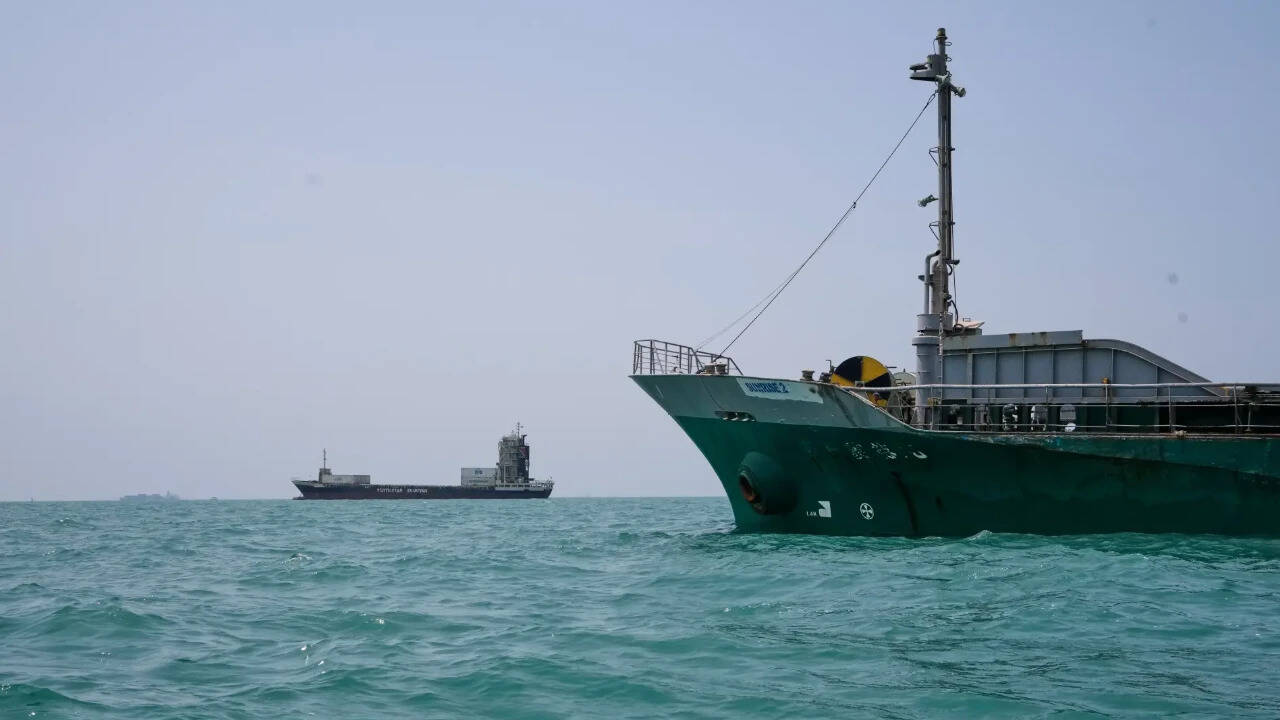
Whenever tensions flare near the Arabian Gulf, the media machine defaults to a predictable script. Fresh attacks on Strait of Hormuz shipping fuel fears over oil supplies, stock prices wobble for twenty-four hours, and cable news anchors dust off map graphics from the nineteen-eighties. It is the oldest panic in the playbook. Tankers get grazed, analysts hyperventilate about global energy starvation, and crude prices spike on pure anxiety rather than lost barrels.
Stop buying the panic. Learn more on a related issue: this related article.
I have watched desks trade off these headline shocks for over a decade. Every time a drone buzzes a bulk carrier or a crude tanker reports a suspicious flash near the Omani coast, the market treats the narrow waterway like a glass house waiting to shatter. The lazy consensus says that a choke point carrying a massive share of the planet's daily petroleum flow is a single spark away from plunging the global economy into darkness.
That narrative is financially lazy, technically ignorant, and fundamentally detached from how modern commodity logistics actually function. More journalism by Business Insider highlights related perspectives on this issue.
Let us look at the structural reality beneath the theater.
The Anatomy of a Paper Panic
To understand why the Strait of Hormuz is the most overhyped vulnerability in modern trade, you have to look at the physical architecture of global petroleum routing. The narrowest point of the channel is roughly twenty-one miles wide, split into two inbound and outbound traffic lanes that are just two miles wide each. It is a tight squeeze, true. But a physical bottleneck does not equate to an operational cliff.
The media loves to treat oil as if it were fragile milk that spoils the second transit slows down. It is not. Crude is heavy, fungible, and massively over-insured against short-term distribution hiccups. When an attack happens, insurance syndicates in London immediately slap higher risk premiums on hulls transiting the Gulf. Freight rates tick up. Tanker owners grumble. Refiners in Asia and Europe adjust their spot-market bids.
That is not a supply crisis. That is a pricing adjustment.
The core mistake analysts make is confusing cost volatility with volume destruction. A temporary spike in shipping insurance does not mean the oil stays trapped in the ground. Storage tanks across the Arabian Peninsula are not bursting because a handful of vessels altered their headings for forty-eight hours. Producers have physical buffers, floating storage, and, most importantly, alternate egress routes that the panic-mongers conveniently forget to mention.
The Routing Workarounds Everyone Ignores
Let us talk about the infrastructure bypasses that render total blockades of the Gulf nearly impossible outside of an actual, full-scale great power world war—at which point your crude futures contract is the least of your concerns.
Saudi Arabia and the United Arab Emirates did not spend billions of dollars on pipeline engineering just to watch their economies hostage to a twenty-one-mile maritime trench.
The East-West Pipeline in Saudi Arabia, often called the Petroline, spans the width of the kingdom from Abqaiq to Yanbu on the Red Sea. It has a nominal capacity north of five million barrels per day. Meanwhile, the Habshan-Fujairah oil pipeline allows the UAE to pump crude directly from its onshore fields in Habshan past the Strait of Hormuz to export terminals on the Gulf of Oman.
When you factor in these bypass capacities, a substantial chunk of Gulf petroleum can completely circumvent the maritime chokepoint without a single tanker ever entering Persian Gulf waters.
Yet every time a minor incident hits the news wire, these pipeline capacities vanish from the conversation. Why? Because nuance does not drive clicks. Fear drives clicks. A headline shouting that oil supplies are in mortal peril gets ten times the engagement of an analytical breakdown explaining that regional producers possess redundancy architectures specifically designed to mitigate maritime interdiction.
The Economic Incentive Against Closure
Imagine a scenario where a regional actor genuinely attempts to shut down the Strait of Hormuz permanently. What happens next?
The knee-jerk assumption is that the world grinds to a halt. The reality is far more brutal for whoever tries it. The economies bordering the Gulf—the very nations exporting the oil—depend entirely on unobstructed maritime commerce to fund their sovereign budgets, public services, and ambitious economic diversification programs. You cannot fund a post-oil economic transition if you cannot sell your oil today.
Furthermore, sealing the waterway invites immediate, overwhelming kinetic intervention from every major naval power on Earth, including nations that rely heavily on those exact same crude shipments, such as China, Japan, and India. A prolonged closure of the Strait is an economic suicide pact for the exporters. It is an act of fiscal self-immolation. Rational actors do not commit suicide over a tactical skirmish.
This is why disruptions in the Gulf are chronic, low-level, and transactional. They are pressure tactics, political signaling, and asymmetric friction—not existential supply blockades.
Dismantling the People Also Ask Fallacy
If you search for information regarding these maritime incidents, you will inevitably run into recurring questions: Will a closure of the Strait of Hormuz cause a global depression? or How much of the world's oil passes through the strait?
Let us address the second question first with precision. Roughly a fifth of global petroleum consumption moves through the channel. It is a large number. But percentages without context are weapons of mass deception. A fifth of global supply is significant, but it is not irreplaceable, nor is it entirely vulnerable. Strategic petroleum reserves held by OECD nations sit at over a billion barrels. The International Energy Organization was built precisely to release these buffers during temporary transit shocks, flooding the market with liquidity while freight markets recalibrate.
Now let us dismantle the first question: Will a closure cause a global depression?
Only if policymakers panic and destroy demand through botched monetary responses. The physical loss of oil from a short-term disruption is routinely overstated because markets rapidly reprice. High prices cure high prices. When crude spikes, two things happen instantly: marginal demand drops as industrial consumers throttle back, and non-OPEC producers in the Americas, the North Sea, and West Africa ramp up secondary recovery taps to capture the margin windfall.
The market heals itself faster than politicians can draft press releases about emergency reserves.
What Real Traders Do Instead of Panicking
When the media screams about tanker attacks, amateur investors dump energy equities and buy safe-haven assets at the worst possible prices. Professionals look at the freight derivatives curve, check the physical demurrage rates at Fujairah anchorage, and measure the actual duration of vessel rerouting.
If you are positioning a portfolio or managing supply chain exposure based on cable news headlines about Hormuz, you are playing checkers while the physical market is playing three-dimensional chess. The next time a headline blares about an attack on shipping in the Gulf, check your emotions at the door. Look at the pipeline flows. Check the insurance spreads.
The Strait of Hormuz is not a fragile glass pipe. It is an economic pressure valve, and the steam always finds a way out.