The lazy media narrative writes itself before the horn even sounds. A team wins a one-goal game, surrenders a flurry of third-period shots, and the instant consensus floods the airwaves: they survived. They weathered the storm. They bent without breaking.
It is a comfortable, lazy fairy tale. It flatters the losers by framing their frantic final surge as dominant pressure, and it patronizes the winners by turning a calculated tactical shutdown into a desperate act of civic self-preservation.
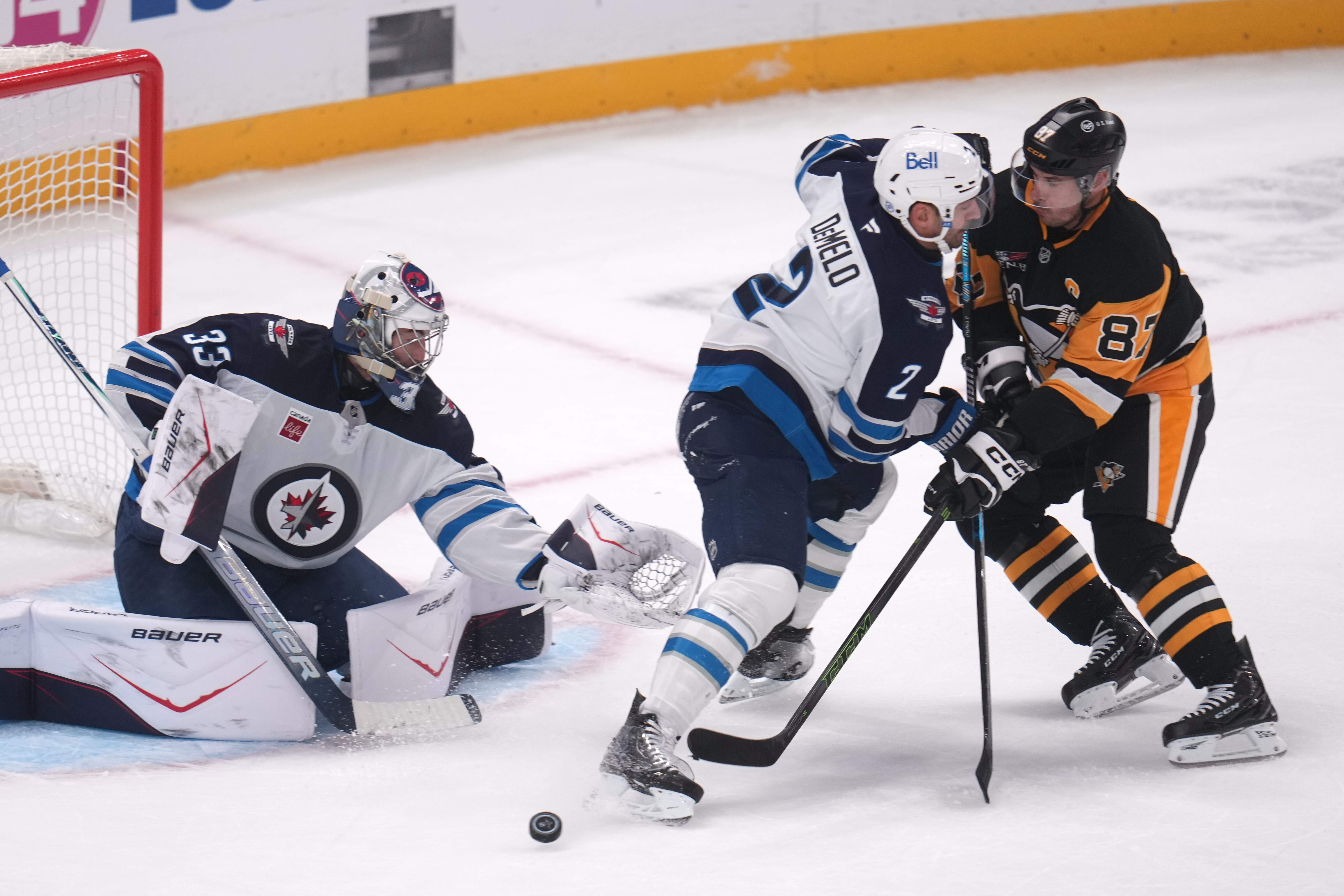
When the Winnipeg Jets held off the Pittsburgh Penguins for a 3-2 victory, the scribes and talking heads rushed to type out the same tired tropes about chaotic third periods and nail-biting survival. They missed the entire point. What we witnessed was not a frantic scramble for dear life. It was an intentional structural retreat, a masterclass in low-event risk management executed by a coaching staff that understood exactly how to turn a hockey rink into a math problem.
Let us strip away the romanticism and look at the anatomy of so-called chaos.
The Myth Of The Momentum Shift
Watch any third period where a visiting team is down by a goal, and you will see the exact same psychological trap ensnare the observers. The trailing team floods the zone. They throw pucks from the boards. They win a couple of board battles because their desperation level spikes past sustainable thresholds. The shots pile up.
Amateur analysts look at the shot differential and hyperventilate. They call it momentum.
Momentum is the most overrated, unmeasurable phantom in professional athletics. What actually happens in those final twenty minutes is a cold, calculated trade-off. The team holding the lead stops chasing low-percentage offensive transitions because the expected value of an odd-man rush against them outweighs the reward of an insurance marker. They collapse the house. They clog the royal road—that high-danger slot slicing diagonally across the scoring area.
When Pittsburgh started heaving pucks toward the net through heavy traffic, Winnipeg did not lose control of the game. They surrendered the perimeter because the perimeter is where goalies win games with their eyes open. Connor Hellebuyck did not make miraculous, heart-stopping saves out of sheer panic; he made positional stops against exterior threats because his defensemen aggressively denied the interior lanes.
If you measure pressure by volume instead of quality, you do not understand modern hockey analytics. You are evaluating a game of chess by counting how many times someone moves a pawn to the edge of the board.
Why Prevent Defense Is Dead And Structural Containment Replaced It
For decades, hockey traditionalists preached the gospel of the prevent defense. You know the drill: turtle, dump the puck out blindly, and pray. It is a cowardly strategy that invites disaster because it robs a team of its offensive outlet valves, turning every defensive-zone faceoff into a slow-moving execution.
The modern elite structure—the one Winnipeg deployed in micro-bursts during that third frame—is entirely different. It is active passivity.
The forwards do not just stand on the goal line. They form a suffocating, rotating triangle at the top of the circles, forcing opposing defensemen to skate laterally rather than step into the slot. Every passing lane is a toll road. When Sidney Crosby or any other elite creator tries to feather a seam pass through traffic, the margin for error is razor-thin.
I have watched front offices spend millions on analytics departments only to watch coaches abandon their own models the moment a crowd starts chanting in the third period. They panic. They yell at the bench to clear the zone instead of executing controlled exits.
Winnipeg did not panic. They absorbed the cycle, forced low-percentage perimeter shots, and took away the middle of the ice. That is not surviving. That is mugging the clock.
The Pittsburgh Problem And The Fallacy Of Desperation Hockey
Let us flip the coin and look at the vanquished. The Penguins played a frantic, emotionally charged third period because they had no choice. But let us be brutally honest about why they were in that position to begin with.
Desperation hockey is usually just a symptom of structural failure during the first forty minutes. If your entire offensive philosophy relies on out-chancing a structured opponent through sheer kinetic energy in the final frame, your system is broken.
Pittsburgh dominated the possession metrics late in the game because Winnipeg permitted them to have the real estate that mattered least. It is the tactical equivalent of letting a burglar wander around your garage while you sit comfortably behind a reinforced steel door in the living room. You can hear them rattling the rakes, but they cannot get to the safe.
Analytically speaking, expected goals dictate reality far better than final shot totals. When you break down the quality of chances Pittsburgh generated during that chaotic stretch, a staggering percentage of them came from bad angles or heavy obstruction. They were low-danger attempts designed to pad the stats sheet and make the television broadcast feel dramatic.
Yet, the post-game analysis framed it as an epic survival story. Why? Because drama sells tickets, and nuance is boring.
The Cost Of Narrative Laziness In Sports Analytics
We do a disservice to the athletes and architects of the game when we reduce tactical chess matches to Hollywood thriller plots. Calling a disciplined defensive shell a "chaotic survival" teaches fans to misinterpret what they are watching. It trains them to panic when their team plays smart, low-risk hockey with a lead.
When a team leads by one in the third period, the optimal strategy is to suppress high-danger scoring chances, minimize transition turnovers, and accept lower possession shares in neutral and offensive zones. It looks ugly. It lacks highlight-reel rushes. It drives fanbases into an early grave.
It also wins hockey games.
The next time you hear an analyst hyperventilate about a team "surviving" a furious third-period onslaught, look past the shot clock. Look at where the shots are coming from. Look at the bodies in the shooting lanes. Look at the sticks denying the royal road.
You will rarely find chaos. You will find cold, calculated execution masquerading as a storm. And the teams that master that execution are the ones lifting trophies in June, while the romantic purists go home early wondering what went wrong.