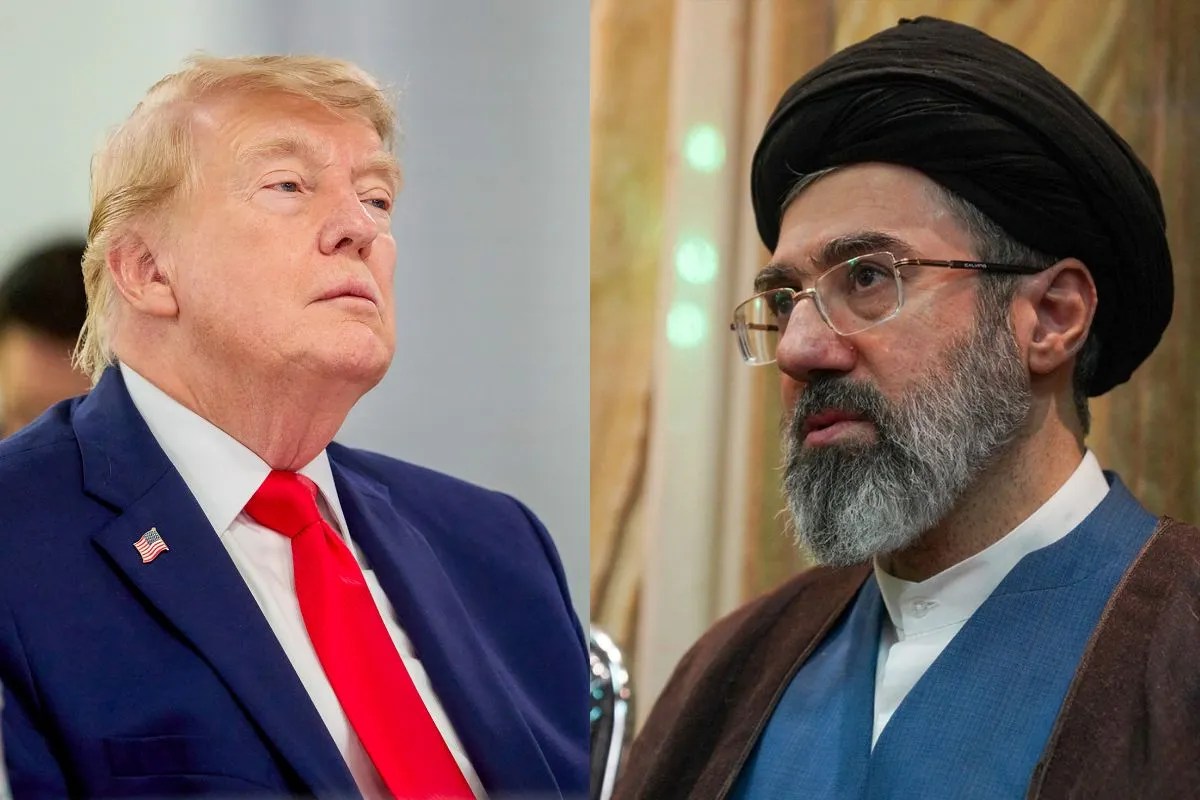
Every major newsroom treats US-Iran escalations like a bad Hollywood thriller. You get the predictable script. A strike happens in the Middle East. The Islamic Revolutionary Guard Corps promises fierce retaliation. Pundits on cable television hyperventilate about impending regional conflagration. Diplomats rush to microphones to preach the gospel of restraint.
It is exhausting theater. And it is completely wrong. Don't miss our previous coverage on this related article.
The lazy consensus in international relations is that Washington and Tehran are locked in a permanent, zero-sum spiral toward total war, occasionally interrupted by fragile diplomatic breathers. This narrative treats both governments as reactive hotheads perpetually one miscalculated drone strike away from Armageddon.
Look past the red-meat rhetoric and the reality is far more cynical, structured, and rigidly managed. What the talking heads call chaos is actually a highly regulated choreography of controlled violence. Both sides know exactly where the guardrails are, and more importantly, they know how hard they can lean against them without breaking the glass. To read more about the context here, Reuters provides an excellent summary.
The Anatomy of Managed Escalation
When an American strike hits an Iranian-backed proxy position, or when the IRGC launches a retaliatory barrage of drones toward an installation, observers mistake the noise for a structural breakdown. It is the opposite. It is institutionalized venting.
Think of these military exchanges as pressure valves on a high-pressure boiler. Tehran needs to feed domestic and regional narratives of defiance to maintain the legitimacy of the regime's ideological core. Washington needs to project deterrence and punish proxy aggression to satisfy domestic hawks and secure regional alliances.
When a missile flies, it is rarely designed to achieve a strategic military breakthrough. It is calibrated. Trajectories are telegraphed. Targets are chosen for their symbolic value rather than their existential threat. If the IRGC genuinely wanted to trigger a catastrophic regional war that closed the Strait of Hormuz permanently, global energy markets would look very different within sixty seconds. They do not do this because a total war is the one thing that guarantees the rapid, violent collapse of the clerical establishment in Tehran.
Survival is the supreme law of politics. The Iranian leadership understands this better than any Western think-tanker giving interviews in Washington.
The Myth of Accidental Armageddon
The most pervasive panic in modern foreign policy circles is the fear of the stumble. The theory states that two armies staring each other down across the Persian Gulf will eventually blunder into a global conflict through a series of tragic misunderstandings.
This gives incompetent actors far too much credit while denying strategic rationality to the players. Real-world military forces maintain dense networks of backchannels, deconfliction lines, and tactical red lines. Commanders on the ground are risk-averse precisely because their political masters back home have zero appetite for an unbudgeted, unbounded quagmire that drains treasury reserves and political capital.
When an exchange occurs, intelligence agencies on both sides spend hours verifying intent before a response is authorized. The fog of war is real, but strategic surprise is heavily filtered by institutional caution.
Why Diplomacy is Always a Prop
Whenever tensions spike, the media fixates on diplomatic shuttles. Envoys fly between European capitals and Middle Eastern hubs, trying to broker a grand bargain.
They fail every single time because they are trying to solve a problem that neither side actually wants solved. A permanent peace treaty between Washington and Tehran would destroy the domestic political utility of the conflict for both governments.
For hardliners in Tehran, the Great Satan is an essential organizing myth. Without the constant threat of American subversion, how do you justify domestic crackdowns, economic failures, and ideological rigidities? The foreign threat is the oxygen the regime breathes.
Conversely, for Washington, the persistent Iranian bogeyman serves as the eternal justification for arms sales to Gulf monarchies, forward-deployed naval architectures, and a permanent security footprint in West Asia. Peace cuts budgets, disrupts procurement pipelines, and forces politicians to talk about boring domestic infrastructure instead of heroic foreign policy stances.
The diplomats are not failing because they lack skill. They are failing because success would put them out of a job.
The Real Danger Everyone Misses
While everyone is staring at the sky waiting for the next ballistic missile test or retaliatory drone swarm, the real transformation is happening quietly in the background, entirely unbothered by the daily news cycle.
Iran is not preparing for a massive conventional war against the United States. It doesn't have to. Tehran has spent decades perfecting asymmetric deterrence through maritime disruption capabilities, cyber warfare units, and a deeply entrenched regional network of non-state actors who operate below the threshold of conventional warfare.
At the same time, Washington is quietly pivoting its attention, resources, and institutional bandwidth away from the Middle East entirely. The strategic horizon in the Pentagon is dominated by great power competition in the Indo-Pacific. Every dollar spent managing skirmishes in the Persian Gulf is viewed by strategic planners as a distraction from the long-term containment of Beijing.
This means American tolerance for Iranian shenanigans is shifting. Washington no longer wants to reshape the Middle East or overthrow regimes; it wants cheap stability and minimized exposure.
When you understand this shift, the daily headlines stop looking like chapters in an unfolding tragedy. They look like what they truly are: the dying gasps of an obsolete paradigm, managed by actors who know the script by heart, performed for an audience that refuses to look at the backstage machinery.
Stop reading the updates looking for the spark that burns down the region. There is no spark coming, because nobody holding the matches wants to get burned.

