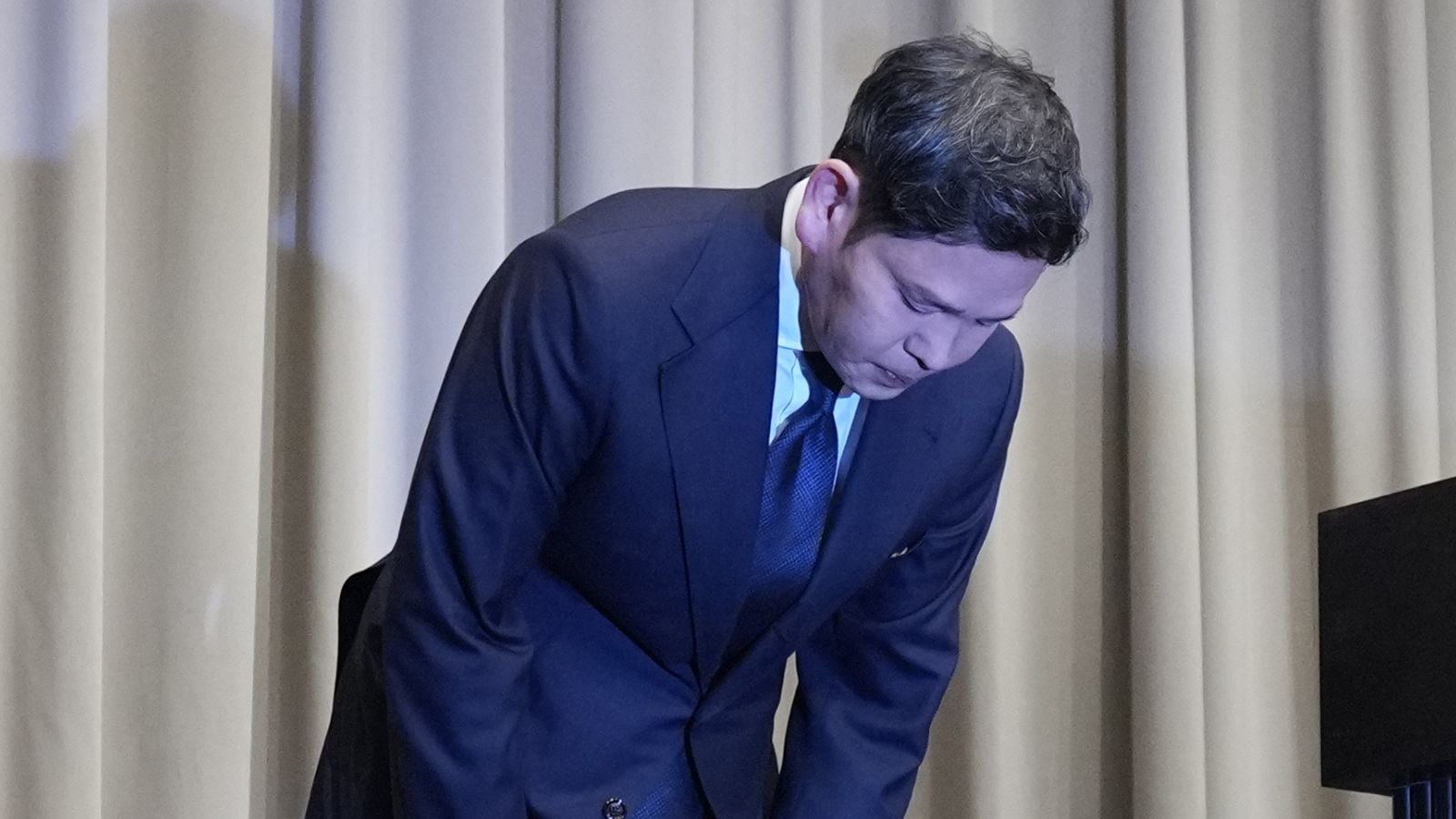
Corporate crisis management loves a good performance. When Shinsegae Group Chairman Chung Yong-jin stood before cameras and bowed three times to apologize for Starbucks Korea’s disastrous "Tank Day" marketing campaign, the media ate it up. Commentators rushed to analyze the depth of his spine’s angle, treating the gesture as a profound moment of accountability and cultural shame.
It was nothing of the sort.
The three bows were a masterclass in theater. They were a calculated, cynical maneuver designed to insulate the parent company, protect a 67.5% market stake, and shift the blame entirely onto anonymous subordinates. Treating this performance as genuine contrition ignores the cold reality of how corporate power operates in South Korea’s chaebol ecosystem.
The Illusion of Absolute Accountability
The narrative presented by mainstream coverage is comforting: a tycoon realizes his company crossed a line, steps up, and takes the bullet. But looking closer at the mechanics of the "Tank Day" fiasco reveals a different story.
The campaign dropped on May 18, the exact anniversary of the 1980 Gwangju Democratic Uprising. It paired a massive tumbler called the "Tank" with the tagline "Thwack it on the table!"—a phrase triggering immediate, painful memories of the 1987 police cover-up involving the torture death of student activist Park Jong-chol.
Starbucks Korea "Tank Day" Campaign Structure:
[May 18 Launch] ──> [Product Name: "Tank"] ──> [Slogan: "Thwack it!"]
                           │                             │
                           ▼                             ▼
                (Gwangju Uprising Tanks)       (1987 Torture Cover-up)
The backlash was instant, fierce, and entirely justified. Within hours, the promotion was canceled and Starbucks Korea CEO Sohn Jeong-hyun was fired.
Firing a chief executive within hours of a marketing blunder is not accountability; it is a human sacrifice designed to halt an escalating crisis before it reaches the chairman's office. When public outrage continued to build anyway, fueled by calls for boycotts and condemnation from political figures like President Lee Jae-myung, the chairman had to deploy the ultimate crisis management weapon: the televised personal apology.
I have watched companies burn millions of dollars trying to manage brand fallout, and the playbook never changes. When a crisis threatens systemic revenue, you do not solve the root problem. You offer the public a dramatic performance of grief.
Chung stated that "all responsibility lies with me," while simultaneously ensuring that the consequences fell everywhere else. The local CEO was already gone. Rank-and-file marketing employees were subjected to aggressive internal audits, with some refusing to hand over their personal smartphones. The chairman takes the symbolic blame; the employees take the actual pink slips.
The Real Cost of Corporate Backlash
The immediate corporate response was driven by survival, not shame. Starbucks Korea isn't just another coffee franchise; it is a massive revenue engine for Shinsegae Group. When Interior and Safety Minister Yoon Ho-jung declared that government events would ban Starbucks products, the issue shifted from a public relations headache to a material threat to the bottom line.
Data from previous corporate boycots in South Korea shows that consumer anger can trigger sharp sales declines that take quarters to reverse. A localized scandal can erase millions in value in days.
| Metric | Immediate Impact of "Tank Day" Controversy |
|---|---|
| Starbucks Korea Revenue | Sharp, immediate drop in daily retail store sales |
| Government Procurement | Total ban on products at state-level events |
| Executive Turnover | Immediate termination of local CEO and marketing head |
| Legal Exposure | Open police investigation into historical defamation |
By bowing three times, the chairman wasn't just asking for forgiveness from the families of Gwangju victims. He was trying to stabilize the stock, appease institutional investors, and prevent a temporary consumer boycott from turning into permanent brand decay. The bow is a corporate tool used to de-escalate tension when financial metrics face a cliff.
The Hypocrisy of "Unintentional" Edgelord Marketing
The corporate defense hinges on a single, fragile premise: it was an accident. Senior Shinsegae executives insist they have found no conclusive evidence that marketing staff intended to mock the pro-democracy movement.
This argument is incredibly naive. Modern corporate marketing departments do not launch national campaigns on historical anniversaries by accident. Every asset, copy variant, and launch date passes through multiple layers of review, legal compliance, and executive sign-off. To believe that "Tank Day" on May 18 with a "thwack on the desk" slogan was a triple coincidence requires ignoring how corporate product pipelines function.
Furthermore, this corporate entity operates under a chairman well-known for his provocative social media presence and conservative commentary. In a hyper-polarized political environment, lines between edgy branding, political posturing, and corporate negligence blur completely.
If the campaign was malicious, it represents a shocking failure of human decency. If it truly was an accident, it reveals a level of historical illiteracy and operational incompetence that makes the firing of the local CEO look insufficient. Neither scenario justifies letting the parent organization off the hook just because an executive executed a flawless bow on television.
The Trap of the Staged Apology
The broader danger here is how easily the public accepts the choreography of corporate repentance. We are trained to view these public statements as signs of a healthy corporate culture. In reality, they function as a pressure release valve. They allow a company to reset the narrative without changing its internal incentives, ownership structures, or accountability mechanisms.
True accountability does not happen in front of a camera crew. It looks like independent oversight, transparent internal reviews, giving workers a real voice to flag dangerous campaigns, and a corporate structure where executives cannot use their subordinates as shields.
Stop judging corporate crises by the performance of the executives at the podium. The bows, the somber suits, and the low-toned delivery are just parts of a well-rehearsed script. Look instead at who keeps their wealth, who loses their jobs, and whether the system that created the disaster remains completely unchanged.
The next time a corporate titan bows to save their balance sheet, stop looking at their spine. Look at their hands, and see exactly what they are holding onto.