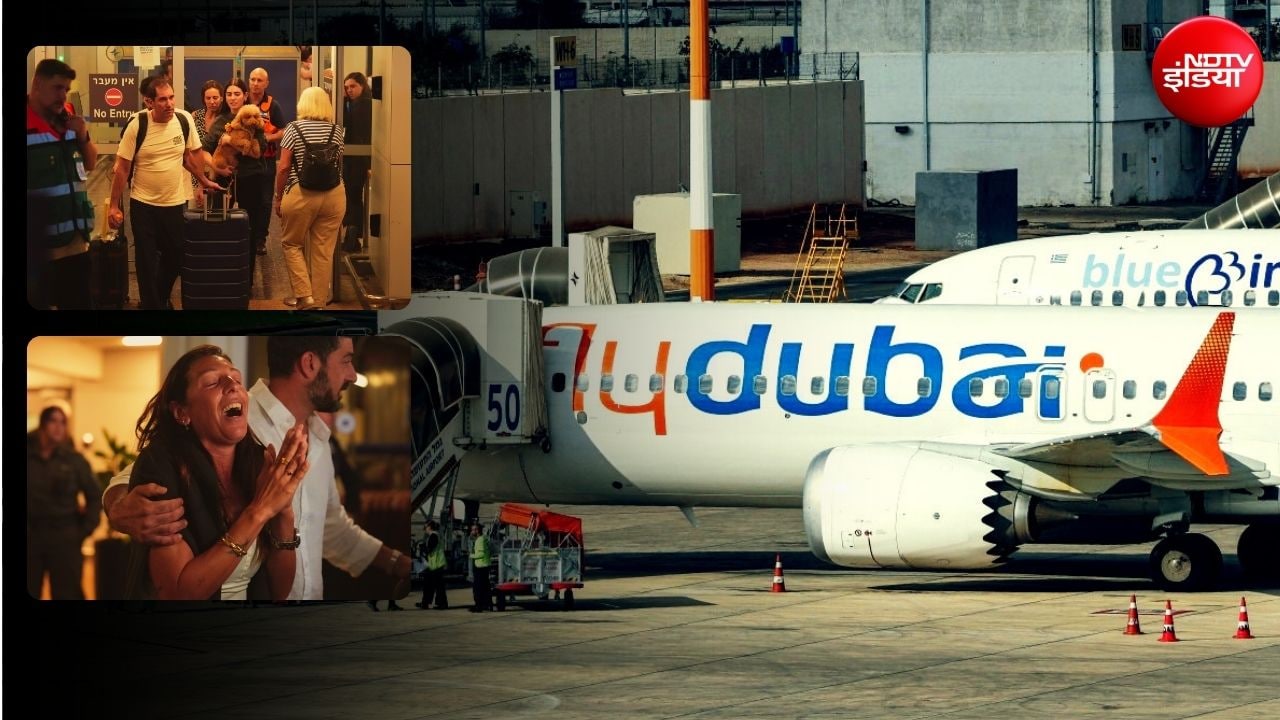
Another mid-air violence incident hits the news cycle, and the collective aviation complex instantly defaults to its favorite comforting illusion. Headlines celebrate the heroic passenger who threw a chokehold on an attacker after a cockpit stabbing, painting the event as a triumph of human grit inside a secure tin can at thirty thousand feet. Passengers nod, clutch their carry-ons, and board their next flight believing the system worked.
The system did not work. The system failed at every single structural checkpoint before the aircraft even pushed back from the gate. Relying on an adrenaline-fueled amateur wrestling match in a narrow aisle to stop a lethal threat is not aviation security. It is rolling dice with two hundred lives and praying the passenger in seat twelve-B happens to crossfit.
I have spent decades watching commercial aviation trade actual risk mitigation for cosmetic comfort. Every time a headline emerges about cockpit breaches, knife attacks, or mid-air stabbings, the industry wheels out the same tired playbook. More baggage checks, heavier liquid bans, and polite announcements reminding everyone to remain vigilant. None of it stops a determined individual with a sharp piece of metal or a ceramic blade smuggled past perimeter screening.
The lazy consensus in mainstream reporting praises the response while ignoring the failure of the design. We treat cabin violence as an unpredictable act of nature rather than the predictable outcome of an architecture that prioritizes passenger throughput and retail revenue over absolute physical containment.
The Architectural Flaw We Refuse to Name
Let us look at the mechanics of the modern narrow-body and wide-body interior. For decades, cabin design has optimized for seat density, galley space, and overhead bin capacity. Security has been bolted on as an afterthought, an external compliance checklist managed by airport authorities rather than an integrated structural reality managed by the airframe manufacturer.
The cockpit door is hardened. That is the great victory of the post-2001 era. Pilots sit behind reinforced barriers designed to withstand small arms fire and kinetic impacts. But what happens the moment a pilot needs to use the lavatory or receive a meal tray? The perimeter breaches. More importantly, the cabin itself remains a completely open, unsegmented free-for-all.
Imagine a scenario where an office building had secure perimeter doors on the ground floor, but once inside, every interior office door was unlocked, unmonitored, and shared a single open corridor where anyone could carry a concealed weapon straight up to the executive suite. You would call that facility an architectural hazard. Yet we put four hundred people inside that exact structural layout, launch it into the stratosphere, and call it safe because everyone took their shoes off in terminal three.
The conventional wisdom claims that airport security checkpoints act as the ultimate filter. If that were true, weapons would never cross the threshold. But security audits consistently demonstrate that contraband slips through human-error-prone screening lanes with alarming regularity. When the checkpoint fails, the cabin is left completely defenseless until someone decides to risk their life in row fourteen.
The Myth of the Hero Passenger
We romanticize the bystander intervention. Media outlets love a good vigilante narrative because it fits a cinematic template. An ordinary traveler turns into an action star, subdues the menace, and saves the day.
This narrative is dangerous. It shifts the burden of defense from the organization collecting the ticket fare to the customer paying for the seat. Airlines have outsourced their physical security responsibilities to mob rule and raw luck.
When a passenger tackles an assailant, they are displaying extraordinary personal bravery, but they are also exposing a catastrophic institutional breakdown. Asking an accountant or a software engineer to neutralize a knife-wielding attacker in a space the size of a walk-in closet is not a security strategy. It is a desperate gamble.
Furthermore, this dynamic creates severe operational liabilities. In a chaotic cabin environment, physical altercations risk accidental decompression, collateral injury to innocent bystanders, and confusion that can easily compromise flight crew focus. The cockpit door is locked for a reason: to keep the flight deck sterile. Yet a wild melee twenty feet away from the instrument panel introduces chaos right outside the most critical barrier on the plane.
Redesigning the Tube
If we want to stop treating symptoms and start curing the disease, we have to look at the physical layout of the aircraft interior. We need to segment the cabin.
Airlines resist interior compartmentalization for one reason: yield management. Every bulkhead, every partition, and every zone divider eats into square footage that could otherwise hold three more economy seats. Carriers calculate risk through an actuarial lens where catastrophic incidents are rare enough to remain cheaper than redesigning the hull.
That calculus is morally bankrupt and strategically fragile.
True cabin security requires physical zoning. Narrow-body and wide-body aircraft should feature reinforced internal dividers with rapid-locking barriers that can instantly isolate cabin sections during a disturbance. Flight attendants should operate behind secure, retractable partitions during high-risk phases of flight.
We also need to address the tooling available to the crew. Handing flight attendants plastic stir sticks and expecting them to manage a violent breach is absurd. Non-lethal containment technology—such as specialized restraint nets, high-expansion foam delivery systems designed for confined spaces, or advanced electro-shock deterrents integrated directly into cabin architecture—should be standard issue.
Critics will argue that these measures add weight, reduce fuel efficiency, and diminish the passenger experience. Let them argue. An uncomfortable flight with redundant security architecture is infinitely preferable to a scenic flight that ends in a morgue.
Dismantling the Compliance Theater
Let us address the questions travelers always ask when these incidents hit the front page. People want to know why metal detectors did not catch the weapon, or why sky marshals were not on that specific flight.
The brutal truth is that sky marshals are a statistical ghost town. They cover a tiny fraction of global departures. Relying on federal agents scattered across a massive commercial fleet is like dropping a single bucket of water onto a forest fire and hoping for the best.
As for airport screening, expecting perfection from underpaid, fatigued contract screeners staring at X-ray monitors for eight hours straight is magical thinking. Technology alone cannot solve a human surveillance failure without a layered defense in depth.
The current model relies entirely on perimeter prevention. Once that perimeter is breached, the defense drops to zero until passengers take matters into their own hands. That is not a security system; that is a single point of failure waiting to be exploited.
My contrarian approach has its own downside, of course. Implementing true structural compartmentalization and advanced interior defense systems would drive up ticket prices, complicate boarding procedures, and draw fierce pushback from airline executives whose profit margins depend on packing every linear inch of aluminum with paying bodies.
I accept that trade-off. Safety that costs nothing is not safety at all.
Stop praising the passenger who had to save his own life with a chokehold. Start blaming the boardrooms that designed a cabin where he had to do it in the first place.