Europe is turning into an oven. During recent summer heatwaves, London sweltered past 36 degrees Celsius while a red warning for extreme heat forced the cancellation of events meant to discuss, of all things, extreme heat. The continent is warming faster than any other on earth.
For decades, European urban planning relied on a simple assumption: summers are mild, nights are cool, and winter is the real enemy. That world is gone. The heavy stone and brick buildings that define historic European capitals are no longer protective shields. Instead, they have become thermal traps.
The real danger isn't just the mid-afternoon peak. It's what Cornell University researchers call the "slow buildup" of heat. European buildings feature high thermal mass, meaning they absorb heat all day and are supposed to release it during cool nights. But when a prolonged high-pressure heat dome settles over a city, nights stay hot. The building breaks its cycle. Heat accumulates day after day inside the walls, indoor temperatures skyrocket, and the human body never gets a chance to recover.
To survive, European cities have to change how they build, live, and look. And the best blueprint for this survival isn't found in Western design manuals, but in the Persian Gulf.
The Myth of the Air Conditioned Desert
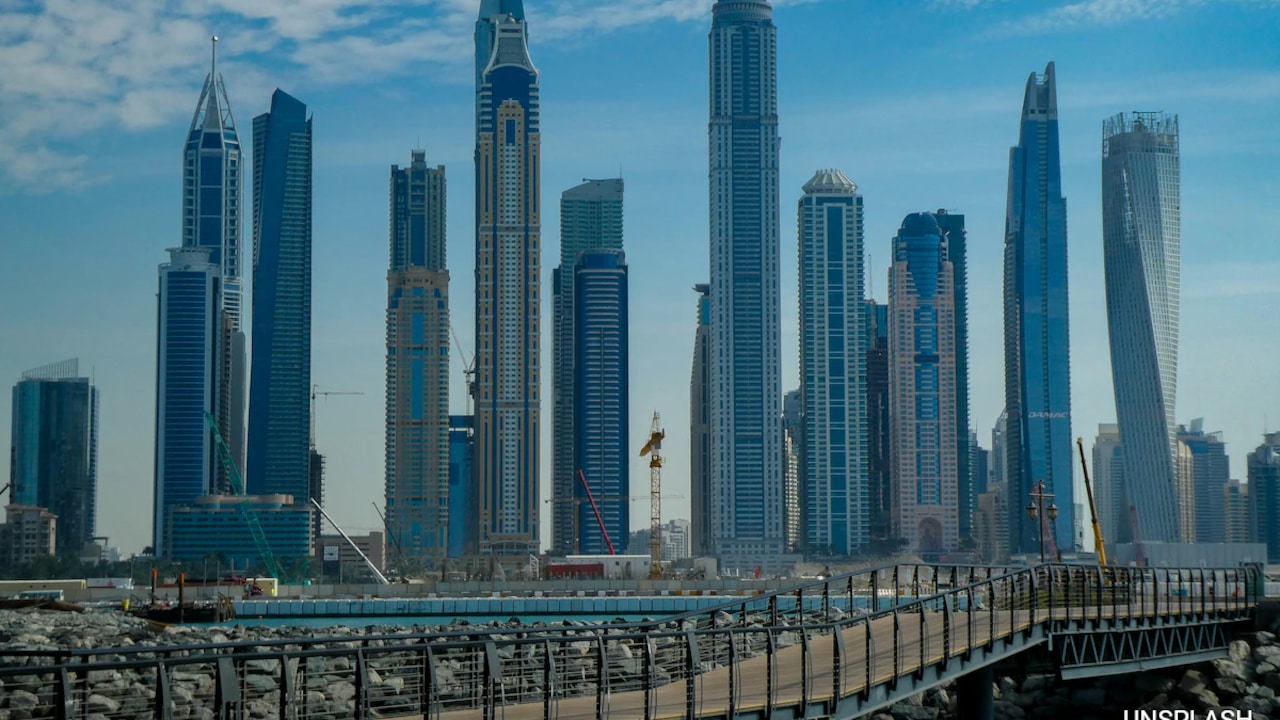
When most people think of climate adaptation in cities like Doha, Dubai, or Abu Dhabi, they picture a brute-force approach. They see glass skyscrapers plugged into massive, fossil-fuel-guzzling district cooling grids. That did happen for a while, but it's proving unsustainable even for resource-rich states.
A quiet architectural shift is happening across the Gulf. Instead of erecting a generic glass tower and trying to fix the internal climate later with massive machinery, urban planners are returning to ancient, passive cooling principles. They're making climate the literal starting point of design.
Take Msheireb Downtown Doha or Abu Dhabi’s Masdar City. These aren't retro-futuristic fantasies; they're modern updates of traditional Gulf architecture. They prove that you can drop the outdoor temperature of a city neighborhood by several degrees without touching an air conditioner remote.
The European approach to heat is reactive. People buy cheap, inefficient portable AC units, which strain the electrical grid and pump more waste heat onto the sidewalk. The Gulf approach is increasingly structural. The building itself does the heavy lifting.
Geometry Over Insulation
European retrofitting conversations almost always focus on insulation and high-tech glass. While those matter, the Gulf demonstrates that building geometry and orientation have a far greater impact on human comfort.
In traditional Gulf design, buildings aren't isolated objects sitting in the middle of a plot. They're packed tightly together. This layout minimizes the surface area exposed to direct solar radiation. The buildings literally shade each other.
The Power of the Deep Façade
Modern Gulf architecture utilizes deep, recessed façades, cantilevered upper floors, and geometric projections. By stepping a building outward as it rises, the structure creates its own shadow over the street below and the windows underneath.
Another major tool is the mashrabiya, a traditional carved wooden lattice screen. Modern versions made of lightweight composites or stone wrap around buildings like a breathable second skin. They block up to 90% of direct solar heat gain while still allowing natural light and breezes to pass through.
Compare this to a standard apartment block in Madrid, Paris, or Berlin. Flat, flush windows bake in the sun for twelve hours a day. The glass acts as a greenhouse, trapping infrared radiation inside rooms that lack exterior shutters or shading devices.
Courtyards as Thermal Chimneys
The central courtyard is a staple of hot-climate design that Europe largely abandoned in modern multi-family housing. In a dense urban block, a courtyard acts as a microclimate regulator.
During the middle of the day, hot air rises out of the open courtyard. This creates a low-pressure pocket that draws cooler air out from the surrounding shaded rooms and narrow walkways. If you add plants and a small water feature, evaporative cooling lowers the ambient temperature even further. It's a completely silent, zero-energy air pump.
Fixing the Street Section
Europeans love their wide, sunny avenues. In a warming world, those avenues are liabilities. Wide asphalt streets act as massive heat sinks, absorbing radiation and raising ambient temperatures across whole neighborhoods.
In hot climates, public space is defined by the street section—the ratio of a street's width to the height of its buildings. Narrowing the streets ensures they stay shaded for the vast majority of the day.
When Msheireb Downtown Doha was planned, designers used wind-tunnel modeling to map how coastal breezes move. They aligned narrow streets to funnel these prevailing winds through the city center, creating natural ventilation corridors. They also built continuous overhangs so pedestrians can walk across the entire district without ever stepping into direct sunlight.
The result is a return to functional public space. When streets are shaded and ventilated, people actually walk, sit, and gather outside, even in intense summer heat. The city remains a living community rather than an obstacle course of heat exhaustion between air-conditioned buildings.
Changing the Rhythm of Life
Adaptation isn't just about concrete, stone, and wind towers. It's about lifestyle. The Gulf states survived for centuries because human behavior adapted to the environment, not the other way around.
In Europe, the concept of the midday pause or siesta is often viewed as a quaint cultural relic or an economic inefficiency. But fighting the midday sun is a losing battle. In the Gulf, the city's rhythm shifts completely during the hot months. Outdoor construction stops during peak afternoon hours by law. Retail, socializing, and civic life shift heavily into the late evening and night.
European corporate and school schedules remain rigidly fixed to a temperate climate model. Expecting workers to maintain peak cognitive and physical output in a 38-degree office with no cooling isn't realistic. The European Environment Agency notes that heat stress drastically reduces productivity and threatens lives, particularly among an aging population.
Your Immediate Heat Adaptation Checklist
European historic centers can't be torn down and rebuilt with narrow alleys and wind towers. Preserving heritage means adaptation must happen through smart intervention. If you're managing a property or retrofitting a home to handle the new normal, look at passive physics first.
- Stop the sun before it hits the glass: Internal blinds or curtains only stop light, not heat. Once solar radiation passes through your window pane, the heat is already inside. Install exterior shutters, awnings, or tensioned shade sails. Even a temporary bamboo screen on the outside of a window makes a massive difference.
- Master night flushing: Don't open windows during the day when the outside air is hotter than the inside air. Keep the building sealed. The moment the outside temperature drops below the indoor temperature at night, open windows on opposite sides of the space to create a cross-breeze, flushing out the stored structural heat.
- Create a microclimatic barrier: If you have a balcony or terrace, pack it with leafy potted plants. Greenery absorbs solar radiation for photosynthesis instead of reflecting it like concrete, and transpiration naturally cools the air entering your home.