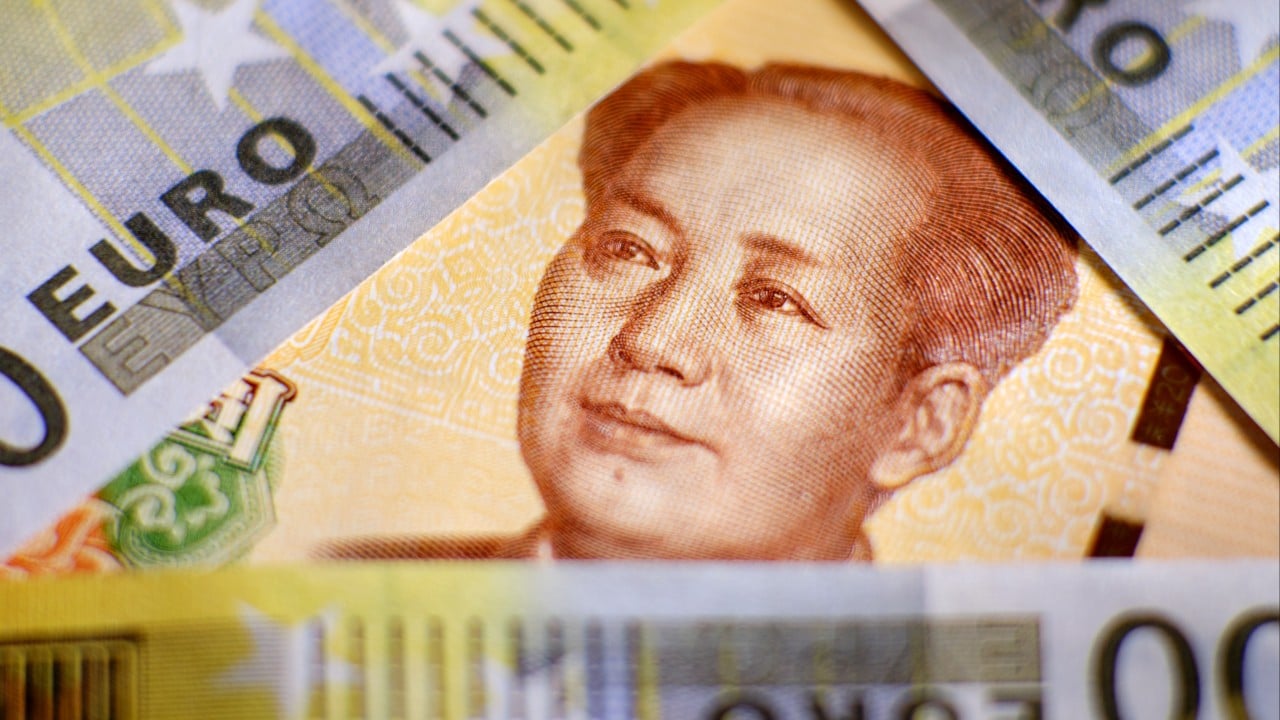
European Union officials are packing their bags for Beijing with a single message: fix your currency.
Led by European Commission Director-General Maarten Verwey, a high-level economic delegation is landing in China to push for a stronger yuan. Top European figures—including European Central Bank President Christine Lagarde and Eurogroup President Kyriakos Pierrakakis—are scheduled to follow in coordinated visits. Also making headlines lately: Big Oil’s Blowout Profits Are Actually a Death Rattle for the Industry.
The primary target isn't just trade tariffs or market access rules anymore. It's the exchange rate.
Brussels faces a trade deficit with China running at roughly €1 billion a day. European industrial leaders argue that an undervalued yuan acts as an invisible subsidy, letting Chinese manufacturers flood European markets with cheap electric vehicles, solar equipment, and industrial machinery. More insights on this are detailed by The Economist.
The math looks simple on paper: force Beijing to let the yuan appreciate, boost European price competitiveness, and narrow the trade gap.
In reality, the strategy is flawed. Demanding currency adjustments from China won't save European industry, and assuming Beijing will comply ignores how China manages its economy.
The Real Math Behind the Cheap Yuan Controversy
European leaders aren't pulling currency numbers out of thin air. Independent economic models indicate the Chinese yuan has been trading well below its fundamental equilibrium.
Analysis published by former U.S. Treasury official Brad Setser at the Council on Foreign Relations estimates the yuan has been undervalued by as much as 30% to 35%. While China reports an official current-account surplus around 4% of GDP, adjusted calculations—accounting for massive gold imports and foreign investment income distortions—suggest the true surplus sits between 5.5% and 6% of GDP. When run through the IMF's External Balance Assessment methodology, that signals a massive currency misalignment.
This price distortion hurts European factories directly.
When a Chinese manufacturer exports an electric vehicle or an industrial pump into Germany or France, the weak yuan creates an immediate 30% price discount before any production efficiency gets factored in. Combine that with China's massive state subsidies in manufacturing, and European producers find themselves completely outmatched on price.
The results show up clearly in manufacturing data across the continent. Factory output in Germany, Italy, and France has stagnated while Chinese exports into the bloc reach historic highs. Brussels views currency revaluation as a quick fix to level the playing field without triggering an all-out tariff war.
Why Beijing Will Fight Any Forced Appreciation
Brussels expects Beijing to adjust its currency policy to preserve smooth trade relations. That's wishful thinking.
China faces severe economic headwinds at home. The Chinese domestic market is struggling with a prolonged property market slump, weak consumer confidence, and persistent deflationary pressure. Domestic spending isn't strong enough to drive national growth.
Exports are keeping the Chinese economy afloat.
If the People's Bank of China (PBOC) allows the yuan to appreciate rapidly, Chinese export prices will jump globally. Margins for domestic manufacturers would collapse, triggering factory shutdowns and widespread job losses.
China's central bank has shown zero appetite for rapid currency movement. Even when the PBOC nudged its daily yuan fixing stronger to around 6.71 per dollar, officials simultaneously deployed foreign exchange reserve requirements to throttle rapid gains. Strategists at Credit Agricole point out that Beijing's actions signal tolerance for only tiny, tightly managed moves.
Beijing isn't going to sacrifice its export sector to solve Europe's trade balance.
Chinese officials counter European complaints by asserting that the trade imbalance stems from structural issues inside Europe—namely high energy costs, rigid labor laws, and slow technological adoption—rather than currency manipulation.
Europe's Real Problem Isn't Foreign Exchange Rates
Blaming the yuan gives European policymakers a convenient external scapegoat for internal weakness.
Even if the yuan surged 20% overnight, European manufacturers wouldn't suddenly regain market dominance. The price gap between Chinese and European industrial goods runs far deeper than a currency conversion rate.
Consider the fundamental cost drivers:
- Energy Costs: European manufacturers pay up to four times more for industrial electricity and natural gas than their Chinese counterparts.
- Supply Chain Integration: China built hyper-concentrated manufacturing hubs where raw materials, battery cells, microchips, and final assembly happen within miles of each other. European supply chains remain fragmented across borders.
- Capital Allocation: China funneled hundreds of billions of dollars directly into advanced manufacturing under its "new quality productive forces" initiative. European investment capital remains tied up in strict regulatory compliance and legacy infrastructure.
If the yuan appreciates, Chinese producers will cut profit margins or shift final assembly to third countries like Vietnam, Mexico, or Hungary to keep prices low. A stronger yuan doesn't automatically translate to higher factory orders in Munich or Milan.
How Businesses Should Prepare for the Escalation
The diplomatic push in Beijing will yield polite joint statements, but little real currency adjustment. Once European officials realize currency talks won't close the €1 billion daily deficit, Brussels will fall back on harder trade weapons.
Expect a sharp escalation in trade friction over the coming months.
Companies operating between the EU and China need to act now rather than wait for policymakers to figure things out.
- Audit Supply Chain Foreign Exchange Exposure: If your business imports Chinese components, don't assume current exchange rates are stable. Build 5% to 10% currency fluctuation cushions into purchasing contracts.
- Prepare for Aggressive EU Subsidies Scrutiny: European regulators are scaling up investigations under the Foreign Subsidies Regulation (FSR). If your operations rely on Chinese state incentives or cheap supplier pricing, document every transaction to survive regulatory audits.
- Diversify Production Footprints: Relying solely on direct Chinese exports to supply the European market carries growing tariff risk. Companies expanding assembly nodes into South East Asia or Eastern Europe will shield themselves from incoming European trade penalties.
Relying on currency negotiations to solve structural industrial imbalances never works. Europe can ask for a stronger yuan all day long, but real trade competitiveness gets built on the factory floor, not at diplomatic summits in Beijing.