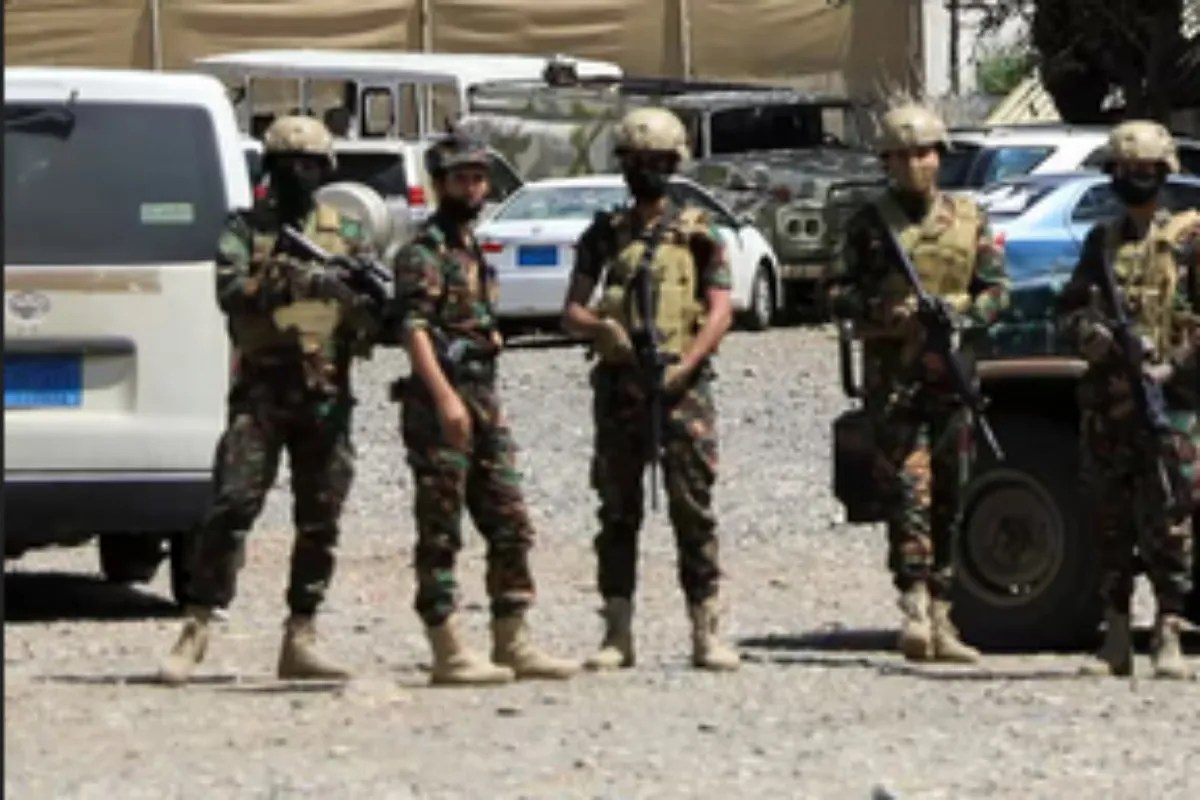
Five fatalities from artillery shelling in Saada on November 13, 2026, appear minor against a conflict that has claimed thousands of lives over more than a decade. Measured on a tactical casualty ledger, five deaths barely register. Measured as a diagnostic signal of regime friction, territorial pressure, and renewed attrition after years of uneven quiet, that number points to a much larger structural shift in the war between Yemen's government forces and the Houthi movement.
Conventional breaking-news reporting treats an incident like shelling in Saada as an isolated episode inside an endless war. That framing misses the mechanics driving the violence. A brief dispatch reporting five deaths in the Houthi movement's founding heartland typically stacks three disconnected facts: a casualty count, a generic claim that both sides are trading blows to expand influence, and a quick nod to humanitarian strain or diplomatic votes. Treating a five-person toll as either a self-explanatory tragedy or mere background noise obscures how localized artillery strikes interact with supply corridors, diplomatic pressure, and regional escalation.
Understanding the current phase of the conflict requires replacing descriptive headlines with three analytical models: The Attrition-to-Escalation Loop, The Three Pillars of Frontline Leverage, and The Cost Function of Humanitarian Disruption. Together, these frameworks explain why a localized strike in Saada matters, what is verified versus inferred in frontline reporting, and what strategic adjustments policymakers and analysts should make next.
Deconstructing the Competitor Narrative
Standard wire-style coverage of Yemeni clashes relies on a predictable sequence. First, it anchors on an immediate body count—here, five people killed in shelling in Saada. Second, it invokes symmetry: both sides are attacking each other's positions to capture territory and expand influence. Third, it appends adjacent developments—such as a United Nations Security Council sanctions renewal or World Food Programme food-aid shortfalls in Taiz—as parallel items rather than linked variables.
Three analytical flaws weaken that approach.
First, symmetrical framing masks asymmetrical capability. Yemeni government forces and Houthi forces do not fight with identical force structures, terrain advantages, or external backing. Saada is not just another contested district; it is the historical and ideological base where the Houthi movement originated and consolidated its power. Shelling inside Saada tests rear-area security and psychological insulation in ways that skirmishes along shifting frontlines do not. Meanwhile, Houthi operations have combined local clashes with long-range ballistic and cruise missile or drone activity targeting government hubs and regional infrastructure. Calling both sides' actions a simple push for territorial expansion flattens distinct military doctrines into a single cliché.
Second, adjoining facts are presented without causal wiring. When an article mentions shelling in Saada, a UN sanctions vote, and aid shortfalls in Taiz in the same breath, the reader is left to guess how they connect. Sanctions shape procurement, financial channels, and diplomatic leverage; humanitarian bottlenecks alter civilian vulnerability and local governance legitimacy; frontline shelling shifts troop allocation and force readiness. Listing them side by side without mapping their interactions turns a system into a bulletin board.
Third, vague time horizons erase turning points. Phrases like "the war continues" or "attacks have increased over the past two months" blur the difference between low-grade boundary friction and a broader breakdown of relative calm. Following the relative lull that began in April 2022, renewed escalation across multiple provinces—including Taiz, Lahj, Marib, and areas near Sanaa—has produced heavy cumulative casualties recorded by international monitors since August 2026. Without separating chronic baseline violence from renewed multi-front pressure, a five-person toll looks arbitrary rather than diagnostic.
Known Facts Versus Educated Hypotheses in Wartime Reporting
Rigorous analysis of Yemen requires separating verifiable reporting from contested claims and analytical inference. Frontline casualty figures in active war zones are notoriously difficult to audit independently because access is restricted, combatant and civilian losses are sometimes conflated or disputed, and parties to the conflict have strong incentives to inflate adversary losses while minimizing their own.
Established Reporting Parameters
- The November 13, 2026 Saada incident: Reporting on the clash indicates that artillery shelling by Yemeni army forces in Saada—a long-standing Houthi stronghold and the group's place of origin—resulted in five deaths.
- Broader post-April 2022 escalation: After a period of relative calm starting in April 2022, hostilities intensified again from July 2026 across provinces including Taiz, Lahj, and Marib, with World Health Organization figures cited in late November 2026 recording 2,361 deaths and 10,982 injuries between August and November 23.
- Multi-domain exchanges: Recent reporting documents concurrent exchanges involving ground clashes, artillery, coalition or government strikes against missile and drone infrastructure, and Houthi missile or drone attacks affecting Yemeni sites as well as Saudi targets.
- Diplomatic and humanitarian pressures: UN Security Council targeted sanctions on Yemen were extended for another year with unanimous backing, while humanitarian agencies have warned of severe food assistance gaps affecting hundreds of thousands of people in areas such as Taiz alongside access constraints along the western coast.
Educated Hypotheses and Analytical Inferences
Because independent verification on the ground is limited during active shelling, several causal links remain analytical hypotheses rather than settled facts:
- Rear-area signaling hypothesis: Shelling inside Saada likely serves not only to attrit local assets but also to signal that Houthi core territory is not immune from pressure while forces are stretched across southern and central fronts.
- Cross-front resource diversion hypothesis: When fighting intensifies simultaneously in Taiz, Lahj, Marib, and near Sanaa, commanders on both sides face tighter trade-offs between holding defensive lines, conducting offensive probes, and protecting logistics routes.
- Escalation-retaliation coupling hypothesis: Ground and air pressure against Houthi positions or launch infrastructure can coincide with retaliatory missile or drone strikes, widening the geographic radius of risk beyond immediate frontline trenches.
Distinguishing these tiers prevents a common analytical error: treating a plausible strategic motive as proven fact, or dismissing a real operational pattern merely because exact battle-damage counts are contested.
Conceptual Frameworks for Reading the Conflict
To move past headline-by-headline tracking, analysts and decision-makers need structured mechanisms that show how small tactical events scale into strategic outcomes.
The Attrition-to-Escalation Loop
In protracted irregular and hybrid conflicts, localized attrition rarely stays contained when political objectives remain incompatible. When one side applies artillery or localized ground pressure—such as shelling in a stronghold like Saada—it imposes physical and administrative costs on the adversary. The targeted actor rarely absorbs that cost in silence if it possesses stand-off capabilities or alternative fronts.
Instead, the system enters a feedback loop:
- Local pressure is applied: Artillery, raids, or localized advances degrade positions or disrupt staging areas.
- Prestige and command costs rise: Strikes inside symbolic or historically central territory raise internal pressure on leadership to demonstrate resolve.
- Asymmetric or adjacent retaliation occurs: Rather than matching the opponent's exact tactic at the same spot, the pressured side may strike a different sector, use longer-range systems, or intensify fighting on a secondary front.
- Risk spreads across theaters: What began as a localized clash feeds into broader regional or multi-provincial instability.
Consider an illustrative operational example. Suppose a commander orders indirect fire against an assembly point or supply node in a core district. Even if only five people die, the local garrison must disperse, shift routes, and divert air-defense or counter-battery attention. If that garrison responds by firing rockets toward a contested corridor or launching a drone elsewhere, the net casualty count of the original strike becomes a poor predictor of the resulting instability.
The Three Pillars of Frontline Leverage
Territorial control in Yemen has never been determined by raw headcount alone. Frontline leverage rests on three interdependent pillars:
- Terrain and choke-point control: Mountainous passes, highland basins, and coastal approaches multiply or reduce the effectiveness of artillery, armor, and infantry. Holding high ground or road junctions dictates whether a force can sustain resupply or merely conduct brief raids.
- Logistics and firepower endurance: Artillery tubes, rockets, missiles, drones, fuel, and spare parts determine how long a unit can sustain tempo without culminating. A force with abundant munitions can pin down a larger force; a force starved of resupply must ration fire even when targets appear.
- Command cohesion and local alignment: Frontline endurance depends on whether local tribes, sub-commanders, and administrative networks remain aligned with the central leadership. When local grievances widen or supply lines falter, tactical setbacks can cascade faster than casualty totals suggest.
Weakness in any one pillar constrains the other two. High ground loses value if ammunition runs dry; supply lines matter less if local alliances fracture.
The Cost Function of Humanitarian Disruption
War in Yemen imposes severe civilian costs that feed directly back into the military and political calculus. In classical conflict economics, prolonged disruption of food distribution, healthcare, and market access acts as a compounding tax on household survival and local governance.
When food aid stalls—such as the warnings affecting more than 600,000 people in Taiz, including roughly 200,000 women and children, alongside access hurdles along the western coast—the cost function shifts nonlinearly. Early shortages force households to draw down savings or alter diets; sustained blockages or insecurity around transport routes drive displacement, illness, and dependence on armed actors or informal networks for basic survival.
Crucially, humanitarian strain is not merely a downstream consequence of fighting. Damaged roads, contested checkpoints, and ongoing shelling raise the operational risk and cost of relief delivery, while severe civilian deprivation erodes public trust in whichever authority is expected to provide order or facilitate access.
Operational Playbook for Monitoring and Decision-Making
Analysts, risk managers, and policy teams covering Yemen need a disciplined workflow rather than reactive reading of daily casualty dispatches.
Step 1: Anchor Every Incident in Geographic and Functional Context
When a report flags a strike or clash—whether five deaths in Saada or skirmishes near Taiz, Lahj, or Marib—log four attributes immediately: the exact district, whether the location is a core stronghold, an active front, or a logistics corridor, the weapon system involved (such as artillery, air strikes, drones, or missiles), and the reporting source. A strike on a supply hub carries a very different operational meaning than random harassment fire.
Step 2: Track Multi-Day Trends Instead of Single-Day Spikes
Daily numbers fluctuate sharply based on reporting delays, local tempo, and verification gaps. Compare rolling weekly and monthly windows against baseline post-2022 patterns. Look for synchronization across fronts: simultaneous pressure in multiple governorates combined with long-range exchanges signals a broader operational phase rather than an isolated local flare-up.
Step 3: Cross-Reference Military Tempo With Aid and Diplomatic Chokepoints
Pair military tracking with two non-military indicators: humanitarian access disruptions (such as aid delays in Taiz or western coastal bottlenecks) and diplomatic or sanctions actions. When heightened kinetic activity overlaps with tighter aid access and hardened diplomatic positions, civilian vulnerability rises sharply and off-ramps narrow.
Step 4: Audit Source Bias and Claim Verification
Treat casualty counts from any single belligerent or partisan outlet as provisional. Cross-check claims against international agency reporting, satellite or infrastructure reporting where available, and corroborating accounts from multiple outlets. Explicitly flag where numbers cannot be verified independently.
Limitations of Analytical Models
No analytical framework eliminates fog of war. Data gaps in Yemen remain substantial: remote districts experience reporting lags, civilian and combatant statuses are frequently unclear in rapid dispatches, and clandestine supply networks resist direct observation. Furthermore, escalation dynamics are non-deterministic—a localized strike can trigger wider retaliation on one occasion and produce little immediate spillover on another. Analysts should treat structured models as tools for ranking probabilities and spotting structural shifts, not as crystal balls.
Strategic Recommendation for Decision-Makers
Treat localized strikes like the shelling in Saada as early-warning indicators of multi-front friction, and orient diplomatic, humanitarian, and risk-mitigation efforts around protecting civilian corridors and de-escalatory channels before renewed clashes harden into an irreversible cycle of regional and domestic escalation.