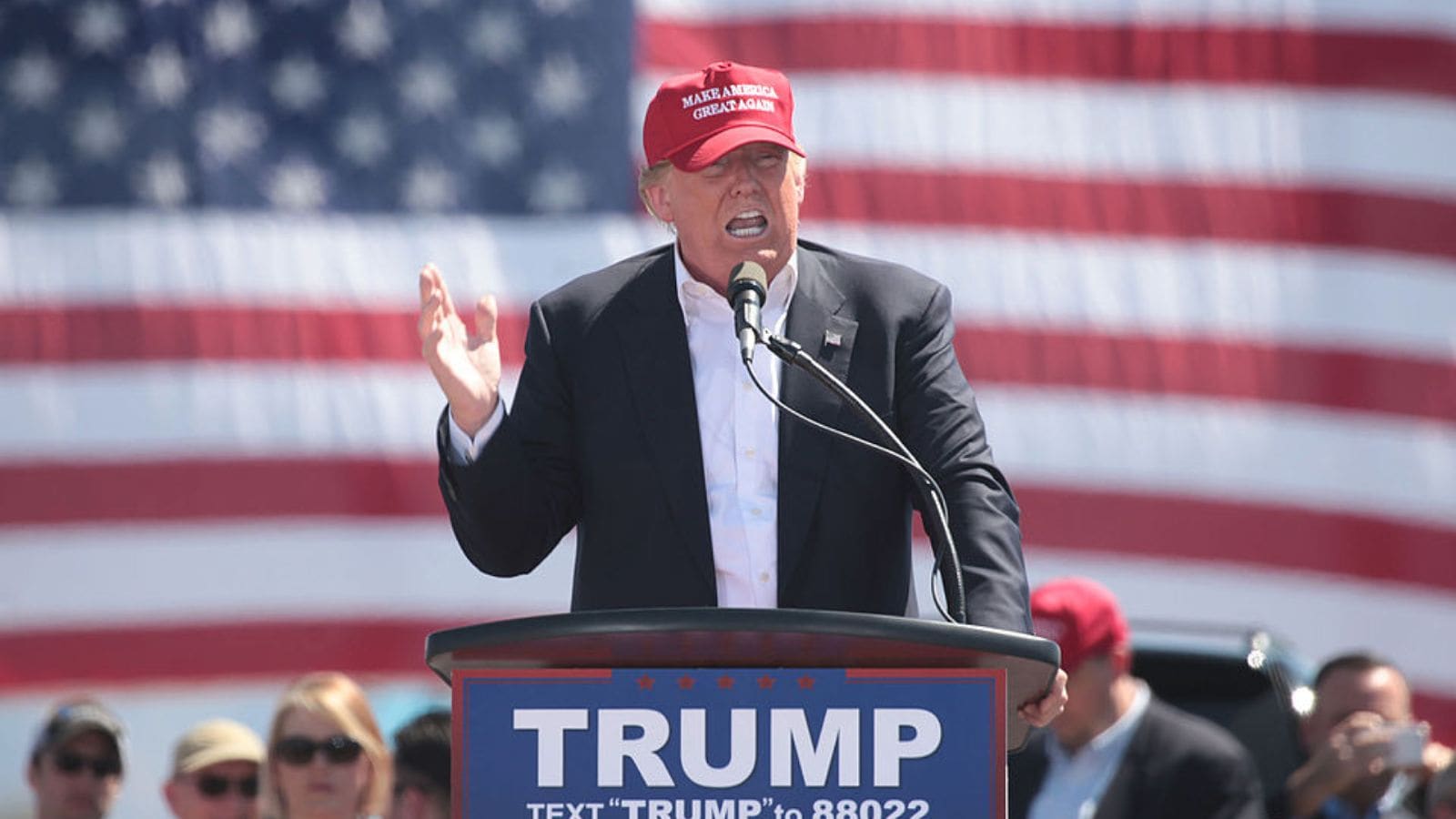
The headlines are busy hyperventilating over Tehran sending a legal bill to Washington for historical grievances, prompting a characteristic table-flip from Donald Trump in the form of a counter-invoice. The mainstream media wants you to view this as geopolitical theater, a bizarre diplomatic slap-fight played out across cable news chyron banners. They treat it as an anomaly, an absurd footnote in the century-long ledger of Middle Eastern hostility.
They are missing the plot entirely.
This isn't theater. It is the raw, unvarnished mechanics of sovereign debt weaponization colliding with a legal framework built for a unipolar world that no longer exists. For decades, international relations have operated on a comfortable fiction: that sovereign immunity is a one-way shield and that great powers can break things abroad without ever having to face an itemized invoice. Iran’s move, ridiculous on its face to any traditional diplomat, represents a structural shift. And Trump’s response wasn't just a clever social media provocation; it was an accidental admission of how modern statecraft actually works. It is all about balance sheets, asset seizures, and the weaponization of domestic courts against foreign treasuries.
I have spent the past fifteen years watching corporations and sovereign entities attempt to litigate geopolitical disputes in jurisdictions that were never designed to hold them. I've seen state departments blow billions on sanctions regimes that leak like a sieve while quietly trading billion-dollar commodities through third-party shell companies. The lazy consensus says that bills sent between hostile capitals are toothless paper tigers. The reality is far more dangerous.
The Myth Of Sovereign Immunity In A Multipolar World
Let us start by correcting a fundamental misconception taught in every introductory international law class: that sovereign states cannot be sued or held financially liable by domestic courts of rival nations without their explicit consent.
That rule worked when the global financial system was anchored entirely in New York and London, and when every major trade route ran through Western-backed maritime chokepoints. Those days are dead.
When Tehran drafts a legal claim demanding war reparations from the United States, they are not expecting a check to clear at the Federal Reserve. They are laying the groundwork for legal reciprocity in secondary jurisdictions. They are creating a template for friendly or non-aligned nations—nations tired of weaponized dollar hegemony—to recognize similar claims against Western assets within their own borders.
When Trump fired back with a counter-bill, he wasn't playing 4D chess; he was reacting to the exact vulnerability that terrifies modern treasury departments: the loss of monopoly control over international financial redress. If every nation can start sending itemized bills for historical interventions, proxy wars, and embargoes, the global financial architecture shifts from a rules-based order to an endless cycle of retaliatory asset freezing.
The Mechanics Of The Counter-Invoice
To understand why this exchange matters, you have to look past the rhetoric and look at the ledgers.
What does an international war damages claim actually look like in practice? It is a compilation of direct military costs, lost GDP, infrastructure destruction, and indirect economic strangulation caused by sanctions. Economists and legal scholars love to debate the methodologies behind these figures. They argue over discount rates, inflation adjustments, and the attribution of blame in complex civil conflicts.
This academic debate is a smokescreen. Sovereigns do not pay war damages because a judge rules against them. They pay—or rather, they lose assets—because their counterparties find parked capital within reach of a court order.
Think about the billions in Iranian assets frozen in European and American financial institutions since 1979. For decades, Western legal systems have treated those funds as perpetual hostages, occasionally redistributing slices of them to victims of terrorism through creative legislative carve-outs. Tehran’s move is a direct counter-strategy to that precedent. If the West can seize sovereign wealth funds to pay domestic judgments, why can't other states pass domestic statutes authorizing the exact same thing against Western corporate assets operating in their spheres of influence?
The moment you open that door, the entire premise of foreign direct investment insurance begins to warp.
The Hypocrisy Of The Ledger
The mainstream commentary focuses on the absurdity of the numbers. How can a state with a shattered domestic economy demand trillions? How can an administration facing its own massive national debt throw counter-claims back across the table?
This line of questioning assumes that these claims are meant to be settled in a courtroom with a gavel. They are not. They are negotiation anchors designed to establish a baseline for future sanctions relief, asset unfreezing, or diplomatic normalization.
Every major power keeps two sets of books. There is the public ledger of diplomatic niceties, treaties, and United Nations resolutions. Then there is the real ledger: the shadow balance sheet of covert operations, structural economic sabotage, currency manipulation, and asset expropriation.
When Washington slaps comprehensive sanctions on an economy, it is imposing a financial penalty without a trial, without due process, and without an appeals mechanism. It is, by any objective definition, an act of economic warfare that extracts trillions of dollars in value from the targeted population.
So when the targeted regime turns around and hands you an invoice for the exact economic damage caused by those sanctions, they are holding up a mirror to the imperial balance sheet. They are using the language of Western jurisprudence against Western capital. It is audacious, it is hypocritical, and it is entirely logical from a game-theoretic standpoint.
Why The Establishment Is Sweating
Watch the reaction of institutional diplomats and career foreign policy experts to these exchanges. They do not laugh it off. They cringe.
They cringe because they know the international legal order is built on a bluff. That bluff relies on the global south accepting a system where Western nations write the rules, enforce the penalties, and exempt themselves from liability.
When rogue actors, sanctioned states, and rising economic heavyweights start treating international law as a weaponized legal marketplace rather than a sacred temple of justice, the rules-based international order stops functioning. You cannot have a global financial system where every participant is simultaneously suing every other participant in domestic courts of convenience.
Trump’s immediate pivot to a counter-bill is the instinctive reaction of a transactional negotiator realizing the rules of the game are being rewritten. Instead of ignoring the absurdity or leaning on traditional diplomatic channels, he met the stunt with an equal and opposite stunt. But in doing so, he legitimized the framework. He treated the hostile legal claim as a valid currency of negotiation.
The Real Risk Ahead
The danger here isn't that Iran is going to collect a check from the US Treasury, nor is it that Washington is going to extract billions in voluntary reparations from Tehran.
The danger is contagion.
When one state successfully normalizes the practice of issuing multi-trillion-dollar sovereign invoices for historical grievances, others will follow. We are watching the gradual balkanization of international law. Multinational corporations operating globally will find themselves caught in cross-jurisdictional crosshairs, where domestic courts in non-aligned nations begin seizing corporate assets to satisfy retaliatory sovereign claims.
The next time you read about a diplomatic spat over historical damages or retaliatory bills, ignore the cable news pundits laughing about the pettiness of it all. Look at the balance sheet. The era of unilateral financial dominance is fracturing, and the invoice is coming due.
Stop waiting for permission from a broken system to protect your capital.