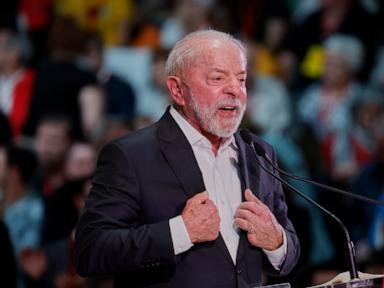
The era of digital immunity in Latin America’s largest economy is over. On May 20, 2026, President Luiz Inácio Lula da Silva signed two executive decrees that fundamentally rewrite the rules of engagement for social media giants operating in Brazil. By shifting the burden of liability from the courts to the companies themselves, the administration has bypassed a stalled Congress to enforce a "duty of care" that forces platforms like Meta, Google, and TikTok to police their own ecosystems or face crippling penalties.
This is not a sudden whim of the executive branch. It is the culmination of a multi-year collision between democratic institutions and the hands-off business models of Silicon Valley. For a decade, Brazil operated under the Marco Civil da Internet, a pioneering "Internet Bill of Rights" passed in 2014. Article 19 of that law provided a "safe harbor" for tech companies: they were only liable for user-generated content if they ignored a specific court order to remove it. That shield has now been shattered.
The Side Road to Regulation
The legislative path to platform accountability, known as the "Fake News Bill" (PL 2630), has been trapped in a circular firing squad of lobbying and political polarization for years. Rather than waiting for a parliamentary consensus that may never arrive, Lula is taking what legal experts call a "side road."
These new decrees align executive policy with a landmark Supreme Court (STF) ruling from earlier this year. The STF declared the old version of Article 19 partially unconstitutional, arguing that a purely reactive regime failed to protect fundamental rights like human dignity and democratic integrity.
Under the new framework, the "notice-and-takedown" model has been bifurcated.
- Honor Crimes: For defamation or personal libel, the court order requirement still stands.
- Systemic Risks: For hate speech, incitement to violence, terrorism, child exploitation, and scams, platforms now have an affirmative duty to act.
If a platform receives an extrajudicial notification about "manifestly illegal" content in these high-risk categories and fails to act, they are no longer shielded. They are liable.
The ANPD Becomes the New Sheriff
Perhaps the most significant structural change is the empowerment of the National Data Protection Authority (ANPD). Historically, the ANPD focused on data privacy and leaks. Now, it has been drafted into the frontline of content moderation oversight.
The decrees grant the ANPD the authority to investigate how platforms respond to illegal content. This moves the debate out of the slow-moving judiciary and into the hands of a regulatory body capable of issuing warnings, massive fines, and even temporary suspensions of service. Critics argue the ANPD is underfunded and ill-equipped for this massive expansion of its portfolio. Skeptics like legal expert Mattheus Puppe have pointed out that an agency already struggling with its primary mandate is now being asked to judge the ethical and legal nuances of millions of daily posts.
Profit and Promotion
The government’s logic is simple: if you profit from it, you are responsible for it. The new rules specifically target algorithmically amplified and sponsored content.
When a platform’s AI pushes a post into a user’s feed or allows a bad actor to pay for its reach, the "we are just a neutral pipe" argument vanishes. The law now presumes the platform has knowledge and control over promoted material. If a scam or a call for an insurrection goes viral because a platform's algorithm favored engagement over safety, the company cannot claim ignorance.
This directly addresses the trauma of January 8, 2023, when rioters stormed the Three Powers Plaza in Brasília—an event many in the current administration believe was fueled by unchecked digital mobilization.
The Protection of Women and Minors
A second decree signed by Lula specifically targets the "digital environment for women." This establishes strict guidelines for platforms to handle complaints involving gender-based violence and digital harassment. Platforms must now analyze these complaints immediately, remove criminal content, and communicate the decision to the offender.
This follows the implementation of the ECA Digital law earlier this year, which protects minors under 16. That law already banned "addictive features" like infinite scroll and auto-play for children. By layering these decrees on top of existing child safety laws, Brazil is creating a regulatory environment that looks less like the United States and much more like the European Union’s Digital Services Act (DSA).
The Free Speech Counter-Argument
The tech industry’s response has been one of cautious, calculated silence, though their lobbying arms have spent years warning of "private censorship." The fear is that by making platforms liable for failing to remove content, the government is incentivizing over-moderation.
If a company faces a $10 million fine for leaving a borderline post up, they will delete it every time. This creates a "chilling effect" where legitimate political speech, satire, or protest could be swept up in a broad, automated dragnet designed to protect the platform's bottom line. The lack of clear definitions for what constitutes "manifestly illegal" content leaves a gray area that low-level moderators and AI filters are poorly equipped to navigate.
Diplomatic Friction
This aggressive stance has already begun to fray relations between Brasília and Washington. U.S. officials and tech advocates see these moves as a threat to the open internet and a potential tool for political weaponization. Brazil, however, views this as a matter of digital sovereignty. The administration's position is that a company cannot extract billions in revenue from a population while refusing to comply with that nation's standards for public safety and democratic stability.
The legal laboratory in Brazil is now live. The world is watching to see if a country can truly force the hand of global tech titans through executive decree, or if the sheer volume of the internet will simply overwhelm the new regulators.
Companies must now decide if the cost of compliance—hiring massive local moderation teams, building new transparency reporting structures, and risking frequent fines—is a price they are willing to pay for access to the world’s fifth-largest digital population. The "ignore it and wait for the court order" strategy is officially dead.
Every platform operating in Brazil now carries the burden of proof. They must demonstrate "effective diligence" or accept the legal and financial consequences of the content they host.