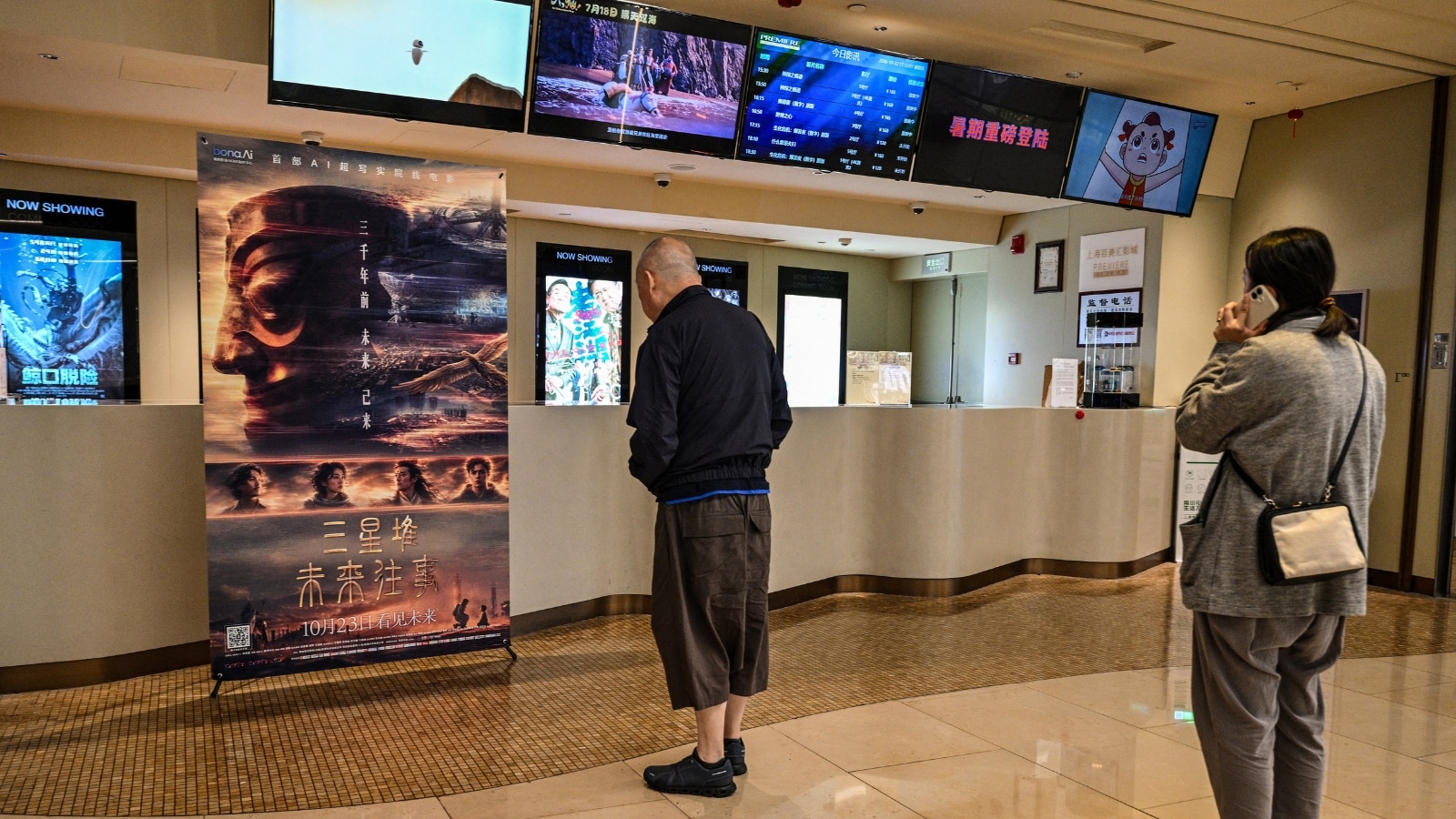
Soft box office numbers for China's first AI-generated theatrical release did not expose a flaw in generative filmmaking. They exposed a flaw in how pundits measure value.
Read the lazy consensus. A novelty film opens on big screens. Seats sit empty. Headlines scream that audiences reject synthetic storytelling. The takeaway sounds neat, tidy, and completely backward.
People go to movie theaters for shared ritual, star power, and emotional payoff. They do not buy a fifteen-dollar ticket because a diffusion model rendered a frame in four seconds instead of four hours. Treating weak opening-weekend receipts as a verdict on generative cinema confuses distribution mechanics with creative merit.
The Lazy Consensus Misses How Theatrical Economics Work
Theatrical exhibition is a brutal, capital-heavy business. Even in major global markets like China, where cinema attendance rebounded sharply in the early 2020s before cooling into more selective viewing habits, theatrical grosses reward established IP, holiday timing, marketing muscle, and screen allocation. An experimental AI feature fighting for auditoriums against tentpole blockbusters starts at a structural disadvantage before a single frame plays.
When commentators point to modest ticket sales and declare generative film dead on arrival, they apply an old scoreboard to a new game. Box office totals measure short-term theatrical demand under current exhibition rules. They do not measure unit economics, iteration speed, localization cost, or long-tail distribution.
Weak box office returns on an experimental release tell you about marketing reach and theater competition. They tell you nothing about whether generative tools will reshape production budgets.
Let's get precise about the terms before we go further. AI-generated film does not mean one uniform pipeline. A project can rely on text-to-video clips stitched together in post-production, custom-trained character models, motion-controlled camera passes, AI-assisted rotoscoping and upscaling, or human voice and score work layered over synthetic visuals. Calling all of those the same thing is like calling a stop-motion short, a 3D animated feature, and a live-action indie the exact same medium because all three project light onto a screen.
Why Audiences Care Less About Tech Than Critics Think
Here is the uncomfortable truth for both tech evangelists and film purists. Regular moviegoers rarely care how an image was made if the story grips them. They care about pacing, humor, tension, sound design, and whether the characters feel alive.
When audiences walk out of a theater disappointed, it is usually not because they spotted a temporal flicker in a background cloud. It is because the script dragged, the stakes felt weightless, or the marketing promised spectacle that never materialized. Blaming generative video for thin plot or weak promotion lets lazy storytellers off the hook.
Imagine a scenario where a studio releases a terrible live-action drama with zero star attachments and a tiny ad buy. Nobody writes an obituary for cameras when that film tanks. Yet the moment a synthetic film stumbles at the box office, every hot-take merchant treats the failure as proof that machines cannot make movies.
That double standard is intellectually sloppy. Bad art loses money regardless of the toolset. Good art still has to earn attention.
Battle Scars From Chasing Shiny Tools
I have watched studios and creative teams burn serious money chasing shiny production toys without fixing the fundamentals underneath. Teams get mesmerized by real-time rendering, new neural shaders, or slick demo reels, then pour budgets into scenes that look impressive in a ten-second clip and collapse over ninety minutes.
In commercial production, novelty wears off fast. A flashy visual trick might win a conference applause line or a social media clip. Keeping an audience locked into a narrative arc requires discipline: tight editorial rhythm, clear character motivation, consistent visual grammar, and audio that anchors the weight of every cut.
Throw raw generative clips at a weak story and you get expensive wallpaper. Put disciplined direction and sharp editing behind strong visual tools and you get something far more interesting—even if the first theatrical experiment misses projections.
What Heavy Hitters Actually Focus On
Look at how seasoned filmmakers, VFX supervisors, and studio veterans talk about production pipelines when they are being honest rather than promotional. Figures like James Cameron have long emphasized that technology only matters in service of story and immersion, while top visual effects leaders point out that real production value lives in consistency, control, and turnaround time—not one-click randomness.
Studio executives who survive downturns watch cost per usable minute, revision cycles, and release flexibility. Traditional animated features often take years and tens of millions of dollars before a single trailer reaches the public. If a new workflow cuts pre-visualization time, speeds up background generation, or allows rapid language dubbing and visual localization across territories, that changes the spreadsheet even when a theatrical debut starts small.
Answering the Questions People Keep Asking
Did low ticket sales prove audiences hate AI movies?
No. That conclusion overreaches. A single release—or even the first wave of releases—cannot settle how millions of viewers will respond over the next decade. Low attendance can come from limited screen counts, weak awareness, skepticism around unfinished visuals, or simply an uncompelling premise.
More importantly, asking whether audiences "like AI movies" frames the question backward. Audiences respond to experiences, not raw tooling. If a synthetic film feels uncanny, choppy, or hollow, viewers check out. If it delivers genuine wonder, laughs, or suspense, most viewers care far more about what they felt than which GPU cluster rendered the shot.
Is generative cinema ready to replace traditional film crews?
Not even close, and anyone claiming a total wipeout is selling hype. Making a watchable feature still demands writers who understand structure, directors who make tough choices, editors who control tension, sound designers who build atmosphere, and producers who manage logistics and rights.
What shifts is labor distribution and bottleneck location. Routine prep work, rough concept exploration, certain cleanup tasks, and select visual elements can move faster. Complex continuity, nuanced acting direction, and cohesive world-building still require human judgment and accountability.
Where does the real opportunity actually sit?
Stop obsessing over theatrical opening weekends for experimental AI features. Look at smaller formats, episodic runs, hybrid VFX pipelines, interactive media, and targeted niche releases where production overhead is kept lean and feedback loops are fast.
Actionable move for anyone building in this space right now:
- Start with a tight, self-contained story. Do not use generative tools to hide a meandering plot.
- Design around strengths, not weaknesses. Lean into stylized worlds, surreal transitions, and controlled camera moves where synthetic imagery holds together cleanly.
- Invest heavily in sound and editing. Crisp audio and ruthless pacing mask visual imperfections better than almost anything else.
- Match distribution to budget. Do not chase expensive theatrical scale before proving audience retention on smaller screens.
The Honest Downsides of Betting Against the Crowd
Taking a contrarian stance carries real risks, and pretending otherwise would undermine credibility.
First, uncanny valley fatigue is real. Viewers have sharp pattern recognition for human faces, hands, physics, and emotional micro-expressions. When a synthetic character crosses into creepy or weightless territory, audience trust evaporates quickly.
Second, copyright and licensing friction remain messy. Training data provenance, studio legal standards, and union agreements continue to evolve, creating real compliance headaches for commercial distributors.
Third, theatrical prestige still matters. Cinema remains a cultural event business built on shared anticipation and big-screen spectacle. Dismissing theatrical metrics completely can blind creators to why certain stories belong in a dark room with a crowd while others belong on streaming or mobile.
Why Box Office Skeptics Are Looking at the Wrong Screen
The competitor framing treats China's first AI theatrical release like a pass-fail exam for an entire industry. That is lazy analysis dressed up as realism. Every major shift in media history—sound, color, CGI, streaming—had awkward early outings, clunky experiments, and skeptics gloating over early numbers.
Judge the technology by where friction drops and where creative control improves. Judge the movie by whether it holds your attention from the first frame to the last.
Soft ticket sales on an early experiment do not kill generative cinema. They just remind everyone that a machine can generate pixels, but only a real story earns a seat.