The supermarket aisle on a Tuesday morning is a quiet place. Fluorescent lights buzz with a low, medicinal hum. Stacked ceiling-high are columns of tinned tomatoes, plastic-wrapped loaves, and neat pyramids of root vegetables. To walk past them is to inherit a quiet, unearned arrogance. We look at the abundance and assume it is a law of nature, as permanent as the tides or the pull of gravity.
It is not. It is an intricate, fragile illusion maintained by split-second timing, invisible satellites, and thousands of trucks moving through the dark while we sleep.
Consider a hypothetical distribution hub outside London, operating in the gray hours before dawn. A logistics manager named Arthur watches a wall of glowing monitors tracking refrigerated trailers crawling down the M6. Every single apple, carton of milk, and packet of chicken has a timestamp attached to its survival. Modern retail does not store food anymore; it flows. Supermarkets operate on what the industry calls just-in-time delivery. There are no vast, dusty cellars packed with grain for the winter. There are only rolling warehouses on asphalt.
When that flow stutters, the illusion vanishes in days.
Experts have spent years warning that the United Kingdom is fundamentally unprepared for severe food emergencies, whether driven by sudden supply chain shocks, extreme weather, geopolitical fracture, or cyberattacks on digital logistics networks. We are a nation that imports roughly half of everything it consumes. We trade our maritime borders and fertile acreage for the frictionless convenience of global trade lanes. But frictionless trade depends entirely on a frictionless world.
And the world is growing increasingly abrasive.
Look back at recent history, not with the dry eye of a spreadsheet, but with the visceral memory of empty shelves during the pandemic or fuel crises. Panic is contagious, and it moves faster than freight. When whispers of scarcity hit social media, human behavior undergoes a predictable, ancient mutation. The rational citizen becomes the anxious hoarder. Within forty-eight hours, the supply chain does not break because the food has vanished from the earth; it breaks because everyone tries to buy a month's worth of calories on the exact same Tuesday afternoon.
The parliamentary committees and food security analysts point to a chilling reality: our national resilience strategy treats food emergencies as low-probability anomalies rather than inevitable recurring stress tests. There is no strategic national food reserve worthy of the name. Grain silos that once dotted the landscape have long since been converted into luxury apartments or left to rust. The buffer is gone.
Imagine, for a moment, a compounded crisis. A severe winter storm hits northern Europe simultaneously with a major maritime bottleneck closing in the English Channel, paired with a sophisticated ransomware attack taking down the inventory management systems of our three largest supermarket conglomerates.
In this scenario, Arthur’s glowing monitors turn amber, then red.
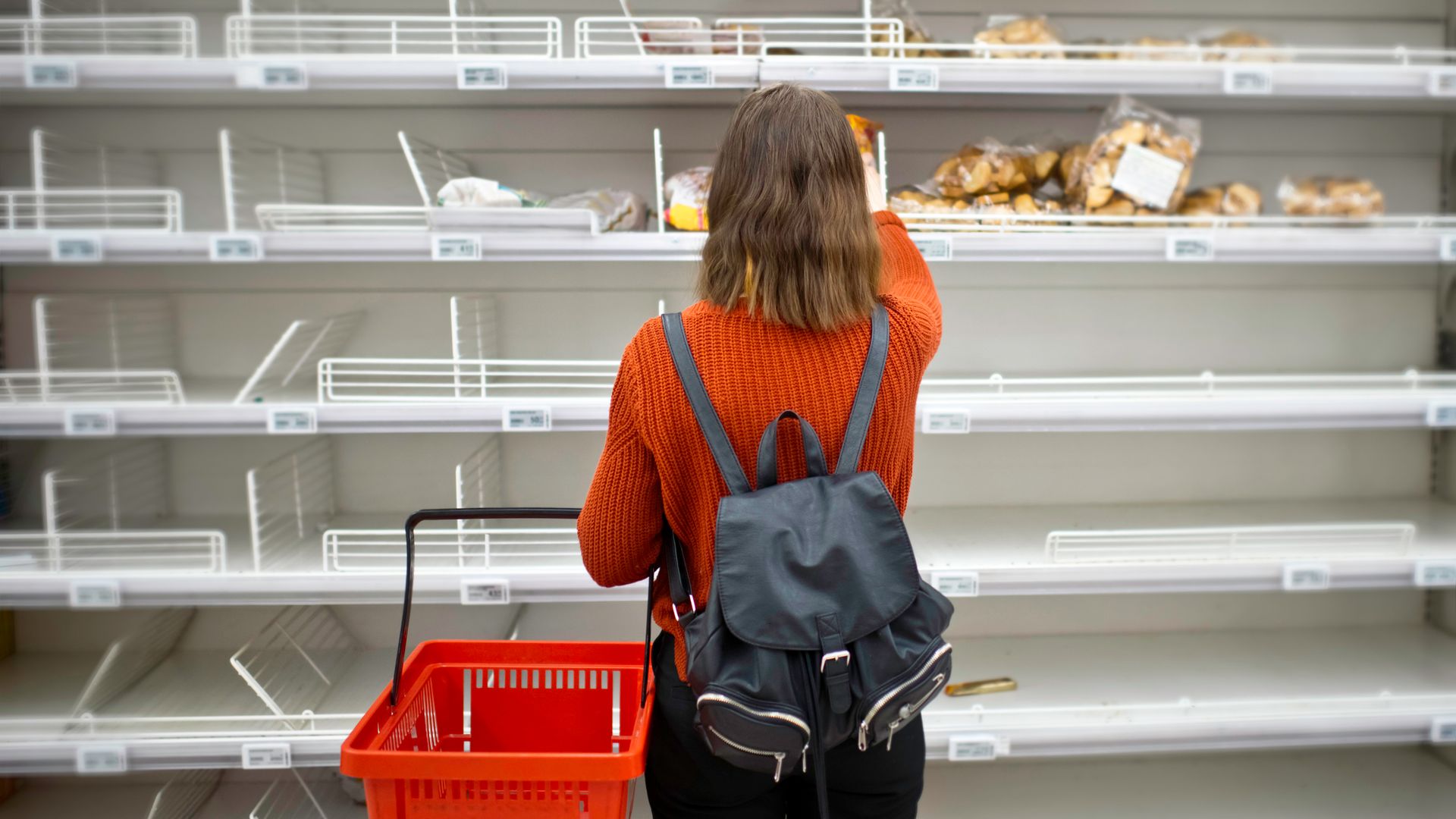
Trucks stop rolling because drivers cannot log their manifests. Distribution centers cannot match stock to storefronts. Within seventy-two hours, the fresh produce sections are barren. By day five, the canned goods are gone. By day seven, the quiet hum of the fluorescent supermarket lights is replaced by the echoing footsteps of people staring at empty metal wire baskets, wondering how a modern society forgot how to feed itself.
This is not science fiction. It is a logical deduction based on the thin margins of efficiency that corporations prioritize over basic survival. Efficiency is the enemy of resilience. When you optimize a system to eliminate every single penny of waste, you also eliminate every single ounce of spare capacity. A system with zero slack cannot absorb a punch.
The warnings from agricultural scientists and supply chain auditors are met mostly with institutional shrugs. Preparing for systemic shock costs money. It requires maintaining idle warehouses, subsidizing domestic production, stockpiling staple grains, and forcing private corporations to build redundancies into their profit margins. Governments hate paying for insurance against disasters that haven't happened yet, because a prevented crisis always looks like an unnecessary expense.
Yet the cost of inaction is written in the sudden panic of ordinary people staring at bare shelves, realizing that the invisible machinery holding up their daily lives was held together by duct tape and blind optimism.
We need to rewrite our relationship with sustenance. We need to look past the convenient aisle and recognize that food security is national security. It is not about hoarding out of fear; it is about building a system robust enough to absorb the shocks of a fractured century without collapsing into chaos.
Until we bridge the gap between corporate efficiency and societal survival, that quiet hum in the supermarket aisle will remain what it truly is: the sound of a clock ticking.