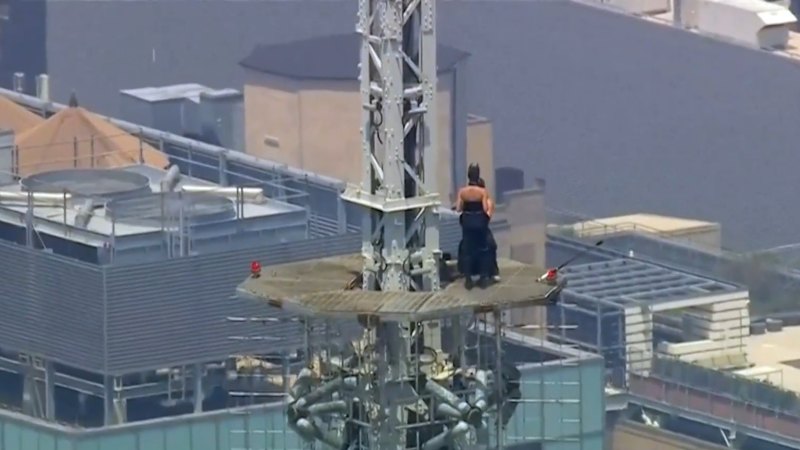
Two content creators just bypassed millions of dollars in modern security infrastructure to scale the lightning rod of the Empire State Building. The media response was entirely predictable. Headlines screamed about the "unacceptable security breach." Politicians demanded investigations. The public feigned outrage on social media, treating the stunt as a terrifying lapse in counter-terrorism protocols.
They are all missing the point.
The standard narrative surrounding high-profile urban trespassing is built on a fundamental misunderstanding of risk management. We treat urban climbers like dangerous anomalies who expose fatal flaws in our civic armor. In reality, these individuals are performing a vital, free public service. They are the unauthorized penetration testers of the physical world, highlighting a truth that corporate security directors hate to admit: absolute security is an expensive illusion.
The Flawed Premise of Absolute Security
Every time a daredevil slips past a perimeter, the knee-jerk reaction is to call for a total lockdown. Turn the property into a fortress. Double the guards. Install more biometric scanners.
This approach fails because it treats security as a binary state—either a building is secure or it is not.
Physical security operates on a spectrum of friction, not absolute prevention. The primary objective of skyscraper security is to mitigate actual, high-consequence threats: active shooters, explosive devices, and mass-casualty events. It is designed to handle large-scale, violent anomalies.
It is intentionally not optimized to stop a highly motivated, 140-pound kid with sticky shoes and a GoPro who is willing to risk a 1,000-foot plunge for Instagram metrics.
Standard Security Focus: High-Velocity Mass Threats (Violence, Sabotage)
Daredevil Profile: Low-Mass, High-Agility, Non-Violent Opportunists
To build a security apparatus capable of stopping 100% of non-violent, hyper-agile trespassers would require turning our iconic public landmarks into unnavigable, totalitarian bunkers. The economic and cultural cost of eliminating that final 1% of vulnerability far outweighs the minor annoyance of a teenager taking a selfie on a crane.
Daredevils Are Free Pen-Testers
In the software industry, companies pay ethical hackers millions of dollars via bug bounty programs to find vulnerabilities in their code. If a hacker finds a backdoor into a banking app, they are rewarded.
When an urban climber finds a physical backdoor into a cultural icon, we throw them in jail.
"If a teenager with no budget can access your asset's most critical structural point, your multi-million dollar security contract is a paper tiger."
I have spent years auditing corporate asset protection plans. I can tell you that the biggest threat to any facility is complacency. Guard forces fall into routines. Security cameras become wallpaper to bored monitors. Motion sensors get miscalibrated to ignore "false positives."
Urban climbers break the complacency cycle. They expose the specific blind spots that matter:
- The Human Factor: Tailgating through employee entrances or exploiting shift-change chaos.
- Structural Blind Spots: Scaffolding, maintenance ladders, and architectural flourishes that double as climbing holds.
- Sensor Dead Zones: Patches of a perimeter where cameras do not overlap or motion detection fails.
When someone climbs the Empire State Building, they hand the building's management a flawless, real-time map of their systemic failures. They show exactly which stairwell door was left propped open, which guard was looking at his phone, and which camera angle needs adjustment. They do it for free, risking their own bones instead of charging a $50,000 consultant fee.
Dismantling the Copycat Myth
The most common defense for throwing the book at these climbers is the deterrent argument. "If we don't punish them harshly, everyone will do it."
This is a complete misunderstanding of the psychology driving extreme subcultures.
The people who scale supertall structures are not casual weekend hobbyists who see a video and think, Yeah, I’ll try that today. The barrier to entry for free-climbing a skyscraper isn't legal deterrence; it is the raw, paralyzing fear of falling to your death.
True Barriers to Entry:
1. Vertigo and psychological panic
2. Elite grip strength and physical conditioning
3. Specialized knowledge of structural architecture
Harsh legal penalties do not deter the elite tier of urban climbers because they already operate under the ultimate penalty: gravity. If the prospect of turning into a sidewalk pancake doesn't dissuade someone, a misdemeanor criminal trespass charge certainly won't.
In fact, heavy-handed prosecution often backfires. It increases the counter-culture currency of the act. It turns a reckless stunt into an act of defiance, making the footage even more lucrative and prestigious within the community.
The Downside of the Open-Gate Reality
To be intellectually honest, this contrarian framework carries real risk. The line between a thrill-seeker and a malicious actor is defined entirely by intent.
If an influencer can reach the top of a spire, a bad actor with a weapon or a dirty bomb could theoretically do the same. This is the legitimate nightmare scenario that keeps facility managers awake at night.
But here is the hard truth: locking down the roof does not solve that problem. A malicious actor looking to inflict maximum harm does not want to climb the outside of a lightning rod in the dead of night. They target the high-density ground floors, the crowded lobbies, and the transit hubs underneath the structure.
Fixating on the roof because two kids made a viral video is a classic example of security theater. It reallocates limited resources toward fixing a low-probability, low-casualty vulnerability while leaving the high-probability ground-level vulnerabilities untouched.
Stop Fixing the Wrong Problem
Building managers need to stop reacting to these incidents by firing the lowest-paid security guard on duty and buying more expensive, useless hardware.
Instead, look at the data. Look at the specific path the climbers took. Treat the incident report as a software patch note. Fix the specific mechanical failure—weld the hatch shut, realign the camera, change the access code—and move on.
Accept that as long as we build structures that touch the sky, human beings will try to conquer them. It is an evolutionary impulse that predates the invention of concrete. The day nobody wants to climb the Empire State Building is the day our architecture has ceased to inspire.
Locking down our cities until they are sterile, frictionless cages just to prevent a few viral videos isn't security. It's defeat.