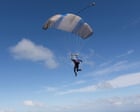
Every time a dramatic rescue makes the headlines, the public rushes to applaud the cinematic heroics. Skydivers dropping out of the sky onto a remote wreckage site sounds like the plot of a blockbuster action movie. It captures the imagination. It feeds the craving for modern folklore.
It is also an operational disaster disguised as philanthropy.
When a plane goes down in treacherous terrain, the immediate reflex of media outlets and armchair pundits is to lionize any high-risk intervention that looks impressive on camera. The lazy consensus states that speed and theatricality matter above all else. If operators drop in from twelve thousand feet, they must be saving the day faster than anyone else could.
Except they aren't. And worse, they are introducing catastrophic variables into an environment that requires clinical, boring, methodical precision.
Let us look at the structural reality of aviation accidents. When an aircraft crashes in rough wilderness—whether in the dense forests of Wisconsin or a rugged mountain ridge—the primary objective is triage, stabilization, and secure extraction. Parachuting into an active crash zone without a secured perimeter or established landing infrastructure turns trained professionals into high-value liabilities.
I have spent years analyzing emergency response protocols across high-consequence industries. I have watched organizations blow millions of dollars on high-visibility gadgetry and stunt-adjacent rescue units while ignoring the mundane logistics that actually keep people alive.
The first failure of the skydiver rescue narrative is the physics of the drop itself. Uncontrolled wind shears, invisible tree-canopy hazards, and unpredictable terrain mean that jumpers frequently land injured, separated from their gear, or completely unable to assist the primary victims. Instead of a cohesive medical team hitting the ground ready to work, you have scattered operators who now require rescuing themselves. That is not operational excellence. That is an ego trip packaged as emergency response.
Consider the equipment deficit. A skydiver jumping into a remote site carries a fraction of the gear required to manage severe trauma. Heavy hydraulic extraction tools, volumetric blood supplies, advanced airway management systems, and thermal regulation gear do not fit in a jump bag. When rescuers prioritize an airborne insertion method over heavy transport capabilities, they deliberately choose to arrive empty-handed. They trade medical capacity for theatrical impact.
The media loves the imagery because it fits a narrative of human triumph over adversity. Journalists write about brave souls defying gravity to pluck the injured from the jaws of death. But real emergency management is bureaucratic, unglamorous, and slow. It relies on coordinated ground sweeps, heavy-lift rotary aircraft with winch capabilities, and established staging grounds. It relies on radio frequencies that actually connect and supply chains that do not depend on the whims of a high-altitude thermal updraft.
Critics of this view argue that in extreme conditions, traditional helicopters cannot land, making parachutes the only viable entry vector. That argument collapses under scrutiny. If conditions are too hazardous for a modern twin-engine rotorcraft equipped for mountain operations, they are exponentially too hazardous for a human body suspended in nylon and lines. If a zone does not permit a controlled winch operation or a tactical hover-step exit, dropping freefall jumpers into the same localized microclimate is a gamble with human life that defies basic risk management.
We need to stop confusing adrenaline with competence. When emergency systems cater to the public appetite for spectacle, safety margins shrink. Resources get misallocated toward flashy units that generate good press releases rather than boring units that save lives reliably.
The next time an outlet breathlessly reports on a death-defying aerial drop into a disaster zone, ask the uncomfortable question. Did they jump because it was the only medically sound path forward, or did they jump because the cameras were rolling.
Stop cheering for the circus. Demand the boring logistics. Because when your life is on the line in the middle of nowhere, you do not want a stunt double. You want a paramedic with a heavy pack and a clear runway.