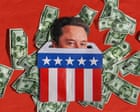
Spending nearly half a billion dollars on a single midterm election cycle sounds like a guaranteed way to buy political influence in Washington. It didn't work. In fact, Elon Musk's massive financial push during the 2026 midterm elections turned into one of the most expensive cautionary tales in modern American campaign finance.
You can't simply brute-force an off-year electorate with tech-startup blitzscaling.
When reports confirmed that Musk poured close to $500 million into super PACs, voter turnout operations, and down-ballot Republican races throughout the 2026 cycle, political operatives in both parties held their breath. Following his heavy financial involvement in the 2024 presidential race through America PAC, the assumption among pundits was simple. More money meant more votes.
That assumption broke down fast once actual ballots were cast in November 2026. Instead of delivering a sweeping red wave across battleground House and Senate districts, the unprecedented cash dump ran straight into the structural realities of midterm voting behavior, diminishing financial returns, and severe voter backlash.
The Structural Flaw in Elon Musk's Midterm Spending Strategy
Presidential elections and midterm elections are completely different animals. Treating them like the same product with a slightly smaller user base is a classic mistake made by wealthy political newcomers.
During a presidential year, high-propensity and low-propensity voters alike pay attention because the top of the ticket dominates every screen in the country. Cash spent on digital ads, canvassers, and viral stunts can nudge marginal voters to show up. Midterms work differently. Off-year electorates are older, more partisan, and way harder to expand through paid media alone.
Political scientists at institutions like the Brennan Center for Justice and OpenSecrets have documented for decades that campaign spending hits a steep wall of diminishing returns in competitive federal races. Once a House or Senate candidate has enough money to saturate local broadcast television and digital feeds, dumping another $20 million into the district doesn't persuade undecided voters. It just annoys them.
Musk's political apparatus leaned heavily on massive paid field operations and aggressive online messaging via X. On paper, building a tech-enabled ground game makes sense. In practice, outsourced canvassing operations funded by billionaire super PACs often suffer from terrible quality control.
Campaign veterans know this well. When you rapidly scale a door-knocking operation using third-party vendors paid by the door, you get app check-ins without real conversations. Voters don't change their minds because a gig worker reads a script off a tablet on their porch in October.
Why Cash Couldn't Overcome the Midterm Backlash
Money amplifies a message, good or bad. If your brand is polarizing, spending $500 million just makes sure every swing voter in Pennsylvania, Michigan, and Arizona remembers why they don't like you.
By mid-2026, Elon Musk wasn't just a wealthy donor operating quietly behind closed doors like traditional megadonors such as Timothy Mellon or Miriam Adelson. He was the headline. Democratic strategists didn't even have to invent a villain for their midterm attack ads. They just put Musk's face, his posts on X, and his massive spending totals directly into thirty-second spots across suburban swing districts.
Here's what happened when that dynamic hit the ballot box:
- Suburban college-educated voters recoiled. These are the exact voters who decide control of the House of Representatives, and they consistently reject overt billionaire interference in local elections.
- Democratic fundraising surged in response. Every time a headline dropped about another eight-figure wire transfer from Musk's network, small-dollar donations poured into ActBlue for vulnerable Democratic incumbents.
- Candidate quality still mattered more than ad buys. Several high-profile challengers backed heavily by Musk-aligned PACs ran weak local campaigns, relying on national culture-war talking points instead of local economic issues.
I've watched dozens of cycles where outside groups think they can drag a flawed candidate across the finish line with sheer financial volume. It almost never happens. Voters can smell an astroturfed campaign from a mile away.
Comparing 2024 Success to the 2026 Reality Check
To understand why the 2026 midterm spending flopped, you have to look at why Musk's 2024 playbook looked like a success at the time.
In 2024, Donald Trump was at the top of the ticket. Trump possesses a unique ability to turn out low-propensity voters who ignore politics for four years at a time. Musk's America PAC rode that wave, taking credit for turnout mechanics that were largely driven by Trump's own gravitational pull.
Remove Trump from the ballot in 2026, and the whole machine stalled.
Traditional midterm elections almost always punish the party holding the White House. That historical pattern—documented across nearly every midterm cycle since the Civil War—acts like gravity in American politics. Overriding midterm gravity requires either a wildly popular president or a catastrophic misstep by the opposition party. Half a billion dollars in super PAC money isn't a substitute for either one.
Even worse, pouring massive sums into safe or leans-Republican seats soaked up media inventory and drove up ad rates across the board. Republican campaign committees found themselves paying inflated prices for local TV spots because outside groups funded by Musk were bidding against them for the exact same airtime.
What Billionaire Donors Keep Getting Wrong About Politics
Tech founders love to talk about disruption, efficiency, and first principles. Politics resists all three.
When you run a company like Tesla or SpaceX, capital allocation directly translates to engineering output, factories, and market share. If you outspend your competitors ten-to-one on research and development, you usually win. Elections are a zero-sum contest governed by human psychology, regional identity, and deeply ingrained partisan habits.
There are three hard rules of campaign finance that billionaire donors repeatedly learn the hard way:
- You can't buy authenticity. Voters forgive a lot from candidates who feel genuinely rooted in their community, and they punish candidates who look like wholly owned subsidiaries of an out-of-state billionaire.
- Data tools don't replace local trust. Proprietary voter-targeting software sounds impressive in a donor pitch deck, yet a trusted local union leader, pastor, or small-business owner still moves more votes than an algorithm.
- Overspending creates a ceiling, not a floor. Past a certain financial threshold, every additional dollar spent generates negative earned media that undercuts the paid ads you just bought.
Look at Michael Bloomberg's 2020 presidential primary run, where he spent over $1 billion only to win American Samoa. Look at Tom Steyer's self-funded campaigns. Now add Elon Musk's 2026 midterm expenditure to that exact same shelf.
What This Means for Future Election Cycles
The 2026 midterm results didn't kill big money in politics—Citizens United remains the law of the land, and megadonors aren't going anywhere. What it did do is shatter the myth that a single tech billionaire can casually purchase a congressional majority.
Party committees and major donors looking toward 2028 are already recalibrating. Smart political money is shifting away from flashy, centralized super PACs run by tech outsiders and moving back toward state-level party infrastructure, early voter registration, and candidate recruitment.
If you're tracking campaign finance data on OpenSecrets or Federal Election Commission filings over the next two years, pay less attention to the top-line dollar figures announced in press releases. Look instead at where the money actually goes—specifically whether it funds year-round local organizing or disappears into high-fee media consultancies and bloated vendor contracts. That single distinction separates real political power from an expensive vanity project.


