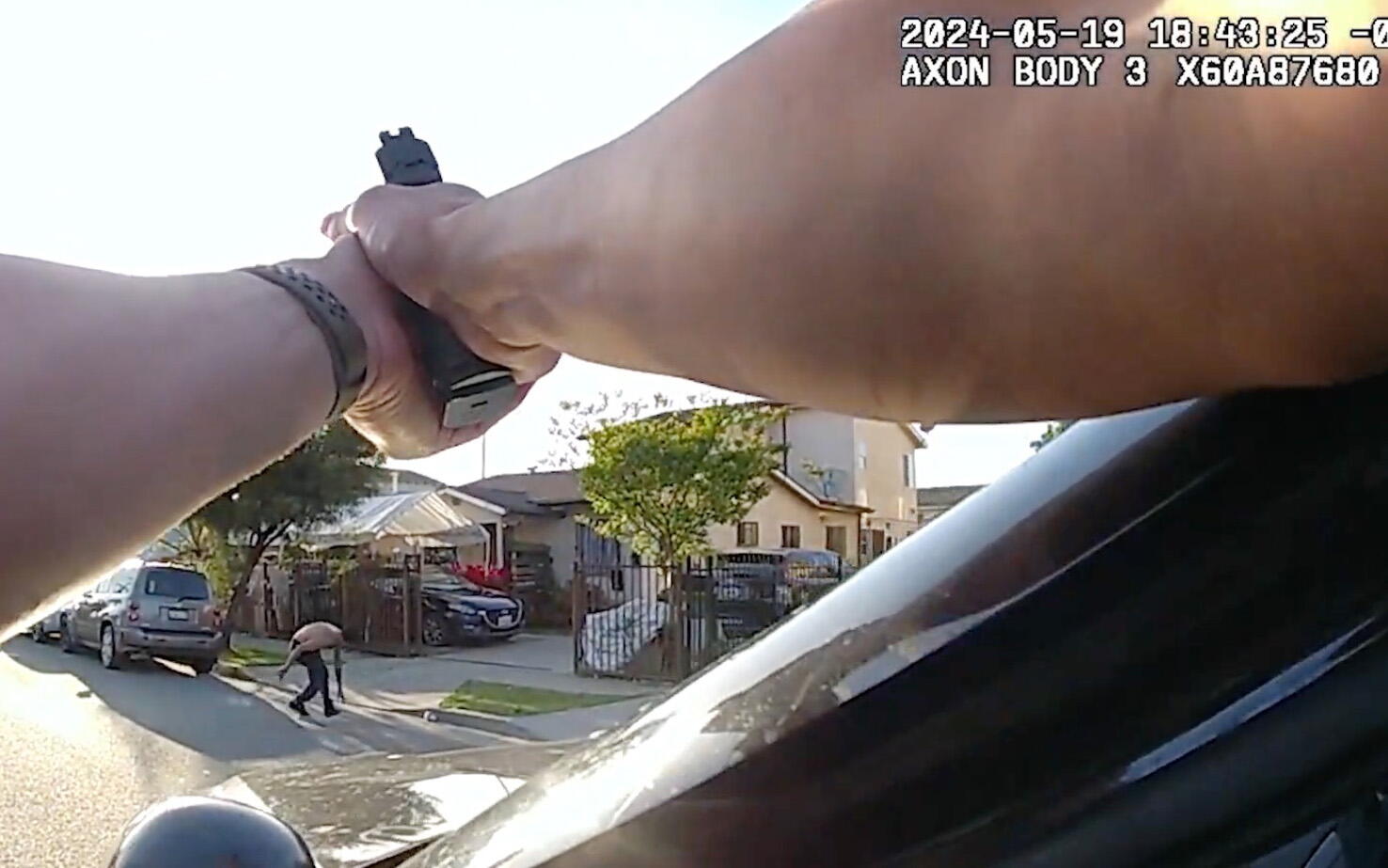
Another headline flashes across the screen. A jury hands down an eleven million dollar verdict to the family of a man killed by police during a psychiatric crisis. The public sighs with grim satisfaction. Social media floods with righteous condemnation of the badge. Activists declare a moral victory. Lawyers cash their checks and prepare for the next press conference.
Everyone feels like justice has been served.
They are dead wrong.
An eleven million dollar payout from a municipal treasury is not justice. It is hush money. It is an expensive insurance settlement paid by taxpayers to buy off public outrage while the underlying machine that created the tragedy keeps grinding forward unchanged. It is a cynical transaction that allows city halls, police chiefs, and state legislators to shed crocodile tears, write a check funded by property taxes, and pretend they solved a systemic failure.
Every time a massive settlement makes the news, the collective conversation defaults to the same lazy script. We argue about bad training, bad apples, and excessive force. We debate whether officers should carry tasers or batons instead of firearms. We demand more de-escalation seminars.
All of it is a distraction.
Focusing on the split-second decision of an officer standing in a cramped hallway facing a knife-wielding man in the throes of unmedicated psychosis is like blaming the parachute manufacturer when someone pushes you out of a plane without a ripcord. By the time the police are dispatched to that hallway, the system has already failed ten times over. The shooting was not an accident; it was the inevitable mathematical output of a broken equation.
To understand why eleven million dollar checks change nothing, you have to look at what municipal litigation actually accomplishes. Cities do not fight these multi-million dollar payouts with the fierce determination you might expect. Behind closed doors, risk managers and city attorneys calculate the cost of liability versus the cost of systemic reform. They look at the balance sheet and realize something chilling: writing a check every few years is far cheaper than fixing mental health infrastructure.
Settlements insulate politicians from accountability. If a city council had to rebuild the civil commitment framework, fund thousands of locked psychiatric beds, reform dangerous privacy laws, and face the political wrath of civil liberties groups who defend absolute autonomy even for those who have lost touch with reality, that would take real courage. That would require political capital. Writing a check out of the tort liability fund requires nothing except an accountant.
The lazy consensus tells us that police have no business responding to mental health calls. On the surface, that sounds enlightened. Supporters of this view imagine a tranquil world where compassionate clinicians in comfortable cardigans gently talk down individuals experiencing a psychotic break.
Step outside that fantasy for a moment and look at the street-level reality.
Imagine a scenario where a six-foot-four man experiencing paranoid delusions and methamphetamine-induced psychosis is actively destroying apartment drywall, screaming threats at his elderly mother, and wielding a jagged kitchen knife. Dispatch receives the call. Under the pure civilian model, who arrives?
If you send unarmed social workers into that room, you are offering them up as human sacrifice. People in active psychotic terror do not respond to empathetic active listening techniques. Their prefrontal cortex is offline. Their amygdala is running the show. They do not see a helper; they see a threat.
When advocates pretend that civilian crisis teams can safely handle every acute psychiatric emergency without armed backup, they are lying. They are trading police casualties for clinician casualties, or worse, leaving vulnerable families unprotected while professionals stand outside waiting for permission to act.
The truth that nobody in polite policy circles wants to admit is simple. Law enforcement is often the only agency left with the legal authority, the protective equipment, and the physical capacity to restrain a violent, self-harming, or threatening individual. The tragedy is not that police showed up. The tragedy is that we have made police the default psychiatric triage unit of last resort for a society that abandoned its sickest citizens.
How did we get here?
To answer that, you have to trace the history of deinstitutionalization. For decades, civil rights advocates, legal scholars, and progressive reformers fought a righteous war to empty the old state mental hospitals. Many of those facilities were snake pits. Patients were warehoused, abused, and neglected in conditions that shocked the conscience. Closing them was morally necessary.
But the reformers made a catastrophic error. They closed the asylums, but they forgot to build the community safety net that was supposed to replace them. They promised comprehensive outpatient treatment, supportive housing, and localized care. That promise was broken by budget cuts, NIMBYism, and institutional neglect.
The result was the great psychiatric diaspora. We moved millions of severely mentally ill people out of sterile wards and into doorways, park benches, jail cells, and concrete overpasses. We traded the horrors of institutionalization for the slow, brutal cruelty of abandonment under the banner of civil freedom.
When a person with severe schizophrenia or bipolar disorder stops taking their medication, loses their housing, and spirals into profound psychosis, our current legal standards protect their right to deteriorate in public. Under current civil commitment laws in most jurisdictions, police and medical professionals can do virtually nothing until that person commits a violent crime or attempts suicide.
We wait for the disaster to happen. We criminalize the symptoms of the illness, ignore the person until they become dangerous, send armed officers to manage the inevitable explosion, and then express shock when someone dies. Then, to cleanse our collective conscience, we hand over eleven million dollars to the grieving family and go back to sleep.
It is a grotesque ritual.
If we actually want to stop the body count, we have to tear up the current playbook and embrace solutions that make ideological purists on both the left and the right deeply uncomfortable.
First, we must radically rewrite the threshold for civil commitment. The current legal standard, which requires proof of imminent danger to self or others, is a death sentence disguised as a civil liberty. When an individual is demonstrably incapable of caring for their basic needs due to severe mental illness or substance-induced brain damage, society has a paternal obligation to intervene before blood is spilled. We need secure, therapeutic stabilization facilities where individuals can be housed, medicated, and evaluated safely for months, not hours.
Second, we need to stop pretending that severe mental illness and criminal behavior are entirely separate universes. Jails and prisons have become the largest psychiatric providers in America. That is an abomination. We need specialized secure medical wards integrated directly into correctional and forensic systems, staffed by medical professionals who have the legal authority to treat patients who refuse medication because their illness convinces them they are healthy.
Third, we must hold municipal leaders financially and politically liable for failing to build care infrastructure, rather than letting them buy their way out of negligence with taxpayer funds. When a city pays out an eleven million dollar settlement, that money should not come from a generic risk pool. It should come directly from the administrative budgets of the agencies responsible for the systemic failures, forcing bureaucrats to choose between funding functional mental health response pipelines or paying massive legal penalties.
The family who lost their son in that Los Angeles apartment did not get justice. They got a financial settlement born of municipal guilt. The officers involved were thrown into an impossible scenario engineered by decades of legislative cowardice. The public got another news cycle of outrage followed by comfortable inertia.
Until we summon the courage to bring back secure residential treatment, reform our cowardly commitment laws, and stop hiding behind cash payouts, the headlines will repeat. The checks will clear. And the morgue doors will keep swinging.