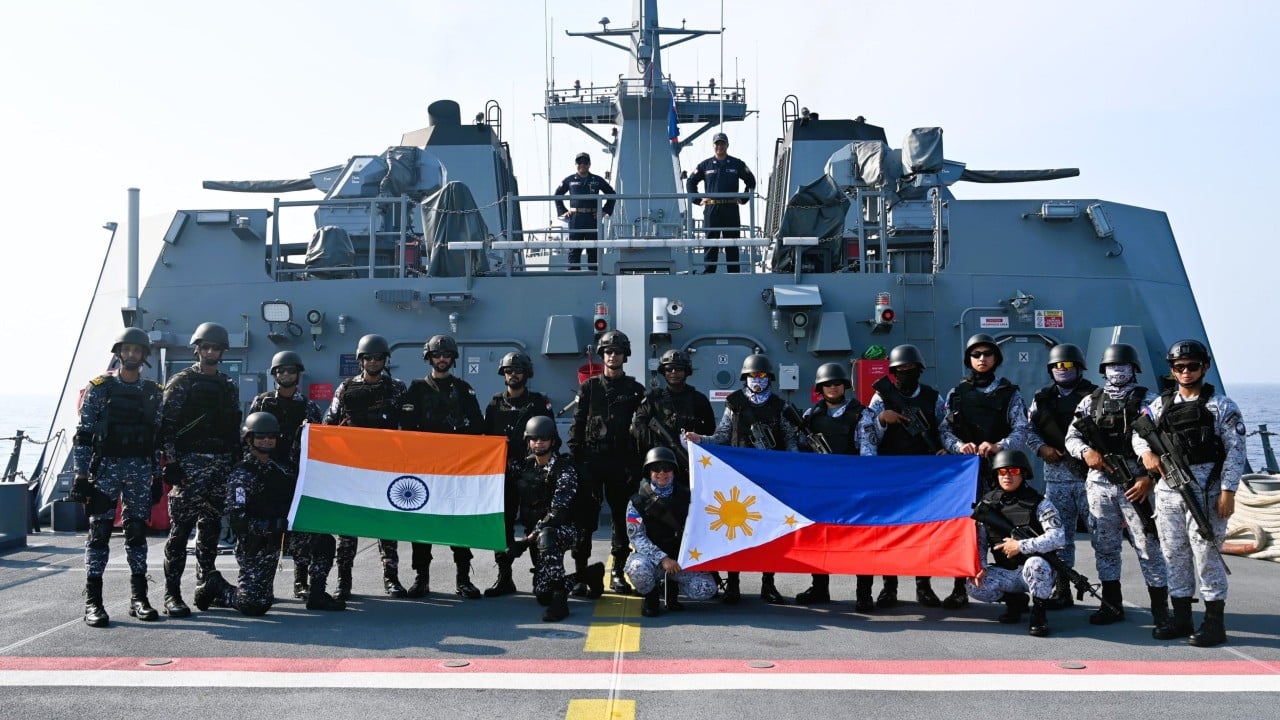
Armchair defense analysts love counting hulls and crying exhaustion. When headlines broadcast that the Indian Navy executed eleven major maritime exercises in sixty days, the predictable chorus starts singing about hull fatigue, crew burnout, and operational overextension.
They are looking at the spreadsheet upside down. You might also find this related article useful: Why Baltic Drone Alerts Keep Triggering NATO Scrambles.
Counting naval deployments like commercial airline flight hours misses the entire point of blue-water warfare. A navy does not rust from sailing; it rots at the pier. Treating high operational tempo as a symptom of strategic panic rather than calculated industrial-grade stress testing is the laziest take in modern defense commentary.
If you want to understand what is actually happening in the Indian Ocean Region, stop asking whether New Delhi is running out of steam. Start asking why Beijing is suddenly watching every choke point from Malacca to Bab-el-Mandeb with nervous eyes. As highlighted in latest coverage by TIME, the implications are notable.
The Peacetime Readiness Myth
The conventional wisdom among desk-bound pundits goes like this: ships need long maintenance cycles, sailors need predictable shore leave, and cramming eleven bilateral, multilateral, and theater-level drills into two months degrades combat readiness.
That logic works great if your goal is passing an administrative inspection in Mumbai or Visakhapatnam. It fails completely when deterrence is on the line.
Naval warfare is an unforgiving business where muscle memory cannot be downloaded during a crisis. You cannot surge competence. When a destroyer crew runs anti-submarine warfare drills with the French Navy on Tuesday, conducts live-fire air defense exercises in the Arabian Sea the following week, and integrates into a carrier battle group exercise ten days later, they are compressing years of institutional friction into weeks.
I have watched maritime task forces spend millions on synthetic war-gaming simulators only to watch their communications architecture collapse the moment salt water hits the hull in an unscripted coalition environment. Real interoperability requires real steel burning real fuel in unpredictable sea states.
Why Hull Hours Are an Investment, Not a Liability
Critics point to maintenance backlogs and the aging tail of legacy platforms as proof that India’s fleet cannot sustain this pace. They confuse utilization with attrition.
Every modern navy operates on a tiered readiness model, similar to the United States Navy’s Optimized Fleet Response Plan. At any given moment, roughly one-third of a competent fleet is in deep maintenance or refit, one-third is in basic workups and certification, and one-third is deployed forward. When India puts ships through eleven drills in sixty days, it is not emptying the dry docks and throwing unready hulls into the deep end. It is maximizing the return on the deployed third.
Consider the logistics of maritime presence:
- Transit Efficiency: Once a guided-missile destroyer like INS Kolkata or INS Visakhapatnam crosses the Malacca Strait into the South China Sea or heads west toward the Gulf of Aden, the sunk cost of fuel and transit time is already paid. Stacking multiple exercises along a single deployment arc is basic operational economics, not reckless overreach.
- Logistics Stress-Testing: High-tempo operations expose supply chain bottlenecks before bullets start flying. Finding out that a replenishment oiler’s transfer rig struggles in heavy monsoon swells during a multilateral drill is a gift. Finding out during a blockade is fatal.
- Sensor Calibration: Operating alongside diverse foreign fleets—from the Royal Navy and Japan Maritime Self-Defense Force to regional partners in Southeast Asia—allows Indian electronic warfare specialists to map acoustic signatures, radar emissions, and tactical data-link latencies in live environments.
Deconstructing the "Overstretched" Fallacy
When readers search for whether India’s navy is stretched too thin, they are usually reacting to two anxieties: the rapid expansion of the People’s Liberation Army Navy (PLAN) and India’s simultaneous anti-piracy and drone-defense commitments in the Red Sea.
Let’s dismantle the premise of those anxieties one by one.
Is the Indian Navy fighting a two-front naval war?
No. Geography remains India’s greatest strategic asset. Unlike continental powers forced to defend porous land borders, India sits astride the primary energy and trade arteries of the Indo-Pacific. Beijing has to project power thousands of miles through narrow, vulnerable maritime choke points to reach the Indian Ocean. New Delhi operates out of its own backyard, supported by shore-based maritime patrol aircraft like the Boeing P-8I Neptune, land-based missile batteries, and island airfields in the Andaman and Nicobar chain. High-tempo drills are not defensive scrambling; they are exercises in sea control and area denial.
Doesn't constant deployment break the crew?
Chronic undermanning breaks crews, not purposeful missions. Morale in elite military units plummets during monotonous, pointless patrols—not during complex, high-stakes international exercises where sailors test their systems against peer competitors. Yes, sustained operational tempo demands strict crew rotation policies and aggressive shore-side support. If Naval Headquarters fails to protect post-deployment recuperation windows, retention will suffer. That is a management challenge, not a strategic flaw in the exercise schedule.
Are foreign navies just using India for geopolitical optics?
The opposite is true. Washington, Tokyo, Paris, and Canberra are not inviting New Delhi to the table out of charity. India brings a battle-tested carrier aviation arm, indigenous nuclear-powered ballistic missile submarines, and unmatched domain awareness across the northern Indian Ocean. When eleven drills happen in sixty days, foreign partners are lining up to plug into India’s regional network because they cannot cover the maritime domain without it.
The Real Cost of Operational Silence
Strategic theorists from Alfred Thayer Mahan to Sir Julian Corbett understood that a fleet-in-being only deters adversaries when those adversaries believe the fleet can actually fight.
During the Cold War, the Soviet Navy frequently surged massive, sudden exercises—like Okean-70 and Okean-75—specifically to shatter Western assumptions about Soviet naval sluggishness and logistics fragility. By demonstrating global command-and-control capabilities simultaneously across multiple oceans, Moscow forced NATO planners to rewrite their contingency playbooks overnight.
India’s sixty-day sprint achieves a similar psychological effect without the saber-rattling rhetoric. Every exercise announces to regional rivals that Indian surface combatants, submarines, and naval aviation can coordinate across vast distances without pausing to catch their breath.
Compare this to the alternative. What happens when a navy prioritizes hull preservation over operational tempo?
- Command Atrophy: Flag officers lose the intuitive feel for managing multi-threat environments in real time.
- Doctrinal Drift: Standard operating procedures look brilliant on paper but fall apart when acoustic conditions shift or satellite links degrade.
- Diplomatic Irrelevance: Vacuums at sea are filled immediately. If Indian hulls stay tied up in Karwar or Kochi to save engine hours, Chinese "research" vessels and distant-water fishing militias quietly map the seabed of the Ninety East Ridge unchallenged.
The Uncomfortable Truth About Hull Fatigue
Admitting that high operational tempo is strategically smart does not mean pretending physics takes a holiday. There are genuine downsides to running a fleet hot, and ignoring them would be just as dishonest as predicting imminent collapse.
Saltwater corrodes everything. Gas turbines require strict borescope inspections after hard running. Combat management systems need software patches that cannot easily be pushed over low-bandwidth satellite links while a ship is dodging submarines in the Bay of Bengal.
Furthermore, India’s shipbuilding yards—Mazagon Dock, Garden Reach, and Cochin Shipyard—deliver impressive hulls, yet the industrial base for deep-level maintenance, spare parts manufacturing, and dry-dock turnaround still lags behind the navy’s operational ambitions. Pushing the current fleet to eleven exercises in two months widens the gap between what the operators can execute at sea and what the shore establishment can sustain over a ten-year horizon.
If New Delhi treats this sixty-day sprint as a permanent baseline without doubling down on predictive maintenance algorithms, modular component swaps, and private-sector shipyard integration, steel fatigue will eventually collect its debt.
Stop Counting Drills and Start Measuring Kill Chains
Defense commentary needs to grow up. Measuring a navy’s health by counting how many days its ships spend away from the pier is like judging a surgeon’s stamina by counting hours spent in the operating room while ignoring whether the patients survive.
The relevant metric is not the number of drills. It is the compression of the sensor-to-shooter loop across disparate platforms.
Can an Indian P-8I aircraft detect a submerged contact, pass the targeting solution via indigenous data links to a stealth frigate, and cue an anti-submarine helicopter from an allied destroyer without human voice relays slowing down the chain? That is what those eleven exercises were actually testing.
When you watch a fleet run eleven major drills in sixty days, you are not witnessing a military stretched to its breaking point. You are watching a maritime power sharpening its teeth in public while its rivals are still arguing over the rulebook.


