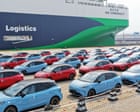
The coffee in Marcus’s cup went cold hours ago, a dark, motionless mirror reflecting the blue light of a spreadsheet that seemed to grow more hostile with every refresh. Outside his kitchen window, the Melbourne street was quiet, wrapped in the heavy, amber haze of a pre-dawn stillness. Inside, the weight was deafening. He wasn't looking at abstract percentages or distant global indices. He was looking at twelve names. Twelve people he had hired, trained, and watched grow over five years at a mid-tier logistics firm, people whose mortgages and children’s school fees lived right there in column C.
Across the ocean, supply chains were snapping under the strain of geopolitical friction, inflation was gnawing at the purchasing power of households from Sydney to Hobart, and central banks were playing a high-stakes game of monetary surgery with interest rates as their scalpel. The headlines called it global economic turmoil. Marcus called it the Tuesday night he had to figure out how to keep his company alive without breaking the people who built it.
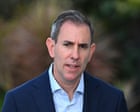
We live in an era where macroeconomics is treated like weather forecasting—something to be observed from behind a windowpane, complete with umbrellas and annoyed sighs at the evening news. But statistics do not bleed. Policy papers do not lie awake at 3:00 AM wondering how to pay for next month’s payroll tax. When theTreasurer of Australia, Jim Chalmers, steps up to a podium in Canberra to warn that the storm gathering across the globe will inevitably force difficult budget cuts at home, he is speaking a language of numbers that masks a deeply human vulnerability.
Yet, nestled within his warning is a stubborn declaration of hope, or perhaps stubborn defiance: Australia should, and can, avoid the abyss of a recession.
To understand what that means, we have to strip away the jargon of fiscal consolidation and treasury forecasts. We have to look at the machinery of a nation of twenty-six million people trying to balance safety with survival on a very narrow bridge.
Consider what happens when the world catches a cold. For decades, Australia’s economic engine has roared on the back of external demand—iron ore shipped to surging Asian manufacturing hubs, gas piped across vast oceanic trenches, and a constant influx of global capital seeking safe harbor. But when global growth stutters, when major economies slow their engines due to persistent inflation and debt overhangs, the ripple reaches local shores with terrifying speed.
It starts with confidence. Confidence is the invisible currency of capitalism. When a consumer reads that global markets are tumbling, they delay buying a new car. When a small business owner hears that interest rates will stay higher for longer, they put off expanding their warehouse. That hesitation is entirely rational on an individual level, but collectively, it is toxic. It is the friction that grinds economic momentum to a halt.
Chalmers’ strategy—and the broader economic balancing act currently playing out in Canberra—rests on a delicate tightrope walk. Cut too deeply, pull back the reins of government spending too abruptly, and you tip a sluggish economy over the edge into contraction. Spend too freely, pump too much liquidity into a system already struggling with inflation, and you force the Reserve Bank to keep interest rates punishingly high, crushing households under the weight of their mortgages.
There is no comfortable middle ground here. There is only management of pain.
Let us step back into the world of tangible reality. Meet Sarah, a nurse working in a busy western Sydney hospital, and her partner Liam, who runs a small electrical contracting business with three employees. They are the twin pillars of the domestic economy: public sector resilience and private enterprise grit.
For Sarah, the pressure comes in the form of cost-of-living creep. The price of groceries, electricity, and fuel has climbed steadily, turning every trip to the supermarket checkout into a silent negotiation with her household budget. She isn't buying luxury items; she is buying chicken breasts, petrol, and school shoes. When the federal budget tightens—when government spending is reined in to cool inflationary pressures—she worries about wage restraint in the public sector, the very system holding the healthcare infrastructure together.
For Liam, the threat is entirely different. Higher interest rates have cooled the residential construction market. The frantic phone calls from homeowners wanting kitchen extensions or new solar setups have slowed to a trickle. He is staring down the barrel of reduced margins and wondering how long he can carry his apprentices if the broader economy stumbles into a technical recession.
If you look at these two lives through the lens of a spreadsheet, they are data points. If you look at them through the lens of human experience, they are the front lines of a national test of resilience.
How does a country like Australia avoid a recession when the global tide is pulling outward?
The answer lies not in a single silver bullet, but in structural adaptation and targeted fiscal discipline. When global demand weakens, a nation must look inward to shore up its productive capacity. This means steering clear of broad-based austerity that starves public infrastructure and education, focusing instead on efficiency, productivity growth, and targeted support for those most vulnerable to the price shocks.
Budget cuts are never popular. No politician wants to stand before the public and announce that public sector projects are being delayed or that spending growth is being capped. The opposition calls it a failure of management; the commentators call it political risk. But economic stewardship sometimes requires the courage of unpopularity. If government spending continues to outpace the economy's ability to supply goods and services, inflation becomes entrenched, forcing interest rates higher for longer. And high interest rates are a regressive tax that hits mortgage holders and small businesses with ruthless impartiality.
By trimming the fat, prioritizing high-yield investments in clean energy transition, skills training, and digital infrastructure, and allowing the private sector room to breathe, a government can engineer a soft landing.
It is a narrow path. One misstep—a premature tax hike, an overzealous spending cut that stalls employment, or an external shock from an overseas banking wobble—can send the economy sliding.
Yet, history suggests Australia has an unusual capacity for weathering these storms. We are a nation built on adaptation, shaped by isolation, and cushioned by robust regulatory frameworks that were forged in the fires of past crises, such as the 1997 Asian financial crisis and the 2008 global financial meltdown. During both epochs, while much of the developed world sank into deep recessions, Australia kept walking.
Why? Because of a combination of timely fiscal stimulus, a flexible exchange rate, and deep trade integration with developing economic powerhouses that continued to demand our resources even when Western markets stalled.
Today, the geopolitical landscape is more fractured, and the inflation dragon is harder to slay. But the fundamental resilience of the Australian workforce remains unchanged.
When Marcus sat at his desk that Tuesday night, looking at those twelve names, he didn't close his business. He didn't panic-fire half his staff. Instead, he gathered them the next morning, laid out the numbers with complete transparency, and asked for a collective pivot. They renegotiated supplier terms, found efficiencies in their delivery routes, and temporarily adjusted working hours to share the load. By the end of the quarter, the company hadn't just survived; it had secured a new contract that locked in its future.
That is the micro-level mirror of what a national economy must do during times of turmoil.
Avoiding a recession is not a guarantee handed down by economic bureaucrats. It is an active, messy, daily choice made by millions of people deciding to keep building, keep hiring, keep treating patients, and keep wiring homes despite the uncertainty hanging in the air.
The global economic storm will arrive. The budget cuts will bite. The headlines will continue to alternate between cautious optimism and stark warning. But the ultimate outcome will not be decided in the marbled halls of international monetary funds or even in the federal parliament.
It will be decided in the quiet resilience of kitchens across the suburbs, in the adaptability of small business owners balancing their ledgers at midnight, and in the refusal of a country to let fear write its final chapter. We are walking the edge, yes. But we have walked it before, and we know how to keep our balance when the earth begins to shake.