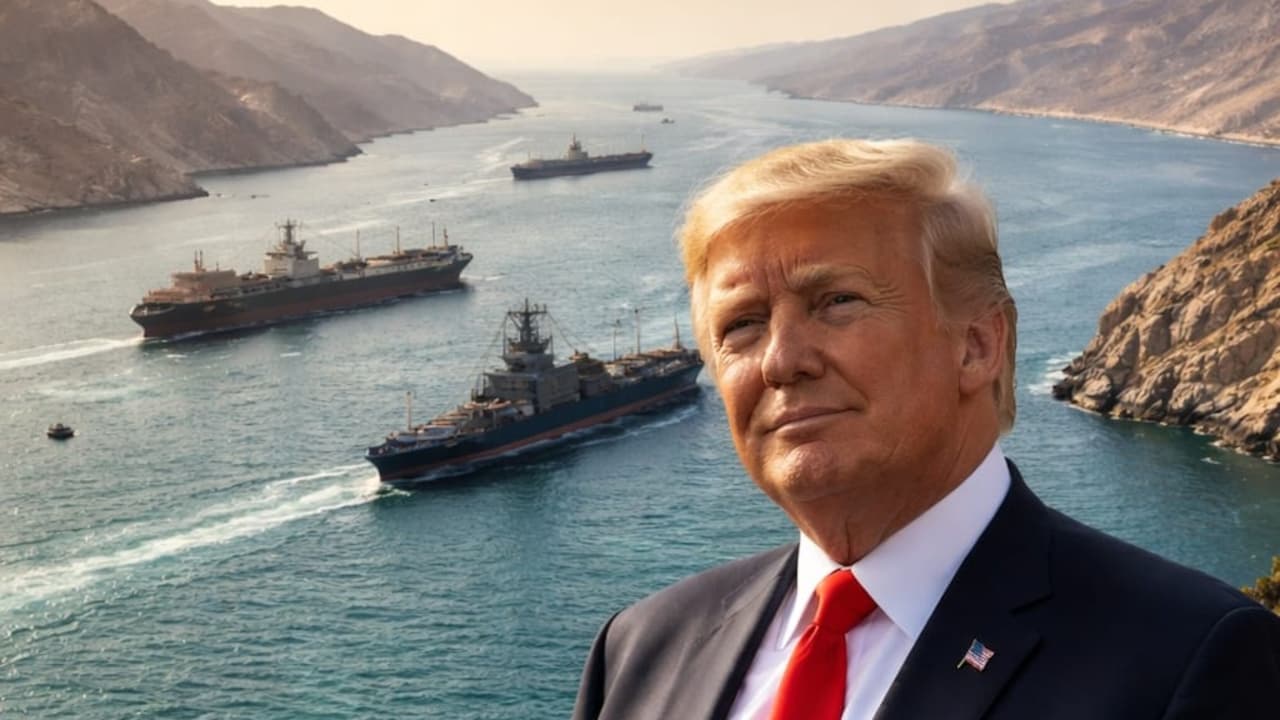
Global trade corridors depend on the maintenance of open maritime chokepoints, yet the financial burden of enforcing security has historically fallen on a single hegemon. The administration of United States President Donald Trump has articulated a hardline economic framework regarding the Strait of Hormuz, demanding that beneficiary nations and regional allies reimburse Washington for the military overhead required to keep the waterway open. This strategy marks a pivot from traditional collective security models to a transactional security framework where protection is treated as a priced commodity.
The Cost Function of Naval Power Projection
Maintaining naval dominance inside a contested chokepoint like the Strait of Hormuz requires a massive concentration of capital and materiel. The logistics chain involves strike groups, mine countermeasures, air defense architecture, and continuous patrols to mitigate asymmetric threats such as drones, fast-attack craft, and anti-ship missiles.
When the United States assumes the role of sole guardian, it absorbs the entire capital expenditure and operational maintenance costs of force projection. Traditional defense economics classifies this as an international public good, where non-rival and non-excludable benefits accrue to all trading nations relying on Middle Eastern energy exports. The Trump administration's policy challenges this classical definition, arguing that the asymmetric distribution of benefits requires an asymmetric distribution of costs. Wealthy energy importers and regional states whose economic survival relies on unhindered hydrocarbon transit are positioned as direct consumers who must offset the security deficit.
Transactional Securitization and the Price of Transit
The operationalization of security cost-recovery has manifested through aggressive proposals, including proposed cargo fees and direct demands for war cost reimbursement. While international bodies such as the International Maritime Organization challenge the legality of mandatory transit tolls in international waters, the underlying economic logic reflects a zero-sum renegotiation of global defense burdens.
The mechanics of this policy operate on three distinct levers:
- Direct Cost Offsets: Demanding that allied nations, including Israel and Gulf energy producers, pay back direct operational outlays incurred during military engagements and regional deterrence operations.
- Transit-Linked Levies: Tying commercial passage rights to financial contributions, transforming the naval escort matrix into a paid service model.
- Burden-Shifting via Blockade Enforcement: Utilizing a naval blockade against hostile actors to force dependent economies to align financially with Washington's strategic objectives or risk commercial isolation.
Structural Friction Points and Strategic Limitations
Attempting to bill allies for maritime security introduces acute structural friction across diplomatic and economic fronts.
First, regional alignment is complicated by differing risk tolerances. Gulf states, while benefiting from American naval power, often bear the immediate diplomatic and physical blowback of retaliatory strikes from adversaries like Iran. Imposing direct financial demands without prior diplomatic synchronization risks alienating local partners who argue they were excluded from the strategic decision-making process that precipitated the crisis.
Second, commercial resistance creates a compliance bottleneck. Global shipping firms operate on razor-thin margins. Introducing unpredictable security levies or cargo-value percentages disrupts supply chain cost predictability, driving up insurance premiums and forcing maritime operators to seek alternative, albeit less efficient, routing.
Strategic Execution
The viability of the guardian-reimbursement model depends on the ability of the enforcing power to monopolize security supply. If alternative security providers fail to materialize, dependent economies face a binary choice: internalize the security fee or accept structural trade strangulation. The forward posture of the United States in the Strait of Hormuz signals an end to unpriced security guarantees, forcing nations dependent on the maritime transit corridor to internalize defense overhead as a standard cost of doing business.
Trump Demands Gulf Nations Pay For U.S. Protection Of ...
This video provides primary source coverage of the administration's financial demands directed at Gulf nations regarding maritime security in the region.