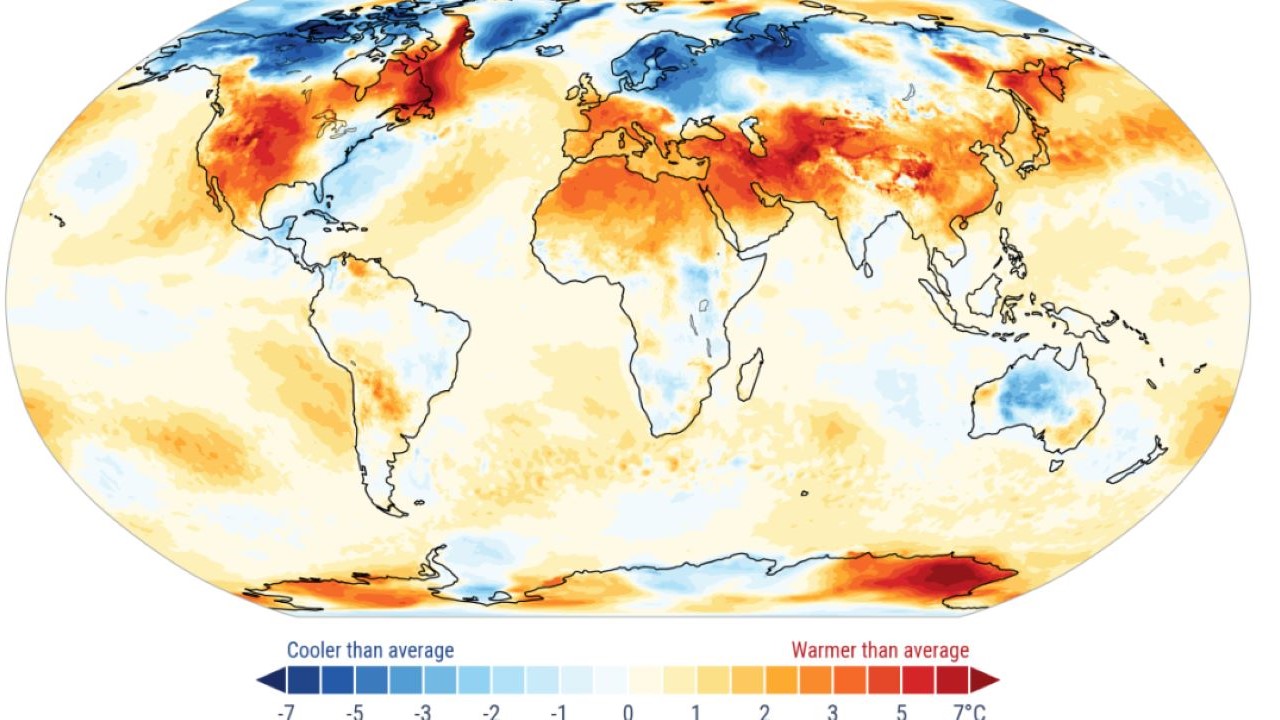
The planet is running a fever that won't break. While we spend our time arguing about daily high temperatures or specific heatwaves, a much more dangerous metric is quietly screaming for attention. It’s called Earth’s energy imbalance. In 2025, this gap reached its highest level since we started keeping track. Basically, the world is trapping way more heat than it’s letting back out into space. It isn’t just a "warm year" thing. It’s a fundamental shift in the physics of our home.
The concept is simple enough for a middle schooler to get, yet it’s the most terrifying data point in climate science. Think of the Earth like a house. Sunlight comes in through the windows. Heat should radiate back out through the roof. Right now, we’ve wrapped the house in a layer of insulation so thick that the heat is stuck inside. The 2025 data shows that this "insulation"—greenhouse gases and the loss of reflective ice—is working better than ever. We're currently trapping about 1.5 to 2 watts of energy for every single square meter of the planet's surface. That sounds small until you multiply it by the entire surface area of the Earth. It’s the equivalent of detonating several Hiroshima-sized atomic bombs every second, 24/7, 365 days a year.
The 2025 Data Spike and Why It Matters
Researchers from NASA and NOAA have been tracking this through the CERES (Clouds and the Earth’s Radiant Energy System) satellite instruments. For decades, the imbalance hovered at much lower levels. Then, around 2014, it started to climb. By 2025, the numbers jumped off the charts. We aren't just seeing a steady rise; we're seeing an acceleration.
Part of this is due to the "double whammy" of 2024 and 2025. We had a massive El Niño event that pumped heat from the ocean into the atmosphere. But there's a deeper, more permanent problem. As we clean up air pollution from shipping and coal plants, we’re removing aerosols. These tiny particles used to act like a mirror, reflecting sunlight away before it could hit the ground. By cleaning our air, we've accidentally pulled back the curtain, letting even more solar energy in. It’s a cruel irony. Better air quality is literally making the planet heat up faster because the cooling effect of smog is gone.
The Ocean Is Our Only Buffer
If all this trapped energy stayed in the air, we’d already be living in an uninhibited furnace. Thankfully—or perhaps ominously—about 90% of that excess energy goes straight into the oceans. The water is acting like a giant sponge.
But sponges have limits.
In 2025, ocean heat content reached levels that shocked oceanographers. This isn't just about coral bleaching or fish migrating. When the ocean absorbs heat, it expands. That’s why sea levels are rising even in places where ice isn't melting yet. More importantly, a warmer ocean fuels more intense storms. We're seeing hurricanes that undergo rapid intensification in ways that defy older weather models. When the ocean is this "charged" with energy, every storm has a higher ceiling for destruction.
Why the 1.5 Degree Target Feels Like a Fantasy
We hear a lot about the 1.5°C goal from the Paris Agreement. Honestly, looking at the 2025 energy imbalance figures, that ship hasn't just sailed—it’s over the horizon. The energy already "in the pipe" ensures that even if we stopped every tailpipe and smokestack today, the planet would keep warming for decades.
This is what scientists call "thermal inertia." Because the ocean takes so long to heat up and cool down, the surface temperature we feel today is a reaction to the energy imbalance from years ago. The record-breaking imbalance of 2025 is a preview of the surface temperatures we'll face in the 2030s and 2040s. We're living in the lag time.
Many people think climate change is a linear process where it gets 0.1 degrees warmer every few years. It’s not. It’s a system of feedback loops. As the planet gets hotter, we lose Arctic sea ice. That ice used to reflect 80% of sunlight. Now, it’s replaced by dark water that absorbs 90% of sunlight. The imbalance grows. The planet gets hotter. More ice melts. Rinse and repeat. This is how you get the "hockey stick" acceleration we're witnessing right now.
Stop Looking at Thermometers and Start Looking at Watts
The biggest mistake in public climate discourse is focusing entirely on air temperature. Air temperature is fickle. It changes with the seasons, with volcanic eruptions, and with weather patterns like La Niña. If a year is slightly cooler than the one before, skeptics come out of the woodwork to claim global warming has "paused."
The energy imbalance data proves that's nonsense. Even in years where surface temperatures stay flat, the total energy in the system continues to climb. The heat is just hiding in the deep ocean or melting sub-surface glaciers. If you want to know how much trouble we're in, don't look at the thermometer on your back porch. Look at the planetary energy budget. It's the only balance sheet that actually matters.
The Role of Methane and Other "Short Lived" Forcers
Carbon dioxide gets all the press, but in 2025, methane concentrations hit a point that worried every atmospheric chemist on the planet. Methane doesn't stay in the atmosphere for centuries like $CO_2$, but while it's there, it’s incredibly efficient at trapping heat.
Recent studies suggest that natural sources of methane—like thawing permafrost and tropical wetlands—are starting to outpace human emissions. If the planet starts emitting its own greenhouse gases because it's already too warm, we lose our "steering wheel." This is why the 2025 record is so significant. It suggests the Earth’s natural systems might be starting to contribute to the imbalance, rather than just reacting to our pollution.
What This Means for Your Daily Life
It’s easy to look at these global numbers and feel like they don't impact your Tuesday morning. They do. The energy imbalance is the "engine" behind every extreme weather event.
- Insurance Costs: In 2025, home insurance rates in high-risk areas like Florida, California, and parts of the Midwest skyrocketed. This is a direct result of the energy imbalance making "once in a century" floods happen every five years.
- Food Prices: Heat stress on crops isn't just about a hot day. It’s about the cumulative energy in the soil and air that prevents plants from recovering at night.
- Grid Reliability: Our electrical grids weren't built for the sustained heat loads we're seeing. The more energy the planet traps, the harder our infrastructure has to work just to stay standing.
Where We Go From Here
We can't just "fix" the energy imbalance overnight. It’s a massive physical system with incredible momentum. However, knowing the scale of the problem allows us to stop wasting time on solutions that don't move the needle.
We need to focus on two fronts: radical emission cuts and massive scale adaptation. Cutting emissions slows down the rate at which the imbalance grows. Adaptation—building sea walls, cooling centers, and resilient food systems—is how we survive the heat that is already locked in.
There is also a growing, albeit controversial, conversation about solar radiation management (SRM). This involves intentionally reflecting a small percentage of sunlight back into space to artificially balance the budget. It’s risky. It has side effects. But as the 2025 data shows the gap between incoming and outgoing energy widening to record levels, these "break glass in case of emergency" ideas are moving from science fiction to serious policy debate.
Practical Steps to Navigate This Reality
Don't wait for a global treaty to change your personal risk profile. The data is clear: the environment is becoming more energetic and less predictable.
- Audit your local risk: Use tools like First Street Foundation to see how your specific property is vulnerable to the increased energy in the climate system (flood, fire, heat).
- Support "Cooling" Infrastructure: Push for local urban planning that includes tree canopies and reflective "cool roofs." These help mitigate the local effects of the global imbalance.
- Decarbonize your life: It sounds cliché, but reducing the "insulation" layer is the only long-term fix. Heat pumps, EVs, and solar aren't just gadgets; they're the only tools we have to stop adding to the energy debt.
- Follow the CERES data: If you want the truth about the climate, stop following sensationalist headlines. Follow the actual NASA energy budget updates. They provide the most honest picture of where we are headed.
The record set in 2025 is a warning shot. The Earth is telling us exactly how much energy it's holding onto. We'd be wise to start listening.