You cannot smell a magnet. You cannot taste the invisible thread binding your smartphone screen to your fingertips, nor can you hear the low hum of an electric motor spinning thousands of revolutions per minute inside a modern wind turbine. But if you were to walk the sun-bleached earth of Western Australia on a blistering afternoon, you would smell something else entirely. Iron. Dust. Sweat. The ancient, heavy scent of a continent that has spent billions of years keeping secrets locked deep inside its red stones.
For decades, the story of global industry was written in petroleum and coal. We burned our way through the twentieth century, leaving soot on the windows of history. Today, the fuel has changed, but our hunger remains just as ravenous. We trade carbon for magnets. We trade fossil smoke for rare earth elements. Neodymium. Praseodymium. Dysprosium. Names that sound like spells cast by alchemists, yet names that dictate whether a nation can build an electric vehicle, guide a missile, or keep a modern hospital running when the grid fails.
And right now, almost every single one of those spells is spoken with a single accent.
Beijing holds the pen. Or rather, Beijing owns the kitchen, the chef, and the pantry. For over thirty years, China methodically secured a near-monopoly on rare earths. Not because the earth beneath its soil was uniquely generous, but because everyone else decided the work was too dirty, too complicated, and too environmentally perilous to bother with. Refining rare earths involves acids, separation columns, and radioactive byproducts. It is a messy business. For a long time, the Western world preferred to outsource its mess and enjoy the clean, shiny gadgets that came out the other end.
Then came the rude awakening. Geopolitics turned icy. Supply chains snapped like dry twigs during global crises. Suddenly, owning the raw material in the ground meant nothing if you lacked the capacity to wash, separate, and refine it into something useful.
Enter the dust of Kalgoorlie.
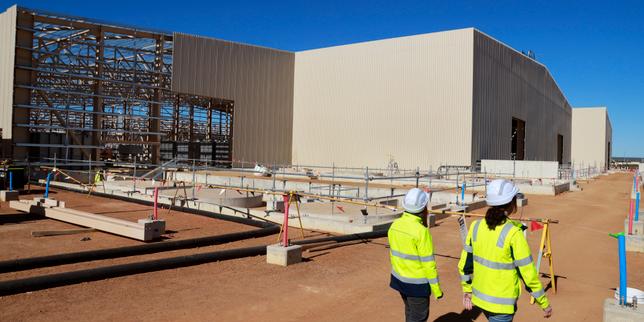
Picture a dusty stretch of the Australian outback where the horizon stretches so wide it makes you feel entirely weightless. This is where a quiet industrial counter-revolution is taking shape. A rare earths refinery is rising from the red earth, designed to do something radical: break an empire's monopoly.
To understand why this matters, you have to look past the spreadsheets and corporate press releases. You have to look at Marcus, a hypothetical veteran metallurgical engineer who has spent thirty years coaxing valuable metals out of stubborn rocks. Marcus remembers when the term rare earths was something only chemistry professors cared about. Today, Marcus stands by a massive steel vessel, watching slurry bubble and churn. He knows the stakes. Every ton of neodymium that emerges pure and ready from this plant is a brick pulled from a towering wall of dependency.
The process itself is a masterclass in stubborn patience. Rare earth elements are rarely found alone; they are locked together in complex mineral cocktails, clinging to one another like stubborn siblings. Separating them requires hundreds of stages of liquid-liquid extraction. Imagine pouring two liquids together that refuse to mix, then tilting, stirring, and cascading them through a towering cascade of tanks until individual elements surrender and separate. It is chemistry performed with tweezers and sledgehammers.
Australia possesses immense deposits of these critical minerals, sitting quietly beneath sheep stations and eucalyptus forests. Mount Weld is one such treasure chest, holding some of the highest-grade rare earth ores on the planet. For years, the drill-and-ship model prevailed. Dig it up, put it on a bulk carrier, send it across the ocean to be refined elsewhere, and buy it back later at a markup.
That model is dying.
The new refinery rising in Western Australia aims to flip the script entirely. Value addition. Sovereignty. Resilience. These are not merely corporate buzzwords tossed around by executives in air-conditioned boardrooms; they are survival metrics for modern democracies. If you cannot refine what you mine, you are not an industrial power. You are a quarry.
Consider what happens next when this facility reaches full capacity. It will not replace China overnight. No single plant can overturn a thirty-year head start built on massive state subsidies and entrenched supply chains. But it introduces something far more dangerous to a monopoly: an alternative. It proves that the West can stomach the environmental oversight, master the chemical complexity, and invest the capital required to process its own destiny.
Critics point out the hurdles, and they are right to do so. Water scarcity in the outback is a constant, biting reality. Environmental regulations are stringent, rightly demanding zero shortcuts. Capital costs are staggering, running into the hundreds of millions, with shifting commodity prices threatening profit margins before the first batch of oxide even clears the gates. There is no guarantee of smooth sailing.
Yet, hesitation is a luxury left to the past.
When you hold a modern electric vehicle key fob, you are holding a piece of a global chessboard. Every permanent magnet inside it vibrates with the tension of competing superpowers. By building refineries closer to the mines, Australia is shortening the chain of vulnerability. It is drawing a line in the sand, written in red dust and heavy machinery.
The wind turbines will keep spinning. The digital world will keep demanding more power, more speed, more miniaturization. Somewhere out in the vast, burning expanse of the Australian desert, a valve turns, a pump hums, and a stream of pale liquid begins its long journey toward purity. The monopoly is cracking. And the sound of that fracture echoes across the globe.

.full.3529161.png)
