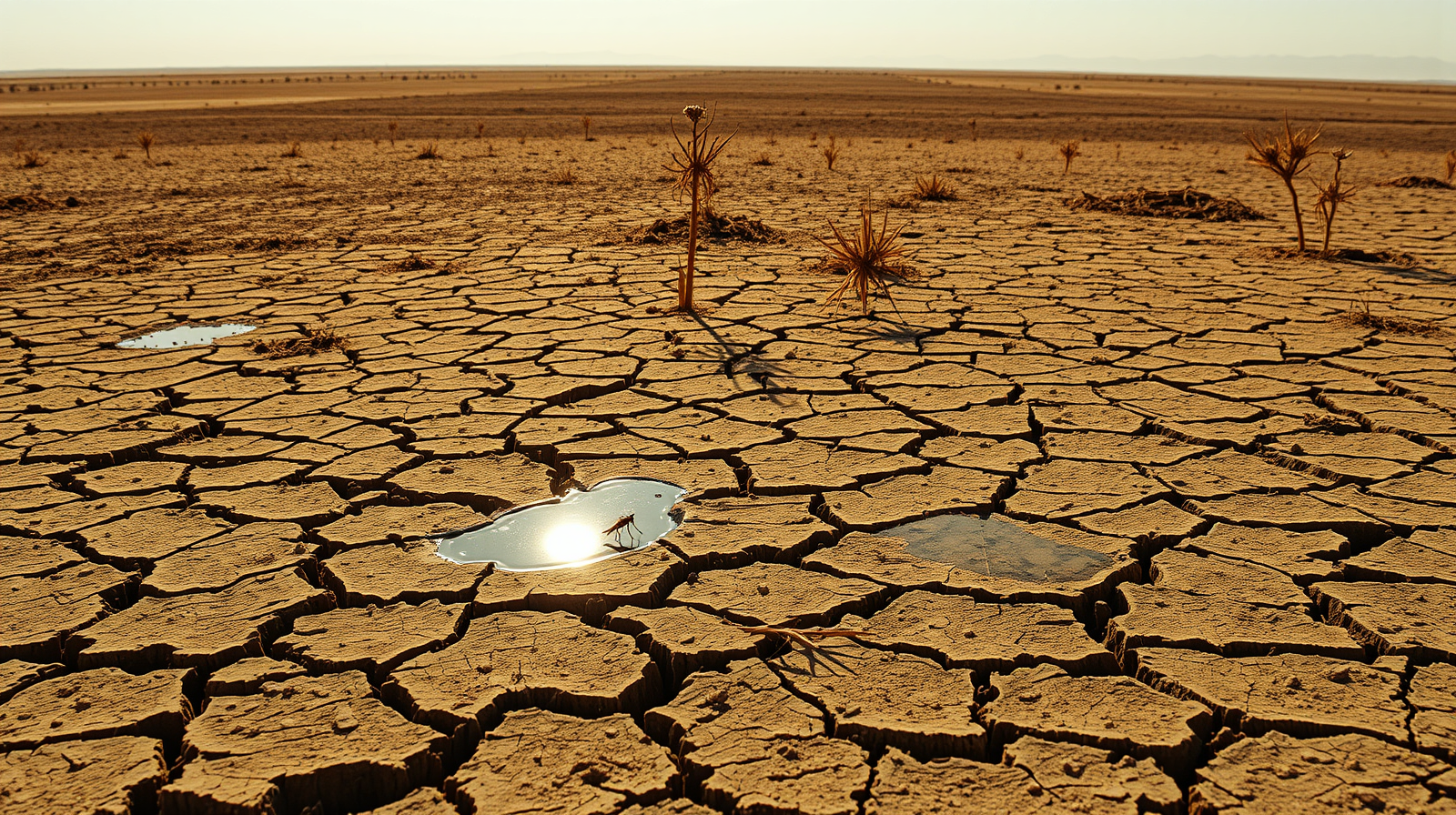
Every time a dry spell bakes the soil, the celebratory headlines write themselves. Puddles vanish. Backyards dry out. The lazy consensus among mainstream weather reporters and armchair epidemiologists is that a historic drought means a free pass from mosquito season. They look at cracked mud and assume the bloodsuckers are wiped out.
They are wrong.
That narrative is not just naive; it is actively dangerous. When you think a drought has solved your pest problem, you lower your guard. You stop clearing containers, you skip maintenance, and you walk straight into the ecological trap that dry periods actually set up.
I have spent years tracking vector dynamics and watching municipalities blow millions on spray programs that react to the wrong signals. Let us dismantle the lazy assumptions about drought and mosquitoes right now.
The Survival Mechanics Everyone Ignores
The primary misconception is that mosquitoes need continuous, standing water to persist. If the water goes away, the logic goes, the mosquitoes go away.
Biology does not work that way.
Many of our worst pest and vector species—particularly floodwater mosquitoes in the genus Aedes—do not lay their eggs directly in permanent ponds. They deposit them on damp soil or the interior walls of containers just above the waterline. These eggs are built like armored bunkers. They are desiccation-resistant. They can sit baking in dry dirt or stuck to the side of an abandoned tire for months, completely dormant, waiting for a specific chemical trigger.
That trigger is not a gentle morning dew. It is a sudden inundation.
When a historic drought finally breaks with a torrential downpour, it does not slowly fill a balanced aquatic ecosystem. It floods millions of square feet of dry ground simultaneously. Every single desiccation-resistant egg deposited over the last three months hatches at the exact same moment.
The result is not a sparse emergence. It is a synchronized biological explosion.
The Predator Vacuum Effect
There is a second layer to this dynamic that amateur commentators completely miss: the predator collapse.
In a normal, stable aquatic environment, a complex web of predators keeps mosquito larvae in check. Dragonfly nymphs, diving beetles, backswimmers, and native fish feast on the wrigglers before they ever take wing.
Drought wipes those predators out first.
Permanent water bodies shrink or vanish entirely, decimating the populations of apex aquatic hunters. When the drought-breaking rains finally arrive, the temporary puddles, clogged gutters, and flooded street drains fill with water, but they are entirely devoid of natural predators.
Imagine a scenario where thousands of mosquito larvae hatch into an environment with zero competition and zero predators. Their survival rate skyrockets from a baseline ten percent to near totality.
You do not get fewer mosquitoes after a drought. You get a monoculture of survivors facing no resistance, multiplying faster than public health agencies can track them.
The Urban Micro-Habitat Reality
Rural areas might see a temporary dip in overall insect mass during severe dry spells, but cities and suburban yards operate under entirely different rules.
Urban infrastructure creates artificial micro-climates that insulate pests from regional weather patterns. When natural wetlands dry up, mosquitoes do not pack their bags and die. They migrate toward human habitation because that is where artificial water sources persist regardless of climate data.
Air conditioner condensation drips, over-watered lawns, ornamental garden features, subterranean utility vaults, and poorly sealed septic lines provide perpetual, hidden oases. While the headlines celebrate a drought in the countryside, suburban backyards are operating as high-density vector breeding facilities fueled by garden hoses and irrigation systems.
Ignoring this urban resilience is how municipalities get caught flat-footed every single summer.
The Flawed Logic of Reactive Vector Control
Public health budgets are notoriously mismanaged. Most local mosquito control districts operate on a reactive model. When it is dry, they cut spending and scale back monitoring. When it rains after a drought, they scramble to deploy trucks and larvicides after the population has already surged.
This is terrible strategy. Spraying adulticides over neighborhoods after a post-drought explosion is like putting a band-aid on a severed artery. You knock down a fraction of the flying adults while millions more are developing undisturbed in hidden domestic containers.
If you want to manage vector populations effectively, you have to do the opposite of what the mainstream narrative suggests. You do not relax during a drought. That is your window of maximum leverage.
What You Should Do Instead
Stop waiting for the weather report to tell you when to care about pests. Implement these actionable rules immediately:
- Hunt the hidden water during the dry spells. When everything looks parched, female mosquitoes concentrate their remaining search efforts on your yard. Check saucers under potted plants, children's toys left outside, and unmaintained pool covers.
- Scrub containers, do not just dump them. Simply pouring out water leaves behind the glued-on eggs of container-breeding species like Aedes albopictus. You must physically scrub the sides of containers with a stiff brush to destroy the dormant embryos.
- Treat the sudden downpour as DEFCON One. The exact moment a heavy rain hits after a prolonged dry period is when your risk profile spikes exponentially. Treat your property with biological larvicides like Bacillus thuringiensis israelensis (Bti) within twenty-four hours of a major storm breaking a dry spell.
The weather is not saving you. The drought is just loading the spring.