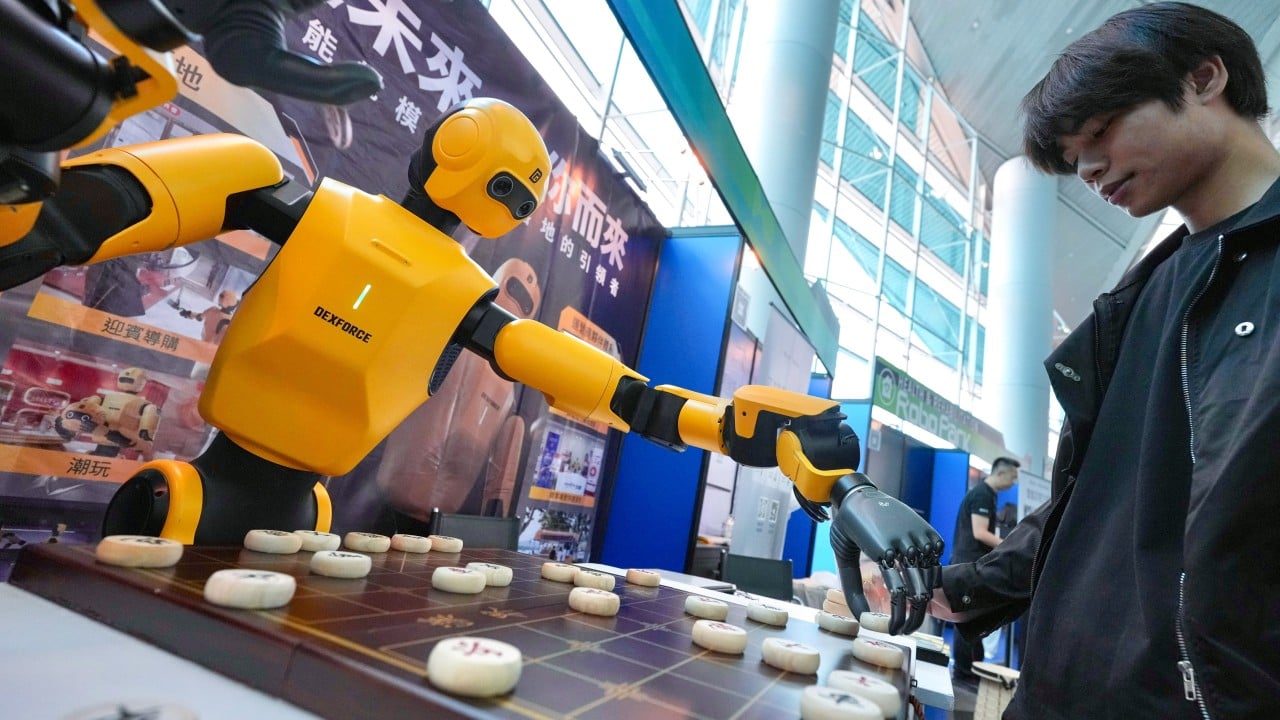
Demographic contraction forces technological adoption faster than venture capital ever could. Mainland China is executing a rapid, state-directed deployment of artificial intelligence into elder care to offset a shrinking labor pool, while Hong Kong—facing one of the highest life expectancies on earth alongside acute nursing shortages—remains trapped in pilot-program inertia. To survive the coming dependency ratio spike, Hong Kong must stop treating elder-tech as a boutique welfare subsidy and instead integrate directly into mainland China’s industrial supply chains, cross-border data protocols, and clinical automation pipelines.
The Structural Mismatch of Longevity and Labor
Standard economic models treat population aging as a gradual fiscal drag, but the operational reality in East Asia is a sudden nonlinear collapse in care capacity. This phenomenon is governed by the Old-Age Dependency Ratio, defined as the number of individuals aged 65 and older per 100 working-age individuals (ages 15 to 64). As this ratio climbs, the traditional labor-intensive care model breaks down mathematically. You cannot hire your way out of a deficit when the pool of potential caregivers is shrinking simultaneously with the surge in patients requiring high-acuity assistance.
Mainland China recognized this structural ceiling early. With hundreds of millions of citizens entering retirement over the next two decades, Beijing categorized smart elder care—often termed "Silver Economy" infrastructure—as an industrial policy imperative rather than a localized healthcare issue. By linking artificial intelligence, robotics, and Internet of Things (IoT) telemetry to national manufacturing goals, mainland municipalities have compressed the time required to move hardware from laboratory prototypes to mass residential deployment.
Hong Kong presents a sharper demographic cliff with a far slower institutional response. The city boasts the longest life expectancy globally, regularly exceeding 85 years, yet its fertility rate hovers near the bottom of global rankings. Unlike mainland cities that can draw upon vast domestic manufacturing bases and centralized urban planning, Hong Kong operates with a fragmented healthcare system split between overloaded public hospitals under the Hospital Authority and an under-regulated private residential care sector. While mainland tier-one cities deploy predictive monitoring across entire districts, Hong Kong’s elder care infrastructure still relies heavily on manual record-keeping, reactive emergency room admissions, and imported domestic labor.
Deconstructing Mainland China’s AI Elder Care Architecture
To understand where Hong Kong lags, one must examine the three distinct operational layers mainland technology firms and municipal governments have built to automate geriatric support. This architecture does not rely on humanoid companions; it focuses on high-frequency data capture, predictive triage, and physical load reduction.
1. Ambient Telemetry and Fall Prevention
The primary driver of catastrophic health decline in elderly populations is an undetected fall or acute physiological event inside the home. Mainland deployments bypass wearable devices—which suffer from notoriously low compliance rates among seniors with cognitive decline—in favor of millimeter-wave (mmWave) radar and acoustic sensors.
- Mechanism: mmWave radar bounces radio frequencies off objects in a room to map posture, gait velocity, and respiration rates without capturing optical video. This preserves privacy in bathrooms and bedrooms where most falls occur.
- Algorithmic Execution: Edge-computing chips process these point-cloud returns locally, flagging anomalies such as a sudden drop in center-of-mass or prolonged immobility, and automatically routing alerts to community response grids within seconds.
2. Predictive Chronic Disease Management
Hospital congestion stems from preventable exacerbations of chronic conditions like hypertension, diabetes, and chronic obstructive pulmonary disease (COPD). Mainland health-tech ecosystems integrate continuous biometric data from home smart-terminals directly into municipal health clouds. Machine learning models trained on millions of longitudinal patient records identify subtle deviations in blood pressure variability or sleep architecture days before an acute crisis manifests. Community health workers receive automated triage lists, allowing targeted interventions that keep high-risk seniors out of tertiary hospital beds.
3. Exoskeletons and Physical Assistive Robotics
The physical toll of lifting and transferring non-ambulatory patients causes high burnout and injury rates among geriatric nurses. Industrial robotics firms in Shenzhen and Shanghai have adapted powered lower-back exoskeletons and automated patient-transfer beds specifically for elder care facilities. By reducing the mechanical load on human caregivers by 30 to 50 percent, these systems extend the working careers of existing staff and allow a single attendant to safely manage higher patient ratios.
The Four Bottlenecks Paralyzing Hong Kong’s Adoption
Hong Kong does not lack capital, academic research output, or awareness of its demographic trajectory. Its universities produce foundational research in robotics and biomedical engineering. Yet this intellectual capital rarely translates into systemic deployment across the city’s residential care homes for the elderly (RCHEs) or public housing estates. Four systemic bottlenecks explain this execution gap.
Capital Allocation via Grant Fragmentation
Hong Kong’s primary mechanism for funding elder-tech is the Innovation and Technology Fund for Application in Elderly and Rehabilitation Care (I&T Fund). While well-intentioned, grant-based procurement models create a valley of death for hardware and AI startups. Care homes apply for subsidies to purchase discrete units—a few robotic pets, a handful of smart mattresses—without the recurring operational budgets required for software maintenance, staff retraining, or systems integration. Vendors cannot achieve economies of scale selling ten units at a time through bespoke grant applications, starving the local ecosystem of the volume needed to refine algorithms.
The Regulatory and Data Silo Wall
Effective AI requires massive, longitudinal datasets to train models and validate clinical efficacy. In Hong Kong, strict interpretations of the Personal Data (Privacy) Ordinance, combined with institutional risk aversion, keep clinical records locked inside the Hospital Authority’s Clinical Management System. Private care homes, NGOs, and technology vendors cannot easily access anonymized longitudinal health data to train predictive algorithms. Furthermore, cross-border data transfer restrictions between Hong Kong and mainland China prevent Hong Kong institutions from utilizing mainland cloud-based AI models trained on vastly larger demographic cohorts, forcing local developers to build inferior models on statistically insignificant sample sizes.
Spatial Constraints and Retrofit Friction
Hong Kong’s high-density urban environment imposes brutal physical limits on hardware deployment. Many private RCHEs operate in converted commercial spaces with narrow corridors, tight turning radii, and outdated electrical and network infrastructure. Autonomous mobile robots (AMRs) designed for spacious mainland care facilities often fail to navigate Hong Kong’s cramped floor plans. Retrofitting older buildings with high-speed Wi-Fi and edge-computing gateways introduces capital costs that thin-margin private operators refuse to absorb.
Workforce Incentive Misalignment
In an environment dominated by imported manual labor—specifically foreign domestic helpers—the immediate economic calculation often favors cheap human labor over capital-intensive automation. Households and private care operators frequently view AI monitoring systems as an unnecessary capital expenditure when they can hire a live-in caregiver for a fixed monthly wage. This short-term arbitrage ignores the impending supply crunch: as neighboring Southeast Asian economies develop and aging populations across East Asia compete for the same finite pool of caregivers, Hong Kong’s reliance on imported manual labor will face severe wage inflation and supply shortages.
Operational Mechanics of Cross-Border Integration
Closing the gap does not require Hong Kong to build a sovereign AI elder-care industry from scratch. Attempting to replicate Shenzhen’s hardware manufacturing ecosystem or Shanghai’s massive data lakes inside a 1,100-square-kilometer territory is economically irrational. Instead, Hong Kong must execute an asymmetric strategy that exploits its specific institutional advantages—clinical governance, international regulatory alignment, and financial structuring—while outsourcing hardware manufacturing and base-model training to the Greater Bay Area (GBA).
Shifting from Device Procurement to Outcome-Based Contracting
The Hong Kong government must restructure its subsidy architecture. Instead of reimbursing care homes for buying specific gadgets, the Social Welfare Department should transition to outcome-based contracting. Under this model, public funds pay technology service providers based on measurable clinical reductions: fewer emergency room transfers, lower incidence of pressure ulcers, or reduced fall rates within a facility. This shifts the technical risk onto the vendors, forcing them to deploy integrated, reliable AI telemetry suites rather than disconnected novelty devices.
Establishing a Bi-Directional GBA Health Data Sandbox
To overcome the training data deficit, regulators in Hong Kong and Guangdong must establish a secure, federated learning sandbox within the Lok Ma Chau Loop (Hetao Shenzhen-Hong Kong Science and Technology Innovation Co-operation Zone).
- Federated Architecture: Rather than moving raw patient records across the border—which triggers privacy compliance failures—AI models can be trained locally on mainland datasets, exported to Hong Kong servers, and fine-tuned on local clinical data without raw records ever leaving Hong Kong jurisdiction.
- Algorithmic Localization: This allows Hong Kong providers to adapt mainland predictive models to account for local dietary habits, Cantonese speech patterns (crucial for voice-activated interfaces and cognitive decline detection), and specific pharmaceutical regimens used by the Hospital Authority.
Standardizing Interoperability Protocols
A sensor array is useless if its alerts do not trigger a clinical workflow. Hong Kong must mandate open Application Programming Interfaces (APIs) for all publicly subsidized elder-tech deployments. Data from mmWave fall sensors, smart beds, and wearable glucometers must feed into a unified middleware layer accessible by both private care operators and public community nursing teams. Standardizing data schemas eliminates vendor lock-in and ensures that when a resident transitions from a private care home to a public hospital, their baseline telemetry travels with them.
Limitations and Systemic Risks of the Automation Play
Treating AI as a complete substitute for human care introduces severe operational hazards. Strategy consultants and policymakers frequently overlook the failure modes of geriatric automation, leading to brittle systems that collapse under real-world edge cases.
Algorithmic Bias and False-Positive Fatigue
Predictive health models trained on younger or healthier cohorts generate high false-positive rates when applied to frail, multimorbid octogenarians. If an ambient monitoring system triggers twenty false fall alarms per night across a 100-bed facility, night-shift nurses will inevitably mute the alerts. This phenomenon, known as alarm fatigue, degrades care quality below pre-automation baselines. Systems require rigorous local calibration and continuous feedback loops to suppress noise while maintaining sensitivity to genuine emergencies.
The Hardware Maintenance Deficit
Deploying robotics and sensor networks into non-technical environments creates an ongoing maintenance burden. Sensors drift out of calibration, lithium batteries degrade, and firmware updates break network connectivity. Without dedicated technical support contracts—which most small RCHEs cannot afford—automated systems rapidly become expensive e-waste. Any viable deployment strategy must bundle five-year maintenance and hardware replacement cycles into the initial capital expenditure.
Ethical Erosion and Social Isolation
Over-indexing on remote telemetry risks accelerating the institutional isolation of seniors. When families and facilities rely on radar and automated medication dispensers to verify a senior’s physical safety, human touchpoints inevitably decline. While AI solves the logistical problem of physical monitoring, it exacerbates the psychological crisis of loneliness, which independently drives cognitive decline and mortality. Automation must strictly be deployed to free up human labor for high-empathy interactions, not to eliminate human presence entirely.
The Strategic Play for Hong Kong’s Healthcare Leadership
Hong Kong’s healthcare planners and private care operators have a narrow window—roughly five to seven years—before the peak of the baby boomer cohort hits extreme old age and overwhelms existing hospital infrastructure. Incremental pilot schemes are no longer defensible.
The immediate strategic move is to reclassify elder-tech from a social welfare expenditure to critical urban infrastructure, mirroring the regulatory treatment of telecommunications and power grids. Concurrently, Hong Kong’s largest private property developers and institutional healthcare operators must bypass local boutique vendors and form direct joint ventures with tier-one mainland AI and robotics firms. By pairing mainland hardware and predictive algorithms with Hong Kong’s clinical governance and Cantonese linguistic datasets, these consortia can build standardized, turnkey automated care facilities in the Greater Bay Area—exporting Hong Kong’s medical management standards northward while importing scalable automation southward to stabilize the city’s domestic care deficit.


