Ink is wet. Breath is cheap.
We live inside an acoustic theater, a ceaseless amphitheater of declarations where every human being holds a pocket-sized megaphone. We announce our intentions to the ether. We draft mission statements for our mornings, broadcast our resolutions to social algorithms, and draft elaborate blueprints for futures we have not yet earned the right to inhabit. Talk is not merely cheap; it is an inflationary currency, printed in endless supply by a culture that mistakes the sound of its own voice for progress.
Consider a hypothetical scenario, a composite drawn from a thousand sterile corporate boardrooms and cluttered home offices. Let us call him Julian. Julian is brilliant at the noun phase of existence. He can spend forty-five minutes deconstructing the philosophical implications of email hygiene, sketching color-coded matrices on glass whiteboards, and convincing anyone within earshot that his strategy for Tuesday is nothing short of revolutionary. He speaks with a rhythmic cadence that sounds like competence. He uses words that smell like leather-bound boardrooms.
Listen closely to Julian. Notice how comfortable the air feels when it is full of his explanations.
Now, look at Julian’s desk. The project due last Friday sits untouched. The client email remains an unblinking cursor on a blank white screen. The architecture of his ambition is entirely verbal. He has talked himself into a state of total exhaustion, mistaking the adrenaline spike of articulation for the muscle ache of execution.
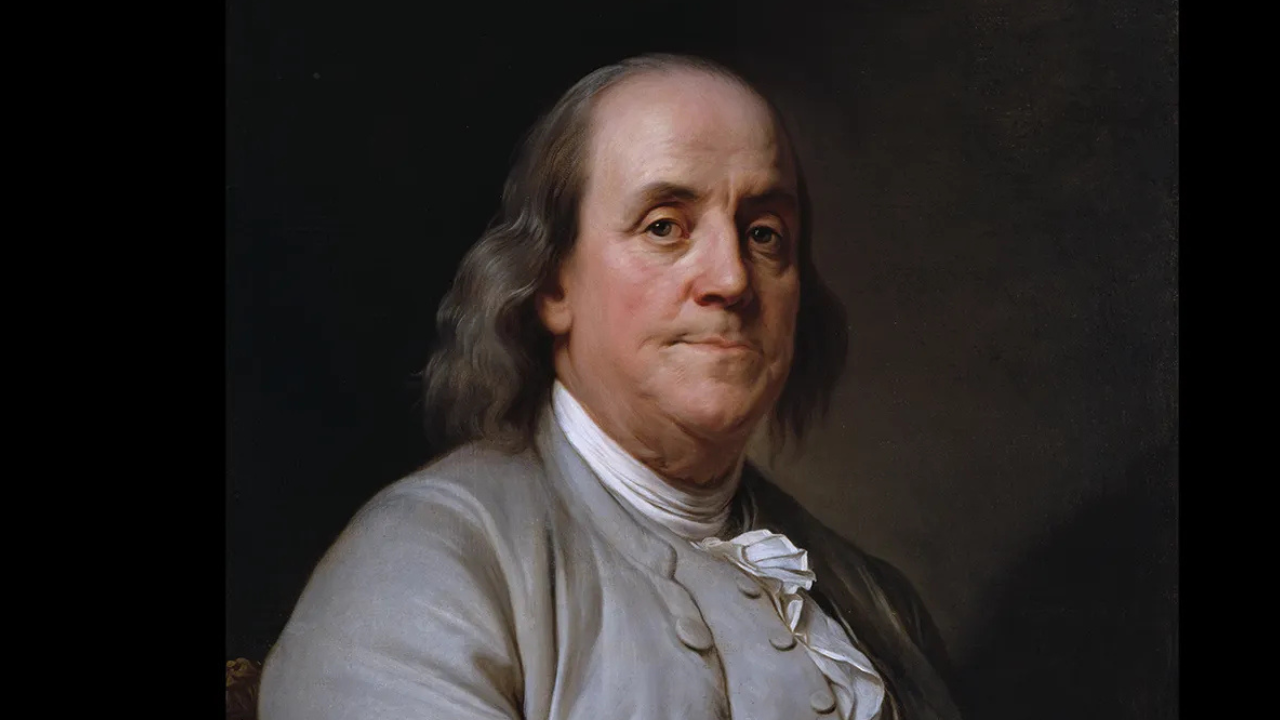
Benjamin Franklin understood the pathology of Julian long before modern productivity culture turned procrastination into an art form. Writing under the pseudonym Richard Saunders in Poor Richard’s Almanack, Franklin carved out a maxim that has survived centuries of linguistic drift because it hits a raw, exposed nerve in the human psyche:
Well done is better than well said.
It is a short sentence. It contains no jargon. It refuses to negotiate. Yet it stands like a guillotine over ninety percent of modern human productivity.
To understand why this distinction matters, we have to look at what happens inside the human brain when we open our mouths versus when we close them and pick up a shovel.
Psychologists have studied what they call the "social reality" of goals. When you tell someone your plan—when you articulate your grand design and receive their nod of approval, their widening eyes, their validation—your brain registers a premature sense of completion. The neurological reward circuits light up as though the deed is already done. You wanted the feeling of achievement, and your friend’s applause provided a cheap, immediate substitute. You got the prize without running the race. Consequently, the biological drive to actually execute the task evaporates.
Talk acts as a pressure release valve. It lets the steam out of the boiler before the train can move an inch.
History is allergic to talkers. If you walk through the archives of any great endeavor—the construction of the transcontinental railroad, the eradication of smallpox, the quiet, painstaking code written in basement apartments that built the modern internet—you find an eerie absence of rhetoric. The people who changed the physical and intellectual topography of the earth were remarkably unchatty about their process.
Take the winter of 1732, when Franklin himself was pushing the boundaries of printing, civic infrastructure, and scientific inquiry in Philadelphia. He did not issue press releases about his intention to found a public library or invent an energy-efficient stove. He simply drew the diagrams, cast the iron, and walked away from the forge before anyone could ask him what he thought about heating efficiency. He knew that if he spent three days telling people how warm his new stove would make them, he would lose three days of fire-building.
We have inverted this wisdom. Today, we optimize for the applause. We build personal brands out of promises. We draft elaborate threads detailing how we are going to change our habits, clean our diets, scale our businesses, or write our masterpieces. The timeline rewards the announcement, not the delivery.
And so, a strange malaise settles over us. We feel busy, yet we produce nothing. We feel exhausted, yet we have broken no sweat. We are crushed under the invisible weight of a thousand unfulfilled conversations.
Break the cycle.
Notice the exact moment in your day when you begin to narrate your ambitions to yourself or others. Catch yourself mid-sentence as you start to explain how you are going to do something. Recognize that speech for what it is: a defense mechanism designed to protect you from the terrifying vulnerability of actually trying and potentially failing in silence.
Stop describing the mountain. Put on your boots.
The silence that follows a closed mouth is heavy, awkward, and charged with potential. It is the space where work happens. It is the raw material of reality. When you finally finish a thing—truly finish it, down to the last unglamorous, frustrating detail—you will notice something remarkable. You won't need to tell anyone. The work has a gravity of its own. It speaks with a quiet, undeniable authority that no amount of eloquence can ever replicate.
The world is full of echoes. Be the strike.