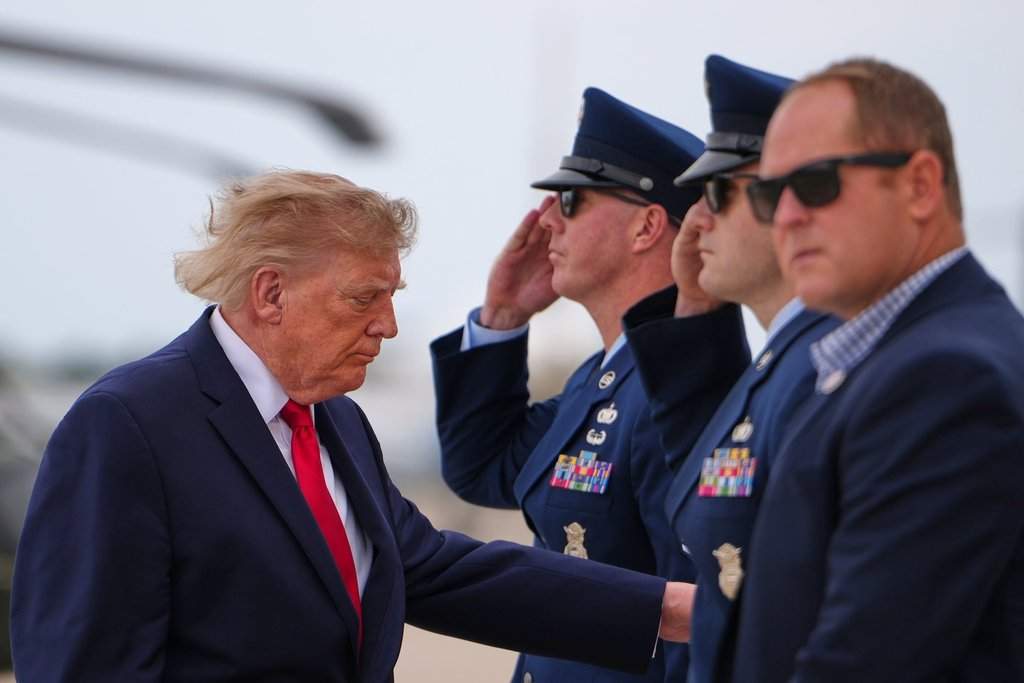
Iranian President Masoud Pezeshkian’s formal declaration that Tehran no longer trusts Washington to engage in meaningful dialogue marks a fundamental rupture in the long-standing diplomatic chess match between the Islamic Republic and the West. Far from standard rhetoric for domestic consumption, this shift exposes the exhaustion of the reformist faction's premise: that economic relief could be unlocked through compliance and negotiation. Decades of transactional hostility, broken treaty commitments, and tightening sanctions have left Iranian leadership convinced that American political volatility renders any bilateral agreement structurally worthless.
To understand why this proclamation carries such weight, one must examine the mechanics of credibility in international statecraft. When a government enters a multilateral framework like the 2015 Joint Comprehensive Plan of Action, it absorbs immediate domestic political costs in exchange for long-term structural guarantees. The subsequent unilateral U.S. withdrawal under the Trump administration did not merely destroy a single accord; it provided an empirical case study for hardliners in Tehran who argued that Western signatures hold no enduring value beyond an electoral cycle. Pezeshkian, who campaigned on a platform of pragmatic engagement and economic resuscitation through international outreach, has now hit the structural ceiling of that philosophy.
The Domestic Calculus of Disillusionment
Inside Iran, the political architecture is constrained by a security establishment that evaluates foreign powers through a lens of permanent threat assessment. The Islamic Revolutionary Guard Corps and allied decision-makers never shared Pezeshkian’s romanticized view that technical compliance with nuclear safeguards would induce Washington to lift systemic financial blockades. Every tightening of secondary sanctions by Western treasuries validated the hardline thesis that economic sovereignty can only be preserved through regional deterrence and nuclear hedging.
When a reformist executive is forced to abandon the utility of talks, the internal power balance shifts decisively. Pezeshkian’s admission is an acknowledgment that the political capital spent advocating for dialogue yielded zero strategic return. The economic metrics inside Iran tell a brutal story of persistent inflation, currency depreciation, and structural isolation, none of which can be mitigated by a diplomatic channel that Washington treats with casual indifference or domestic political posturing.
The Structural Paralysis of American Middle East Policy
Washington bears equal responsibility for this diplomatic dead end, driven by a bipartisan consensus that treats Iran exclusively as a security problem to be contained rather than a regional actor to be negotiated with. American foreign policy cycles oscillate between maximalist economic pressure and tactical deterrence, leaving no stable framework for long-term compromise. A administration seeking a grand bargain finds itself constrained by congressional hostility, domestic lobbying groups, and allied security concerns in Tel Aviv and Riyadh.
Consequently, U.S. offers of talks are viewed in Tehran not as invitations to mutual security, but as instruments designed to extract unilateral concessions without offering permanent sanctions relief. This asymmetry is fatal to diplomacy. Without a credible mechanism to guarantee that a future U.S. president will honor commitments made by the current incumbent, any treaty negotiated today is structurally insolvent before the ink dries.
The Regional Realignment and the Cost of Isolation
With bilateral channels effectively frozen, Tehran is doubling down on alternative architecture. Deepening strategic alignments with Moscow and Beijing, alongside pragmatic diplomatic repairs with Gulf neighbors, reflect an explicit strategy to bypass Western economic levers entirely. While these partnerships cannot fully replace European trade or Western technology transfers, they provide a sufficient cushion to survive the current baseline of sanctions.
The closure of this diplomatic window guarantees a prolonged era of low-intensity friction across the Middle East. Proxy networks, maritime security flashpoints, and clandestine cyber operations will continue to fill the vacuum left by the absence of high-level communication. Trust, once shattered in international relations, requires generations of consistent behavioral reform to rebuild. Washington and Tehran have demonstrated neither the patience nor the political courage required for that repair, locking both nations into a trajectory where confrontation remains the default language of statecraft.