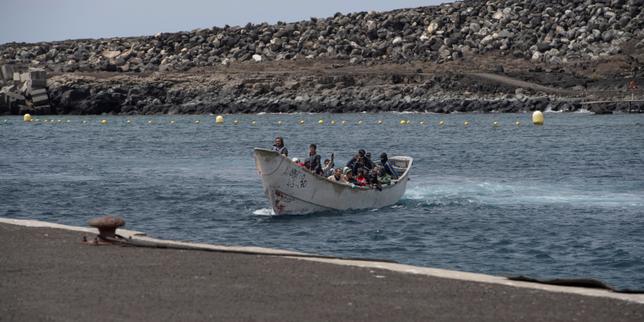
Tragedy struck off the coast of Mauritania last week, leaving 144 migrants dead or missing. Predictably, the international news machine kicked into gear. We saw the standard outrage, the customary calls for expanded border surveillance, the solemn pledges to crack down on human traffickers, and the ritualistic pleas for more emergency aid.
It is a comfortable narrative. It gives everyone a designated villain—the predatory smuggler—and a benevolent savior—the international donor community.
It is also fundamentally dishonest.
The conventional response to Atlantic route shipwrecks operates on a flawed assumption: that if we just throw enough maritime patrols at the West African coast and lock down departure points like Nouadhibou, the flow will stop and lives will be saved. That assumption ignores basic market dynamics and decades of migration data.
When you tighten security at primary departure hubs without addressing the structural forces driving people out, you do not stop migration. You merely inflate the risk premium. You force desperate people into longer, more treacherous detours—further south into Senegal or Gambia—pushing them deeper into the Atlantic on overloaded wooden pirogues with inadequate fuel and zero navigational equipment.
The policy isn't failing by accident. It is failing by design.
Smugglers Are a Symptom, Not the Root Cause
The obsession with human trafficking networks is a convenient scapegoat for policymakers in both Europe and West Africa. Blaming "criminal syndicates" framing every tragedy as an enforcement failure shields government leaders from confronting their own policy failures.
I spent years analyzing West African border dynamics and labor mobility patterns across the Sahel. The reality on the ground contradicts the media narrative of naive victims coerced onto boats by shady masterminds.
- Smuggling operates as a service market: Demand drives the supply, not the other way around.
- Informed risk-taking: The vast majority of migrants embarking from Mauritanian waters know the Atlantic route is lethal. They know the statistics. They choose it anyway because the calculated economic cost of staying vastly exceeds the statistical risk of dying at sea.
- Network effects: Smugglers are often extended family members or community figures pool-funding vessels, not shadowy cartels operating in the dark.
Treating a complex migration network strictly as a law-enforcement problem is like trying to fix an inflationary crisis by arresting cashiers. It misses the underlying economic engine entirely.
The Containment Trap: How Security Aid Backfires
Consider the financial machinery at work. Billions of euros flow into West Africa under the guise of border management and regional stabilization. Mauritania has become a primary recipient of European border security equipment, radar systems, and police training.
What happens when you militarize a coastline?
- Divergent Routes: The safest coastal routes are blocked first. Migrants shift to high-seas bypasses, swinging hundreds of nautical miles into the open ocean to evade radar detection before attempting to cut back toward the Canary Islands.
- Escalating Costs: As security tightens, smuggling fees skyrocket. Migrants take on immense personal debt to pay for passage, increasing the pressure to succeed and making turning back an financial impossibility.
- Eroding Coastal Economies: Traditional artisanal fishing communities along the Mauritanian and Senegalese coasts, squeezed out by foreign commercial trawlers, sell their boats directly to smuggling networks. Security crackdowns destroy the local maritime economy while inadvertently fueling the vessel supply for illegal crossings.
By turning Mauritania into Europe's southern border guard, foreign intervention creates a pressure cooker. We are funding the containment of human momentum without opening a single legitimate pressure-relief valve.
Dismantled: The Lies We Tell About Maritime Rescue
"More Search and Rescue Patrols Will End the Deaths"
False. Search and rescue operations near shore operate as a band-aid on a hemorrhage. When naval vessels patrol closer to the coast, smugglers simply push boats out during extreme weather windows or launch from unmonitored sectors further south, making rescue operations logistically impossible when boats capsize in open international waters.
"Developing Local Economies Will Stop the Outflow"
This sounds reasonable, but migration economics proves the opposite. In the short to medium term, rising incomes in developing regions actually increase emigration rates. Migration requires capital. As poor households get slightly better off, they finally acquire the funds needed to pay for long-distance journeys. Development doesn't stop migration; it finances it.
"Strict Deterrence Sends a Clear Message"
Deterrence assumes rational actors evaluating equal choices. When youth in West African urban centers face structural unemployment, currency degradation, and systemic political stagnation, the downside of staying approaches 100%. Deterrence policy cannot compete with absolute despair.
The Uncomfortable Solution Nobody Wants to Fund
If the objective is genuinely to prevent 144 people from drowning off Mauritania every few weeks, the strategy must pivot entirely away from border militarization.
We must implement regional economic mechanisms that match labor demand with real-world mobility:
- Targeted Managed Labor Mobility: Establish direct, accessible legal pathways for temporary seasonal labor between West Africa and southern Europe. When legal, low-cost options exist, the black market for dangerous ocean crossings collapses instantly.
- Reform Maritime Fisheries Agreements: Stop starving coastal communities. Industrial foreign fishing fleets must be restricted from depleting local West African fish stocks, restoring the traditional livelihoods that keep young workers employed locally.
- Direct Accountability for Border Expenditures: Audit every dollar spent on West African border security. If external funding correlates with higher mortality rates due to displaced migration routes, those programs must be scrapped immediately.
Continuing to pour money into coastal blockades while mourning the inevitable shipwrecks isn't policy—it's performative cruelty.
Stop pretending to be surprised when the ocean claims another 150 lives. We bought the tickets. We built the maze. And as long as we treat a structural labor issue as a military exercise, the Atlantic will keep collecting its toll.