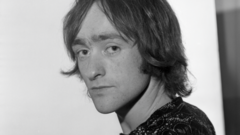
Dave Mason didn't just play guitar. He helped invent the blueprint for the genre-blurring, psychedelic folk-rock sound that defined an era. The news of his death at 79 marks the end of a long, often turbulent, and undeniably brilliant chapter in music history. While many know him as the guy who wrote "Feelin' Alright," he was so much more than a one-hit-wonder songwriter. He was a co-founder of Traffic, a session wizard for the greatest bands on earth, and a solo artist who never stopped touring.
He passed away in Nice, France, due to complications from kidney failure. It's a heavy loss for those who value the craftsmanship of the 1960s and 70s. Mason wasn't just a witness to rock history. He built it.
The Traffic Years and the Clash of Creative Titans
Traffic was never a normal band. Formed in 1967, it was a volatile mix of Steve Winwood’s soul-drenched vocals and Dave Mason’s pop-sensible songwriting. They moved into a cottage in Berkshire to "get it together" in the country. It sounds like a hippie cliché now, but then? It was a radical experiment in communal living and creative isolation.
Mason was often the odd man out. Winwood, Jim Capaldi, and Chris Wood leaned into jazz-inflected jams and sprawling instrumental sections. Mason liked structure. He liked hooks. That tension created Mr. Fantasy, one of the most essential albums of the psychedelic era. But that same tension meant Mason quit—or was fired from—the band multiple times.
You can hear the friction in the music. "Hole in My Shoe" was a massive hit, but the rest of the band reportedly hated it. They thought it was too poppy. Mason didn't care. He had a knack for melodies that stuck in your head like glue. When you listen to those early records today, his contributions provide the necessary grounding for the band's more abstract flights of fancy.
The Song That Everyone Knows and Nobody Can Quite Cover Right
If you’ve ever been to a dive bar, a wedding, or a stadium concert, you've heard "Feelin' Alright." Mason wrote it when he was just 19 years old. Think about that. Most 19-year-olds are struggling to find their car keys; Mason was writing a song that Joe Cocker would eventually turn into a global anthem.
The genius of "Feelin' Alright" is its simplicity. It’s basically two chords. But those two chords hold enough emotional weight to carry a five-minute jam or a two-minute pop blast. Mason famously said he wrote it about not feeling very good at all, despite the title. It’s a song about the struggle of displacement and the search for identity—themes that followed him throughout his career as he hopped between bands and continents.
While the Joe Cocker version is the most famous, Mason’s original with Traffic has a laid-back, skeletal groove that feels more honest. It’s less about the bombast and more about the weariness of the road.
The Secret Weapon of the Rock Elite
What people often forget about Dave Mason is his resume as a session player. He was the ultimate "musician's musician." Look at the credits of some of the most legendary albums of all time, and his name pops up like a lucky charm.
- The Rolling Stones: That's Mason playing the shehnai (an Indian reed instrument) on "Street Fighting Man."
- Jimi Hendrix: He played acoustic guitar on "All Along the Watchtower." That iconic, driving rhythm? That's Dave. He was also one of the few people Hendrix truly respected as a peer in the studio.
- George Harrison: He was part of the massive ensemble that recorded All Things Must Pass.
- Derek and the Dominos: He was an early member of the lineup before they settled into the version that recorded "Layla."
He had this uncanny ability to walk into a room full of egos and add exactly what the song needed. He wasn't trying to outplay Hendrix or Clapton. He was trying to serve the track. That’s a rare trait in a world filled with lead guitarists who only want to turn their amps up to eleven.
Alone Together and the Solo Peak
In 1970, Mason released Alone Together, and it’s a masterpiece. Period. If you haven't heard it, stop what you're doing and find it. From the opening tracks like "Only You Know and I Know," it was clear he didn't need Winwood or anyone else to justify his talent.
The album was also famous for its "marble" vinyl—a swirl of colors that looked as trippy as the music sounded. But beyond the gimmick, the songwriting was tight, professional, and deeply soulful. It peaked at number 22 on the Billboard 200 and proved that Mason was a force in his own right.
He followed this up with years of touring and a stint in Fleetwood Mac during the mid-90s. While the Time album era isn't exactly the most beloved period for Mac fans, Mason brought a level of professionalism and veteran grit to a band that was essentially in freefall at the time.
Why We Should Care in 2026
It's easy to dismiss classic rock stars as relics of a bygone age. But Mason represents a specific type of artistry that’s disappearing. He was a craftsman. He understood that a great song needs a solid foundation, not just flashy production.
He was also a road warrior. Up until very recently, he was still out there, playing small theaters and clubs, keeping the music alive. He didn't hide behind backing tracks or massive light shows. It was just a guy, a guitar, and a voice that had weathered decades of change.
His death is a reminder that the architects of the sounds we take for granted won't be around forever. When we lose someone like Mason, we lose a direct link to the creative explosion of the 1960s. We lose the stories, the techniques, and the firsthand knowledge of how those legendary sessions actually went down.
Digging Into the Mason Catalog
If you want to actually understand why Dave Mason matters, don't just stick to the radio hits. You need to look at the deep cuts and the live performances.
- Listen to "Only You Know and I Know" (Solo): It’s the perfect distillation of his style. Clean guitar work, an infectious chorus, and a sense of optimism that feels genuine.
- Check out "Dear Mr. Fantasy" (Traffic): Pay attention to the interplay between the instruments. Mason’s presence provides the grit that keeps the song from floating off into space.
- Explore the Hendrix Connection: Go back to Electric Ladyland and realize that a kid from Worcester, England, was right there in the thick of it with Jimi.
Mason's health had been a concern for a while. He had to cancel his 2024 "Traffic Jam" tour due to a heart condition. It was a blow to fans who had seen him perform year after year with the same intensity he had in his twenties. He spent his final days in the South of France, a quiet end for a man whose life was spent in the loud, neon-soaked world of rock and roll.
Dave Mason never quite got the same level of "deity" status as a Clapton or a Page, but he didn't seem to mind. He was a worker. He showed up, he played his heart out, and he wrote songs that will outlive us all. Next time "Feelin' Alright" comes on the radio, don't just change the station. Listen to the structure. Listen to the soul. That’s Dave Mason, and he’ll be missed.
To honor his memory, go buy a physical copy of Alone Together. Spin it on a real turntable. Turn it up until the neighbors complain. That’s exactly how this music was meant to be heard.