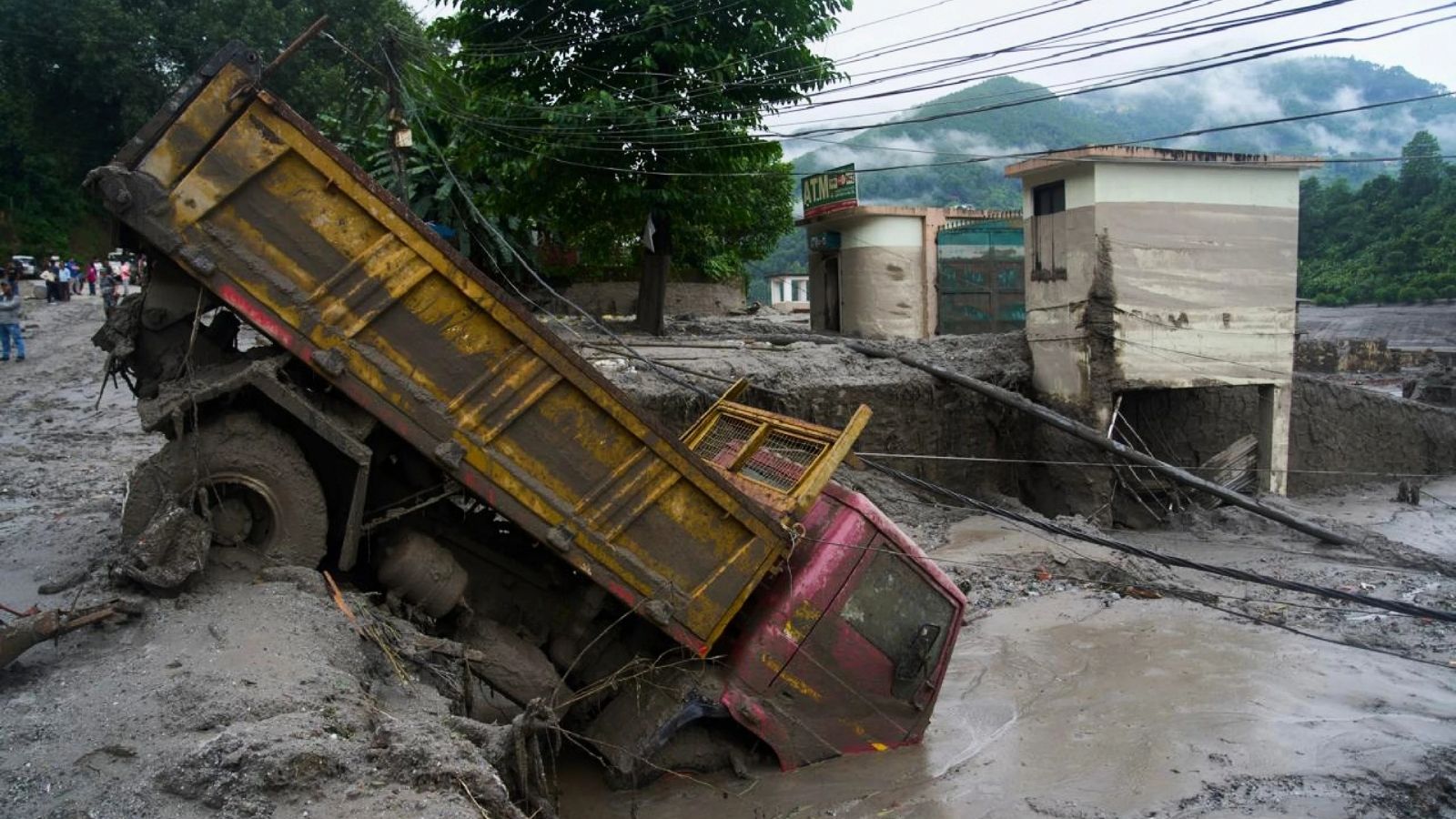
The roar starts in the stomach before it ever reaches the ears. Anyone who has stood near a Himalayan gorge during the monsoon knows this sound. It is not the rush of wind or the chatter of loose gravel. It is a tectonic groan, the sound of granite shoulders grinding together under tons of mud, water, and shattered pine.
Outside, the rain falls in heavy, vertical sheets, turning the steep slopes of Nepal into liquid highways. Inside the tunnel, a hundred feet beneath the ridge, there is no weather. There is only the low, steady hum of heavy machinery, the smell of warm diesel, and the routine of a shift change.
Then the lights flicker. Then they die.
The Long Dark
Water does not knock. It arrives.
Imagine, for a moment, the geography of a modern hydropower tunnel. It is a long, man-made artery carved deep into the belly of the earth, designed to channel the raw kinetic fury of a mountain river and turn it into light for distant cities. It is a triumph of engineering. It is also, when the rains break the sky open, a potential trap.
When the flash flood hits, the first warning for the workers deep inside is often not a siren. It is the air pressure. A wall of water surging into a confined subterranean tube acts like a piston, compressing the oxygen ahead of it with terrifying speed. Ears pop. Chests tighten.
Reports begin to trickle out of the district. One hundred souls. Trapped.
Numbers are cold things. One hundred is a statistic on a news ticker, a flash of orange text against a morning broadcast. But behind that number are boots left by a locker room door. There are half-finished thermoses of tea on concrete ledges. There are wives checking their phones in village homes below the ridge, watching the signal bars drop one by one as the storm takes out the local cell towers.
The rescue crews do not wait for the storm to clear. They cannot. Every minute the floodwaters hold their breath against the blockage is a minute the air inside that concrete lung grows thin.
The Anatomy of a Mountain Surge
Why do these floods happen so fast?
The geography of the region is deceptive. What looks like a stable, eternal mountain is actually a pile of loose debris held together by ancient rock and fragile vegetation, battered annually by monsoon winds that sweep up from the Bay of Bengal. When heavy rains saturate the upper altitudes, entire hillsides let go. These landslides form temporary dams across roaring tributaries.
For hours, the water builds behind a wall of mud and stone. It forms an invisible lake, heavy and angry. Then, the makeshift dam fails.
The release is instantaneous. Millions of gallons of water, mixed with boulders the size of houses and uprooted trees, race down the riverbed at highway speeds. When this slurry hits the intake of a hydropower project, it overwhelms the drainage channels before the gates can even be dropped. The tunnel fills. The exits become subterranean waterfalls running backward.
This is the hidden cost of our hunger for energy. We carve into the bones of the earth to keep the lights on in Kathmandu, in Delhi, in a thousand quiet suburban rooms. We ask the mountains to give us their power, and sometimes, the mountains take their toll back.
The Race Against the Clock
Outside the sealed portal, the rescue operation is a study in controlled panic.
Engineers unroll blueprints that are already damp, tracing lines with grease-penciled fingers while flashlight beams cut through the torrential downpour. Heavy excavation equipment roars, its metal teeth biting into the mudslide that has choked the tunnel entrance. Every scoop of earth brings them closer to the steel doors, but every scoop risks shifting the unstable slope above them.
This is the terror of the margin. Go too fast, and the mountain collapses on the rescuers. Go too slow, and the air runs out for the men inside.
There are no heroes in Hollywood capes here. There are only tired men in yellow hardhats and soaked high-visibility vests, shouting over the roar of the swollen river, passing shovels hand over hand. They know the men inside. That is the cousin who helped pour the concrete last spring. That is the neighbor’s boy on his first month of night shifts.
The tension in the command tent is thick enough to chew. Radios crackle with static. A battery dies. A fresh crew steps forward, silent, jaw muscles tight, swapping places with men who have been digging for six hours straight without a break.
The Weight of Silence
Back inside the mountain, the trapped workers are facing a different kind of time.
When the waters surged, they scrambled upward, climbing the service ladders toward the highest maintenance shafts, seeking pockets of trapped air. Now, they sit in absolute blackness. Sound travels strangely through wet stone; every drip of seepage sounds like the advance guard of a new wave.
They talk in low murmurs to keep the panic at bay. They talk about families, about what they will eat when they get out, about nothing at all. Silence is the enemy down here. Silence lets the mind wander to the water levels, to the oxygen percentages ticking downward in the dark.
They share a single flashlight, its beam growing dimmer, turning from a sharp white point to a dull, amber glow.
We forget, sitting miles away in the glow of our screens, how thin the barrier is between our comfortable routines and the raw, unmanaged fury of the natural world. We flip a switch and expect the room to brighten. We turn a tap and expect the water to flow. We rarely think of the damp, dark places where human hands had to shape the stone so those things could happen.
The rain continues to lash the ridge. The rescue workers keep digging, yard by agonizing yard, moving the mountain out of the way to reach their own.
Inside the tunnel, the amber light flickers once. Then holds. The air is heavy, but it is still breathable. The water has stopped rising.
For now, the mountain holds its breath. And so do we.


