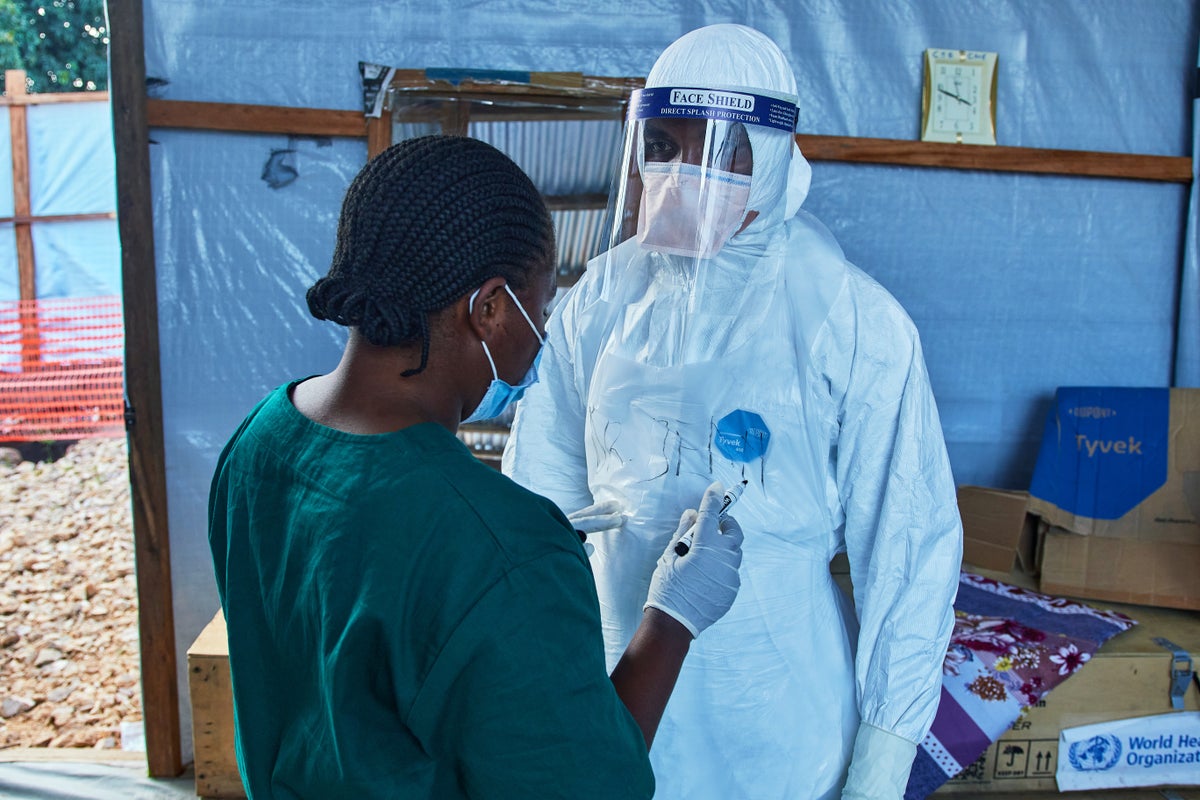
The international health community is panicking again. Headlines scream that the current Ebola outbreak in the Democratic Republic of Congo is the "fastest growing on record." Legacy media outlets are churning out copy-pasted terror, warning of an unprecedented viral explosion that threatens to swallow Central Africa.
They are looking at the wrong data, asking the wrong questions, and funding the wrong solutions.
This is not the fastest-growing Ebola outbreak in history. It is the most aggressively tracked outbreak in history. What the World Health Organization and mainstream journalists are calling an unprecedented spike in viral transmission is actually a predictable spike in surveillance efficiency.
By treating a success story in medical surveillance as a failure in disease control, global health bureaucracies are about to waste hundreds of millions of dollars fighting a phantom acceleration.
The Surveillance Illusion
When health agencies pour hundreds of millions of dollars into field diagnostics, gene sequencing, and localized contact tracing, a specific phenomenon occurs: you find what you are looking for.
In previous decades, an Ebola outbreak in a remote Congolese province would smolder for weeks before a single case was officially registered. Hundreds of people would contract the virus, recover, or die before a mobile lab ever arrived. The historical data is artificially flat because the world was blind.
Today, real-time PCR testing and community-led surveillance networks catch cases within hours of symptom onset. If you compare 2026 data capture capabilities against the fragmented record-keeping of the 1976 Yambuku outbreak or even the early phases of the 2014 West Africa crisis, the graph looks terrifying.
| Outbreak Era | Diagnostic Latency | Data Capture Efficiency | Perceived Growth Rate |
|---|---|---|---|
| Historical (1976 - 2000) | Weeks to Months | Low (Post-mortem heavy) | Artificially Slow |
| Transitional (2014 - 2016) | Days to Weeks | Moderate (Paper & Digital mix) | High |
| Modern (Current) | Hours | High (Real-time genomic sequencing) | "Unprecedented" |
The line on the chart isn't climbing because the virus has suddenly unlocked a new, hyper-infectious gear. The line is climbing because our flashlights are brighter. Pretending otherwise satisfies the fundraising goals of international NGOs, but it sabotages actual epidemiological strategy.
The Problem With the "People Also Ask" Consensus
If you look at standard public health queries, the underlying assumptions are fundamentally flawed.
Why is Ebola spreading faster now than in the past?
It isn't. The basic reproduction number ($R_0$) of Ebola virus variants remains structurally bound by its transmission mechanics. Ebola is not measles. It is not COVID-19. It does not hang in the air of a crowded supermarket. It requires direct contact with bodily fluids of a symptomatic, highly infectious individual. The physical reality of how the virus moves through a population has not changed. The rate of discovery has increased, not the rate of transmission.
Can the current DRC outbreak be contained with standard quarantine measures?
Standard top-down quarantines often backfire. I have spent years analyzing containment strategies in sub-Saharan Africa, and the data is clear: when centralized authorities enforce heavy-handed, militarized lockdowns, communities hide their sick. Fear of forced isolation in poorly managed treatment centers drives the virus underground, which genuinely does accelerate local transmission.
The High Cost of Bureaucratic Panic
When the global health apparatus labels an outbreak "the fastest growing," resources are deployed with blunt-force trauma rather than surgical precision.
Money floods into massive, centralized treatment centers. Fleets of white SUVs clog the roads of provincial capitals. Meanwhile, the actual mechanics of containment—hyper-local ring vaccination and dignified, community-led burial practices—get crowded out by institutional theater.
This panic-driven model has a massive downside that nobody wants to admit: it guts the local healthcare infrastructure.
When you pivot every single healthcare worker, clinic, and dollar in a Congolese province to fight Ebola because of an alarmist headline, people stop getting treated for malaria, tuberculosis, and measles. Historically, the disruption to basic health services during an over-hyped Ebola response kills far more people than the virus itself.
During the 2014-2016 West African outbreak, deaths from malaria, HIV/AIDS, and tuberculosis increased dramatically because health systems collapsed under the weight of the singular, panic-driven Ebola focus. We are on the verge of repeating that exact mistake in the DRC.
Structural Realities Over Sensational Headlines
To actually understand the trajectory of the virus in the DRC, we have to look at the structural variables that dictate real risk, not the raw case counts flashing on an dashboard in Geneva.
- The Mobility Variable: The current outbreak is localized in regions with severely limited transport infrastructure. Without paved highways or high-speed transit connecting these hot spots to major domestic hubs, the physical velocity of the virus is naturally throttled.
- The Vaccine Shield: Unlike the historical outbreaks used to generate these terrifying comparative charts, we now possess highly effective vaccines like Ervebo. Ring vaccination strategies work. Even with operational friction, the presence of a vaccine fundamentally alters the mathematical ceiling of the outbreak.
- Community Literacy: Local populations in the DRC are not blank slates. They have lived through multiple outbreaks. They understand transmission vectors far better than the international media gives them credit for.
The downside of this contrarian view is the risk of complacency. Yes, tracking cases aggressively is vital. Yes, the virus is deadly. But treating a highly efficient diagnostic apparatus as a terrifying epidemiological failure leads to bad policy, misallocated funds, and a higher net mortality rate from preventable diseases.
Stop evaluating the severity of an outbreak by the steepness of a surveillance curve. Stop funding the panic wheel.
The data isn't telling you that the virus is winning. It's telling you that the metrics are finally working. Act like it.