The financial world loves a good boom-and-bust narrative. Right now, the bears think they have found their next victim in the designer toy market. They are shouting about Labubu fatigue from the rooftops. They point to falling secondary market prices and warn that the bubble is bursting.
But while Wall Street analysts panic over short-term data, one of the sharpest investors in the game is doing the exact opposite.
Duan Yongping just doubled down.
The billionaire investor, frequently called China’s Warren Buffett, recently increased his stake in Pop Mart to 7.65%. He moved his position up from 6.85%, buying through his firm H&H International Investment. This is his third major accumulation in 2026. He bought millions of shares back in May at an average of HKD 162.5 each, and he kept buying into July.
Why would a legendary value investor pour billions of Hong Kong dollars into plastic monsters when the market says the craze is over? The answer is simple. The critics are looking at a product cycle. Duan is looking at a platform.
The Flawed Logic of the Toy Fatigue Narrative
Retail analysts are obsessing over the secondary market. It is true that the recent Labubu Hair Salon series, which dropped in late June 2026, did not see the insane, speculative resale markups of previous launches. Some variants even dipped slightly below their official retail prices on trading apps.
To the untrained eye, this looks like a disaster. Deutsche Bank downgraded Pop Mart to a sell, with analyst Sammi Xu predicting a massive slowdown in second-quarter growth. The bear argument is that Pop Mart is a one-trick pony heavily over-indexed on a single hairy monster with jagged teeth. The Monsters series, which includes Labubu, climbed to around 38% of Pop Mart’s total revenue.
But treating cooling secondary market speculation as a corporate death spiral misses the entire point of consumer psychology.
High resale prices driven by scalpers are bad for long-term brand health. When regular fans cannot buy a doll for $30 because flippers are hoarding them to resell for $150, the core community gets frustrated. A stabilizing secondary market means regular collectors can actually buy the toys at retail price. Pop Mart executives have explicitly stated that they want resale prices to normalize. They want consumers buying from stores, not scalping apps.
Slowing growth is not a collapse. It is stabilization. No company grows at 180% year-over-year indefinitely. Pop Mart brought in RMB 37.12 billion in revenue, boasting an adjusted net profit margin of over 35%. Those are luxury fashion margins, achieved by selling blind boxes.
Decoding the Duan Yongping Playbook
Duan Yongping does not buy hype. He built his fortune on predictable, high-margin consumer businesses. He was an early investor in Apple. He understands the power of consumer lock-in and emotional stickiness.
When Duan looks at Pop Mart, he sees a business that satisfies three specific criteria that traditional financial models fail to quantify.
Massively High Gross Margins
Pop Mart products are fundamentally cheap to manufacture. They are made of PVC and plush materials. Yet, consumers willingly pay significant premiums for them. The cost of goods sold is remarkably low compared to the retail price. This structural advantage gives the business an incredible cushion. Even if marketing costs rise or global expansion slows down, the underlying unit economics remain highly profitable.
Predictable Recurring Purchase Behavior
The blind-box mechanism changes everything. It turns a single discretionary purchase into a collection hobby. Traditional toy companies like Hasbro or Mattel rely heavily on movie release cycles to sell action figures. Pop Mart operates like a trading card game or a luxury cosmetics line. Consumers buy repeatedly to complete sets, discover hidden variants, or simply experience the dopamine hit of the unboxing experience.
Intellectual Property Without Backstories
This is the most misunderstood part of the business. Critics complain that Labubu, Molly, and Dimoo do not have movies, comic books, or TV shows to support them. They think this makes the intellectual property weak.
The opposite is true.
Because these characters have no fixed narrative, consumers can project their own emotions onto them. A character with a fixed story can become irrelevant when the movie franchise ends. A blank-canvas character stays relevant as long as the design remains visually appealing. It is an emotional mirror for Gen Z and millennial consumers who value aesthetic identity over rigid lore.
The Global Expansion Reality Check
The bearish outlook relies heavily on the idea that Pop Mart’s international expansion is hitting a wall. Skeptics claim that while the brand resonated in select Asian markets and caught a massive temporary boost from celebrity endorsements like Lisa from Blackpink, it cannot sustain global scale.
The data tells a different story. Pop Mart has been aggressively opening flagship locations across Europe, Southeast Asia, and the United States. They are shifting from third-party distributors to directly operated retail stores.
Direct retail gives the company absolute control over the brand experience and, more importantly, higher margins. When you look at store openings in Western capitals, the queues are not just expatriate communities. They are local consumers buying into the designer toy culture.
The inventory turnover days did tick up to 123 days recently. Bears flagged this as a sign of unsold stock piling up in warehouses. But a deeper analysis shows this inventory build-up is intentional logistical positioning. You cannot expand direct retail stores across multiple continents without lengthening your supply chain and holding more stock in transit. It is the cost of transitioning from a regional player into a global retail powerhouse.
Short Sellers Are Walking Into a Trap
Right now, short interest in Pop Mart is high. Bears have borrowed and sold short over 120 million shares, betting that the stock will tumble further from its historical highs. They are betting on aesthetic fatigue.
They are playing a dangerous game.
When short interest spikes against a company that generates immense cash flow, has zero debt, and features a highly concentrated shareholder base, the setup for a short squeeze is perfect. Pop Mart has been consistently executing share buybacks to support the stock price. Combined with Duan Yongping’s aggressive open-market buying, the available float is shrinking.
If Pop Mart’s upcoming financial reports show that international revenues are holding steady despite the cooling of domestic resale markets, short sellers will be forced to cover their positions rapidly. That dynamic can send a stock price soaring, regardless of what the quarterly retail sentiment looks like on social media.
Diversification Beyond the Hairy Monster
The market is currently treating Pop Mart as if it lives and dies solely by Labubu. That ignores the company's historical track record of managing character lifecycles.
Before Labubu, there was Molly. Before Molly, there was Pucko. Pop Mart has spent a decade managing the rise, stabilization, and maturity of various character lines. They do not need Labubu to stay at peak hype forever. They need Labubu to transition into a stable, legacy intellectual property while newer characters take the growth spotlight.
Emerging lines like Skullpanda, Crybaby, and Xingxing Ren are already scaling up. Crybaby has shown massive growth traction in Southeast Asian markets. Skullpanda has established a massive, dedicated following among consumers who prefer a darker, more avant-garde aesthetic.
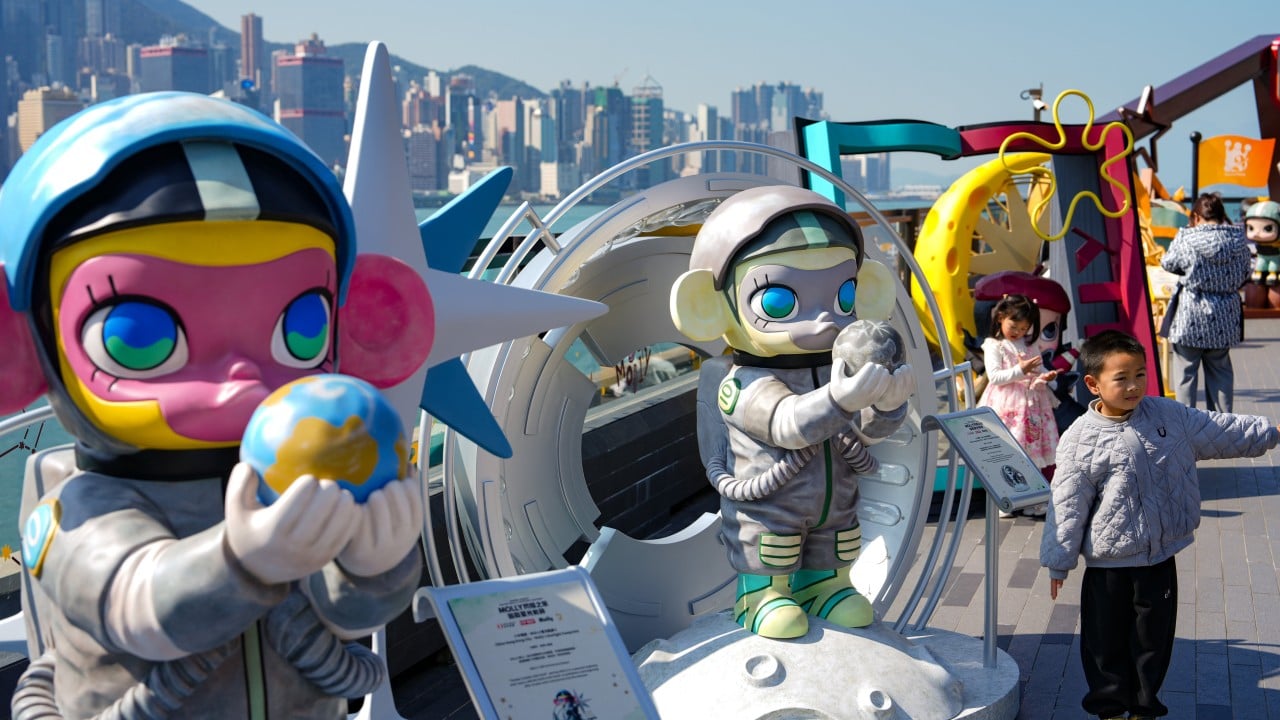
The company is also diversifying its product formats. They are moving beyond $15 blind boxes into high-end collectible statues under their Mega Space Molly line, which retail for hundreds or thousands of dollars. They are building out theme park experiences and working with Sony Pictures Entertainment on animated content. They are institutionalizing their characters.
Action Steps for Investors and Observers
If you are trying to navigate this volatility, stop looking at TikTok trends and look at the underlying corporate mechanics.
- Watch store-level profitability over global volume. Track whether new overseas outlets are achieving profitability within their first six months. This matters far more than total revenue growth rates.
- Monitor the cash position. Pop Mart’s ability to fund its own global expansion through organic cash flow without diluting shareholders or taking on high-interest debt is its ultimate defensive shield.
- Ignore the secondary market noise. A drop in resale prices for specific toy series is a sign of a healthier retail environment, not a dying brand. Look at core retail sales volume instead.
The thesis for shorting Pop Mart relies on the assumption that global consumers will suddenly stop buying toys that make them happy. The thesis for buying it relies on structural profitability, massive margins, and a proven ability to monetize human emotion. Duan Yongping made his choice clear. The smart money is sitting tight.