When reports surface that a Palestinian woman was shot dead by Israeli settlers near Jericho, the headlines follow a predictable script. Quick wire blurbs summarize witness accounts, note the location in the occupied West Bank, and move on to the next breaking alert within hours.
That rapid news cycle flattens a deeply complex reality into a single tragic sentence. It strips away the geography, the legal vacuum, and the day-to-day friction that make the Jordan Valley one of the most volatile flashpoints in the region. If you want to understand what actually happens when an incident like a fatal shooting near Jericho hits the news, you have to look at the mechanics behind the headlines.
Why Jericho and the Jordan Valley Matter So Much
Most outsiders picture Jericho as a quiet desert oasis near the Dead Sea. Historically, it's been treated as one of the calmer areas in the West Bank compared to northern cities like Jenin or Nablus. That reputation is outdated.
Jericho sits in the Jordan Valley, a strategic strip of land accounting for roughly thirty percent of the occupied West Bank. Under the Oslo Accords signed in the 1990s, the West Bank was divided into Areas A, B, and C. While the city of Jericho itself falls under Area A—meaning the Palestinian Authority handles civil and security affairs—the surrounding villages, agricultural lands, and herding communities sit squarely inside Area C.
Area C is under full Israeli civil and military control.
This patchwork geography creates an immediate crisis whenever violence breaks out on the outskirts of Jericho. Palestinian police can't cross into Area C to intervene, investigate, or protect residents in surrounding Bedouin and farming communities. When armed individuals enter those rural outskirts, local residents are left entirely exposed.
The Friction Over Land and Water
You can't separate violent confrontations near Jericho from the fight over grazing land and natural springs. The Jordan Valley is arid, making access to water and pasture the literal difference between survival and displacement for local Palestinian herding communities.
Over the past several years, human rights monitors—including the Israeli organization B'Tselem and the United Nations Office for the Coordination of Humanitarian Affairs (OCHA)—have documented a sharp rise in unauthorized settler outposts, often established as agricultural or herding farms. Unlike older, larger residential settlements, these herding outposts require massive tracts of land for grazing.
Here is how that plays out on the ground:
- Outpost residents graze flocks on land traditionally used by Palestinian Bedouin families near Jericho.
- Access routes to local water springs get blocked off or contested.
- Verbal confrontations quickly escalate when armed individuals arrive at the scene.
- Palestinian residents face severe restrictions on building infrastructure or defending their property under military law.
When a fatal shooting occurs in these areas, it rarely happens out of nowhere. It is almost always the culmination of months or years of creeping territorial pressure that international news desks ignore until someone dies.
How Witness Accounts and Official Narratives Collide
Whenever a Palestinian civilian is killed in the West Bank, two completely different versions of reality emerge within minutes. You see this dynamic every single time.
On one side, local Palestinian witnesses, family members, and human rights field researchers describe unprovoked attacks, live gunfire aimed at unarmed residents, and a total lack of intervention by nearby security forces. In rural areas outside Jericho, witnesses frequently report that armed civilians arrived in vehicles, confronted villagers or farmers, and opened fire before retreating toward nearby outposts.
On the other side, initial statements from Israeli military spokespeople or settler representatives often frame the incident around self-defense, stone-throwing, or an alleged security threat. Sometimes the military states that an investigation has been opened, or that troops arrived after the shooting had already taken place.
Why is the gap between these accounts so wide?
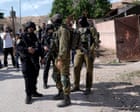
Because independent, real-time verification in Area C is extraordinarily difficult. Journalists rarely have immediate access to remote herding communities outside Jericho. By the time reporters arrive, the scene has often been cleared or cordoned off by military forces. Without body-camera footage or independent observers present at the exact moment shots are fired, the public is left weighing local eyewitness testimony against official press releases.
The Dual Legal System Problem
To understand why these incidents keep repeating, you have to look at what happens after the ambulances leave. In the occupied West Bank, two populations living meters apart are governed by entirely different legal frameworks.
Israeli citizens living in settlements and outposts fall under Israeli civilian law. If an Israeli citizen is suspected of shooting a Palestinian near Jericho, the case is handled by the Israeli police—specifically the Judea and Samaria District police—and prosecuted in civilian courts.
Palestinians living in the exact same territory are subject to Israeli military law, tried in military courts, and face drastically higher conviction rates and stricter rules regarding detention and movement.
According to long-term monitoring by the Israeli human rights group Yesh Din, the vast majority of police investigations into ideologically motivated offenses by Israeli citizens against Palestinians in the West Bank end without an indictment. Files are routinely closed due to "offender unknown" or "insufficient evidence," even when eyewitnesses provide testimonies and video evidence exists.
When accountability is rare, deterrence disappears. People on the ground know this. Palestinian villagers know that filing a complaint at a police station often yields zero results, while armed settlers know the statistical likelihood of facing a prison sentence is slim.
What International Coverage Gets Wrong About Settler Violence
If you read standard breaking news coverage of a shooting near Jericho, you'll notice a few recurring blind spots that distort how readers understand the conflict.
First, media outlets often treat these events as isolated criminal acts carried out by a few "rogue" individuals. That framing misses the structural reality. Many unauthorized outposts receive indirect state support, including paved access roads, water and electricity hookups, and military protection from the Israel Defense Forces (IDF). Calling the resulting violence purely individual erases the policy choices that enable it.
Second, headlines frequently use passive language. Phrases like "clashes erupted" or "woman died during confrontation" obscure who held the firearms and who was unarmed. When witnesses explicitly report that armed settlers shot a civilian dead, flattening that into vague terminology misleads readers about the basic power dynamic on the ground.
Third, international coverage tends to focus on spikes in violence only when diplomatic pressure mounts—such as when the United States, the European Union, or the United Kingdom announce targeted sanctions against specific violent settlers. While sanctions make great headlines in Washington or London, field researchers in the Jordan Valley point out that targeted financial penalties against a handful of individuals haven't stopped the daily intimidation, property destruction, or lethal shootings on the ground.
The Human Toll on Jericho's Surrounding Communities
Statistics and legal breakdowns only tell half the story. For families living in communities like Ras Ein al-Auja, Ein ad-Duyuk, or other small villages flanking Jericho, lethal violence reshapes daily life immediately.
When a woman is shot dead in her community, the shockwaves hit every household. Women and children in rural Palestinian villages often manage daily livestock care, fetch water, and tend small plots of land while men work elsewhere. Fatal shootings shatter any lingering sense of safety around the home.
The immediate aftermath usually triggers a familiar chain of events:
- Restricted Movement: Military checkpoints around Jericho tighten, delaying ambulances, preventing relatives from reaching hospitals, and trapping residents inside their towns.
- Economic Disruption: Herders stop taking flocks to outer pastures out of fear of further gunfire, leading to severe financial losses and forced sales of livestock.
- Silent Displacement: Over the past two years, dozens of small Palestinian herding communities across the Jordan Valley and South Hebron Hills have packed up their tents and abandoned their land entirely because they could no longer guarantee their families' survival.
This is the quietest and most permanent consequence of fatal violence near Jericho. Even when international attention moves on after forty-eight hours, the demographic map of the Jordan Valley shifts permanently.
How to Read Breaking News From the West Bank Critically
Next time you see a short wire headline about a shooting near Jericho or elsewhere in the occupied West Bank, don't stop at the first paragraph. Look closely at the details that determine what actually happened.
Check the exact location. Was the incident inside an Area A city, or in an Area C village or herding community where Palestinian authorities have zero jurisdiction? Look at who is being quoted—are reporters speaking directly to eyewitnesses and medical personnel at local hospitals like Jericho Governmental Hospital, or are they merely repeating a single military statement?
Follow the work of organizations that maintain continuous, on-the-ground documentation rather than parachuting in after a fatality. Reports from OCHA, B'Tselem, Yesh Din, and Al-Haq provide verified timelines, maps of outpost expansion, and tracking of whether police investigations actually lead to indictments months later. Pay attention to what happens six months after the funeral, because the presence—or total absence—of legal accountability tells you everything you need to know about why these tragedies keep happening.