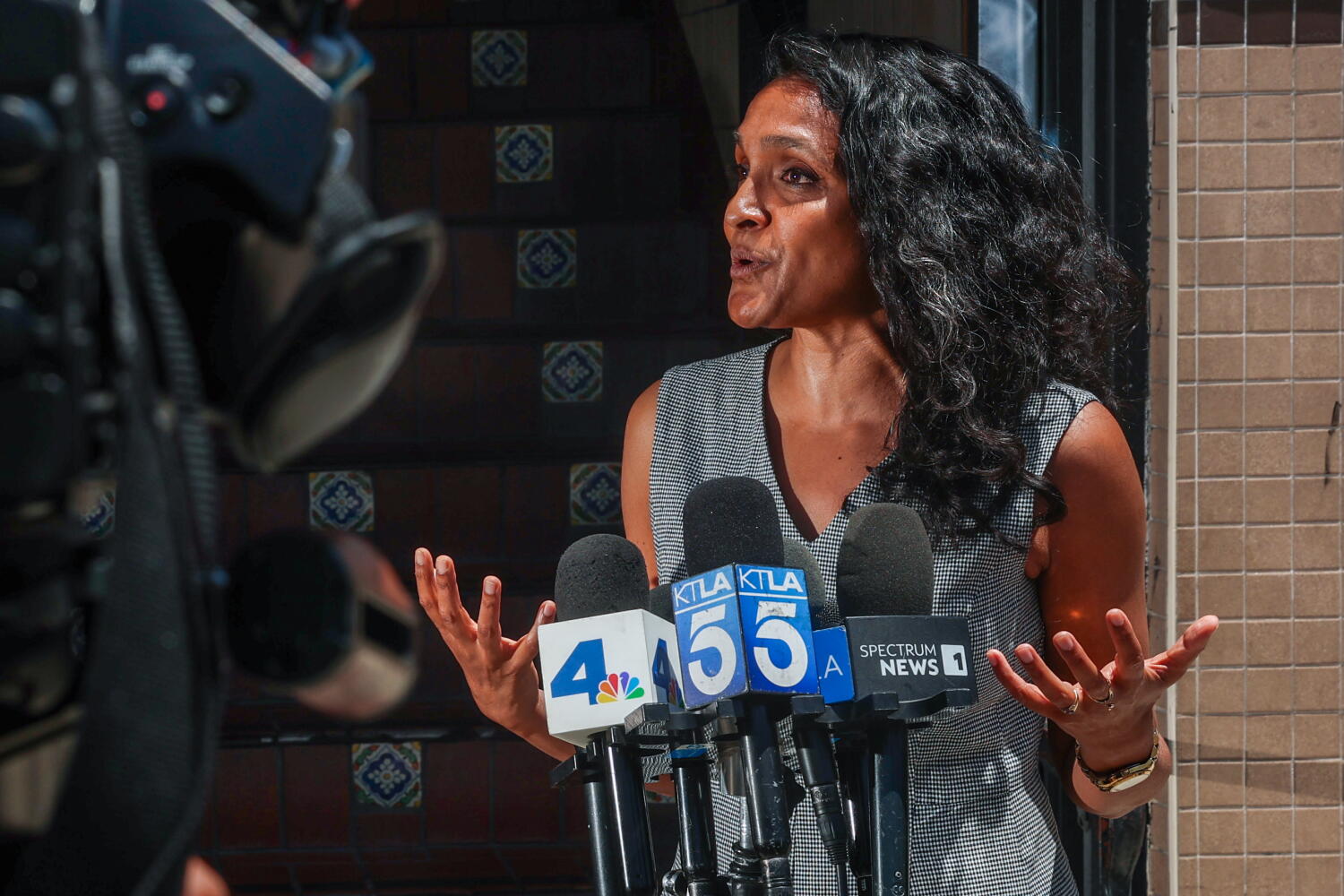
Los Angeles City Councilmember Nitya Raman built her political profile on aggressive progressivism, but the looming arrival of the 2028 Olympic Games has forced a quiet, calculated recalibration. Once an outright critic of host-city bids, Raman now finds herself navigating the reality of an event already locked into the city's civic and financial infrastructure. Her trajectory from vocal opponent to cautious insider highlights a broader friction inside municipal politics: how anti-establishment figures handle massive, corporate-backed mega-events once they hold actual power.
When Los Angeles secured the 2028 Summer Games, the official narrative promised a "frugal" spectacle. Unlike Paris, Tokyo, or Rio de Janeiro, Los Angeles planned to bypass the construction of brand-new, publicly funded stadiums. Instead, organisers pointed to existing infrastructure: SoFi Stadium, the Rose Bowl, BMO Stadium, and the campus of UCLA. The private committee LA28 insisted that television rights, sponsorships, and ticket sales would cover the entire budget, currently projected at over $7 billion.
Yet municipal veterans know that no Olympic Games in modern history has managed to insulate host cities from fiscal fallout.
+-------------------------------------------------------------+
|               THE LA28 FINANCIAL STRUCTURE                  |
+-------------------------------------------------------------+
|                                                             |
|  [ Private Revenue ]              [ Public Liabilities ]    |
|  - Broadcast Rights               - LAPD / Security Overtime|
|  - Corporate Sponsorships         - Transit System Strain   |
|  - Ticket Sales                   - Emergency Contingency   |
|                                       (First $270M City)    |
|                                       (Next $270M State)    |
|                                                             |
+-------------------------------------------------------------+
The structural problem lies in the fine print of host agreements. While LA28 handles the operational budget, the City of Los Angeles signed on as the ultimate financial backstop. If revenues fall short, local taxpayers shoulder the first $270 million in cost overruns, with the State of California picking up the next $270 million before responsibility falls back on city hall. For a city already wrestling with a structural budget deficit, decaying road networks, and an intractable housing crisis, that guarantee carries immense risk.
Raman entered city hall after defeating an incumbent in 2020, backed by a coalition demanding structural reform. Early in her political career, her stance on mega-events mirrored the critiques long voiced by community activists and urban planners. Mega-events divert public attention, consume municipal staff time, and routinely clear out low-income housing under the banner of urban beautification.
Power changes the math.
As chair of committees and a sitting councilmember representing district areas with heavy transit demands, Raman can no longer simply protest the Games from the outside. She has to vote on transit expansions, public safety budgets, and street-level logistics. Her current positioning relies on skepticism rather than outright obstructionism—a stance aimed at extracting concessions for neighborhood services without risking a total breakdown in governance.
The tension becomes clearest when examining public transit. The core promise of LA28 is a "car-free" Games. In a metropolis built around personal vehicles, achieving that goal requires an extraordinary expansion of bus operations and rapid transit corridors. Metro needs thousands of additional buses to shuttle spectators across vast distances. Acquiring, operating, and staffing those fleets costs money that municipal authorities simply do not have sitting in reserve.
      [ City Transit Goals ]                [ Olympic Realities ]
  * Zero-emission fleets                * Immediate bus shortages
  * Expanded rail corridors             * Temporary fleet leases
  * Permanent local lines               * Special spectator routes
Federal grants may cover part of the gap, but local budgets inevitably absorb the administrative and operational friction. When transit lines are optimized to move international visitors between major sports venues, local riders often face rerouted lines, reduced service in peripheral neighborhoods, and heightened security presence.
Public safety spending presents an even larger policy headache. Police departments across host cities historically use the Olympics as leverage to secure hardware upgrades, expanded surveillance authority, and massive overtime budgets. The federal government will designate the 2028 Games as a National Special Security Event, bringing in federal law enforcement agencies and military assets. But daily security across transit stations, public fan zones, and municipal streets remains a local responsibility.
For progressives like Raman, voting to approve police overtime and security contracts connected to LA28 creates a direct policy contradiction. Her base expects opposition to police expansion, yet voting against baseline security infrastructure for an event drawing millions of global visitors is politically unsustainable.
Housing remains the most volatile battleground. Critics of the Games point to historic patterns in previous host cities like Atlanta, London, and Rio, where low-income residents faced increased displacement, aggressive code enforcement designed to clear encampments, and rapid rent escalation near venue clusters.
Los Angeles already faces an acute shortage of affordable housing. The arrival of thousands of workers, media personnel, and visitors threatens to strain the short-term rental market, converting residential housing supply into lucrative temporary lodging. While city officials insist that tenant protections will remain intact, enforcing those protections requires municipal staff and resources that are already stretched thin.
Raman's strategy relies on pushing city council toward binding safeguards: forcing venue operators to hire local labor, securing dedicated funding for permanent housing rather than temporary shelters, and demanding transparent auditing of security expenses.
Yet historical precedent suggests host city councils rarely hold the upper hand once the Olympic clock begins ticking. As event deadlines draw closer, organizers routinely use urgency as a lever to bypass standard municipal reviews, fast-track approvals, and secure emergency funding.
Municipal governance usually operates through slow consensus, but the Olympic movement runs on an unforgiving, non-negotiable deadline. When those two forces collide, public oversight is almost always the first casualty. Raman's pragmatic skepticism represents a test case for whether local representatives can constrain a global mega-event, or whether the momentum of the Games inevitably steamrolls local policy priorities.