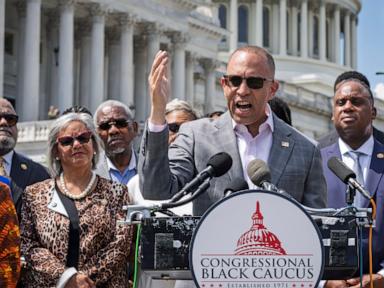
A private corporation operates on a social license that requires balancing shareholder return with multi-stakeholder stability. When the rules governing political representation shift, that license is tested. The recent initiative by the Congressional Black Caucus (CBC)—transmitting a formal ultimatum to more than 250 of the largest U.S. and multinational corporations—is not merely a civil rights appeal. It is a calculated intervention designed to force corporate executives to internalize the external costs of a mid-decade congressional redistricting cycle. By requiring companies to choose between public condemnation of Republican-led redistricting maps and the risk of targeted consumer and labor friction, the CBC is testing whether corporate commitments to equity are operational policies or non-binding marketing expenses.
Understanding this dynamic requires analyzing the convergence of judicial realignments, the economic feedback loops of political representation, and the game-theoretic choices confronting modern corporate boards.
The Structural Drivers of the Redistricting Supercycle
The current mid-decade redistricting push departs sharply from standard historical patterns. Typically, boundary lines are drawn decennially following the U.S. Census to adjust for population variances under the principle of equal representation. The current acceleration of mid-decade boundary revisions is driven by two specific structural shifts:
- The Post-Callais Judicial Re-interpretation: Following the Supreme Court’s ruling in Louisiana v. Callais, the judicial standard for evaluating minority-majority districts under Section 2 of the Voting Rights Act altered the threshold for what constitutes an impermissible partisan or racial gerrymander. This ruling effectively lowered the legal barrier for state legislatures seeking to alter existing maps, rendering previously protected minority-majority districts vulnerable to dissolution.
- The Executive Mandate for Mid-Term Seat Maximization: Moving beyond defensive maneuvers, national political strategies have actively incentivized state-level actors to optimize district lines mid-decade. The strategic objective is explicit: maximize partisan seat security ahead of competitive legislative elections. This mechanism has transformed local redistricting into a coordinated, nationalized effort across states like Louisiana, Florida, Tennessee, and South Carolina.
The Strategic Framework of the CBC Intervention
The CBC’s communication strategy to corporate executives avoids abstract moralizing, focusing instead on operational dependencies. The logic relies on a three-part framework designed to convert political capital into quantifiable corporate risk.
+--------------------------------------------------------------+
|                THE CBC RISK CONVERSION PIPELINE              |
+--------------------------------------------------------------+
|                                                              |
|  1. AUDIT HISTORIC COMMITMENTS                               |
|     (Establish baseline equity/democracy pledges from 2020)  |
|                                                              |
|                             v                                |
|                                                              |
|  2. MAP REVENUE & LABOR EXPOSURE                            |
|     (Correlate market share & labor pools with affected demographics)|
|                                                              |
|                             v                                |
|                                                              |
|  3. DEMAND OPERATIONAL TRANSPARENCY                          |
|     (Force disclosure of PAC contributions to map architects)|
+--------------------------------------------------------------+
The Historic Commitment Audit
The CBC target list is led by the "Business for Voting Rights" coalition—a group of highly valued enterprises including Apple, Amazon, Google, Meta, Microsoft, Tesla, Salesforce, Target, PayPal, Intel, and Starbucks. In 2021, these entities publicly lobbied for federal voting rights legislation. The CBC's current position establishes these past statements as binding corporate policy. By contrasting past declarations with current silence, the caucus creates an internal inconsistency that corporate communications teams must either resolve or defend.
Revenue and Labor Exposure Mapping
The economic foundation of the letter rests on demographic resource reliance. The strategy explicitly links corporate profitability to the very demographics affected by the district reconfigurations.
- The Consumption Variable: Black consumers represent a concentrated market segment across consumer staples, technology, and retail sectors. Companies that optimize for this consumer base while remaining passive during regional political shifts risk brand dilution and targeted consumer boycotts.
- The Human Capital Variable: Knowledge economies and supply chain logistics depend heavily on diverse, urban labor pools. When a corporation's workforce perceives that their employer actively funds or tolerates the reduction of their political representation, internal labor cohesion degrades, increasing retention costs and undermining recruitment pipelines.
Operational Transparency Mandates
The most direct tactical challenge in the letter is the demand for political donation disclosures. The CBC is forcing corporations to reconcile their forward-facing ESG (Environmental, Social, and Governance) commitments with their political action committee (PAC) funding history. Many corporations operate under a bifurcated political strategy: maintaining public-facing equity initiatives while simultaneously funding state-level legislative leaders who engineer redistricting plans to secure business-friendly regulatory environments. The CBC intervention threatens to merge these two spheres, exposing corporate leadership to charges of institutional hypocrisy.
The Macroeconomic Externalities of Political Gerrymandering
A common corporate counterargument is that redistricting is a purely political mechanism outside the scope of fiduciary duty. This perspective ignores the direct economic externalities that occur when political representation is decoupled from demographic realities.
Capital Allocation Distortion
When districts are redrawn to dilute specific demographic blocks, the legislative priorities of that geography shift. Minority-majority districts consistently prioritize public infrastructure investments, localized healthcare access, educational funding, and targeted economic development zones. The elimination of these districts alters the distribution of state and federal capital.
For corporations, this creates long-term operational friction. A region stripped of targeted infrastructure funding faces declining public health outcomes, decaying transport networks, and a contracting skilled labor supply. The short-term regulatory benefit gained by supporting a specific political party can be entirely offset by the long-term degradation of local operating conditions.
Policy Volatility and Regulatory Instability
Stable business environments require predictable regulatory regimes. Mid-decade redistricting weaponizes boundary lines to create synthetic legislative majorities. When legislative power is maintained through structural map manipulation rather than consensus building, the policy output tends toward polarization.
Corporations operating in these environments face heightened regulatory volatility. Tax codes, environmental compliance standards, and employment laws shift radically based on which faction controls the map-making apparatus. This volatility disrupts long-term capital expenditure planning, increases compliance costs, and introduces sovereign-like risk into domestic corporate operations.
The Corporate Decision Matrix: Three Strategic Pathways
Corporate boards facing the CBC mandate cannot rely on standard public relations scripts. Silence is calculated as complicity by one faction; compliance is viewed as partisan warfare by the other. Executives are evaluating three distinct operational pathways, each carrying specific risks and trade-offs.
| Strategic Option | Operational Implementation | Primary Benefit | Core Risk |
|---|---|---|---|
| The Patagonia Paradigm (Active Alignment) | Issue explicit public statements condemning altered maps; freeze PAC contributions to state map architects; meet with CBC leadership. | Solidifies brand equity with progressive consumer bases and urban labor pools; mitigates internal activist employee risk. | Triggers immediate legislative retaliation from state majorities; risks exclusion from state procurement contracts and tax incentives. |
| The Calculated Quietude (Defensive Neutrality) | Issue generalized statements supporting "democratic principles" without naming specific maps or states; delay PAC disclosures; decline direct CBC meetings. | Avoids immediate conflict with state-level legislative majorities holding regulatory power over local facilities. | Exposes the enterprise to targeted boycotts, reputational damage, and structured pressure campaigns like the CBC's proposed collegiate athlete boycott. |
| The Legalistic Retrenchment (Shareholder Primacy) | Refuse the CBC demands entirely; state that political boundary disputes fall outside the corporation's fiduciary mandate; continue standard PAC distributions. | Preserves existing relationships with the current political establishment; adheres to traditional shareholder-first governance models. | Alienates a critical consumer segment; creates severe internal recruitment bottlenecks; drives a wedge between executive leadership and the workforce. |
Targeted Escalation: The Institutional Boycott Mechanism
The CBC’s strategy includes a highly targeted escalation mechanism: calling for Black student-athletes to boycott public universities in states executing aggressive gerrymandering strategies. This tactical pivot demonstrates an advanced understanding of modern institutional revenue models.
Public university athletic programs operate as multi-million-dollar commercial enterprises that generate significant revenue, drive alumni donations, and project powerful regional branding. These programs are heavily dependent on Black athletic talent.
By targeting the talent pipeline of state-supported universities, the CBC shifts the costs of redistricting from the political sphere directly onto the balance sheets of state institutions. If elite prospects refuse to enroll in universities within states like South Carolina, Florida, or Louisiana, the economic value of those athletic franchises declines. This creates a new internal lobbying group: university trustees, prominent boosters, and sports executives who will be forced to pressure state legislatures to moderate their redistricting plans to protect their institutional brands and revenue streams.
Predictive Outlook for Corporate Political Strategy
The era of frictionless corporate political neutrality has ended. The structural reality of a polarized electorate, combined with sophisticated monitoring by legislative caucuses, means that standard corporate hedging strategies—such as equally funding both major political parties—are hitting a point of diminishing returns.
The immediate consequence of the CBC’s intervention will be the fragmentation of corporate political behavior based on market orientation. Consumer-facing enterprises with high exposure to urban demographics and knowledge-industry firms reliant on highly educated, diverse human capital will increasingly adopt the Patagonia Paradigm. These firms will recognize that the risk of internal labor disruption and brand erosion outweighs the risk of localized legislative retaliation.
Conversely, business-to-business (B2B) entities, industrial manufacturing firms, and resource extraction companies—whose primary dependencies are state-level regulatory permits, tax exemptions, and specialized government contracts—will lean into Legalistic Retrenchment. These organizations will calculate that their primary material risk lies in alienating the state-level political actors who control their operational viability.
The critical vulnerability for the corporate sector is the mandatory disclosure of PAC funding. As tracking tools become more automated and public data integration improves, the opacity that previously protected corporate political contributions will vanish entirely. The strategic play for corporate boards is no longer choosing if to take a stand, but accurately auditing their entire value chain to determine which alignment carries the lowest total cost to their long-term operational survival.