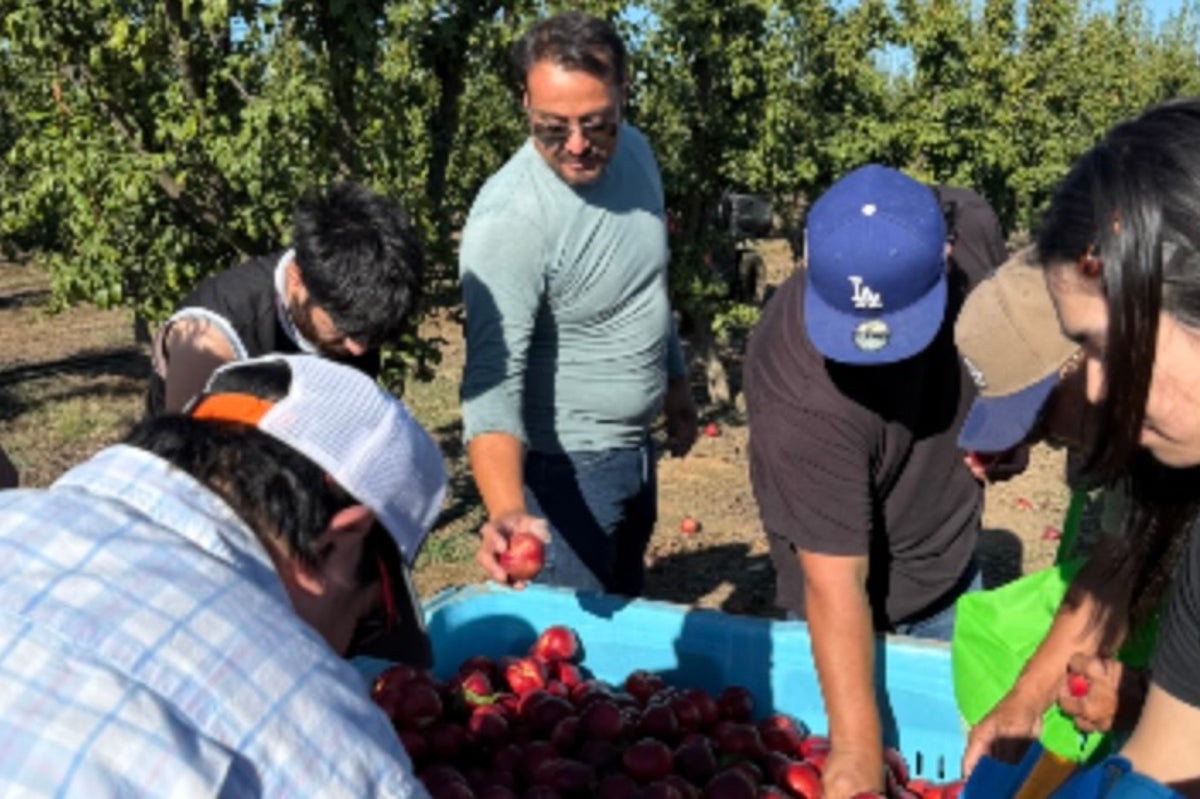
You can't sell a single piece of fruit from your own trees. It sounds like a bizarre bureaucratic nightmare, but it's the exact reality facing Cesar Mora, a veteran farmer who has spent over 30 years working the soil in Reedley, California. His orchard is overflowing with 125,000 pounds of ripe, perfect nectarines, but instead of shipping them to supermarkets, he's giving them away to anyone willing to drive out and pick them.
Mora isn't doing this as a marketing stunt. He's doing it because a massive agricultural corporation has used a legal stranglehold to lock him out of the market. If he tries to sell his harvest, he gets slapped with a lawsuit. If he leaves it to rot, he loses everything.
This isn't just a story about wasted food. It's a clear look at how corporate monopolies control what grows, who sells it, and how independent farmers are getting squeezed out of existence.
The Fine Print That Kills Independent Farms
The fight boils down to Fresno County Superior Court Case No. 23CECG03466, where Giumarra Brothers Fruit Company is suing Mora for breach of contract. Giumarra claims they hold proprietary rights to the specific nectarine variety growing on Mora's land. They argue that because of this patent, they have the exclusive right to market and distribute the fruit.
But here's where the deal goes sideways. Mora says the corporation refused to take the crop from him last season, leaving him unable to make a profit while farming at a loss. When he tried to take his harvest elsewhere to survive financially, Giumarra started hitting him with cease-and-desist letters. They wouldn't buy his fruit, and they wouldn't let anyone else buy it either.
Last year, Mora had to watch 125,000 pounds of fruit simply fall to the ground and rot. This year, with the legal battle dragging toward a July 20th trial date, Mora decided he couldn't handle another season of complete waste.
His initiative, organized under the banner No Nectarines Wasted, opened up his orchard on Parlier Avenue to the local community. Thousands of people have shown up with buckets, bags, and boxes. For Mora, seeing families enjoy the food is better than watching corporate attorneys dictate how his hard work rots. But goodwill doesn't pay the bills, and Mora admits his entire future in agriculture is on the line.
Why Agricultural Patents Create Massive Food Waste
Most people don't realize that a huge portion of the produce in grocery stores is patented. Large agricultural packers and marketers develop or buy the rights to specific genetic strains of fruit, regulating everything from shelf-life stability to color uniformity.
When an independent grower signs a contract to plant these varieties, they enter a heavily lopsided ecosystem.
- The grower takes all the physical risks: Weather, skyrocketing fertilizer costs, labor issues, and water scarcity.
- The corporation holds all the market leverage: They decide if the fruit meets their exact cosmetic standards, when to accept it, and what price to pay.
If a corporate distributor decides to reject a harvest or freeze a grower out during a dispute, intellectual property laws prevent the farmer from pivoting to local farmers' markets or independent grocers. The patent effectively turns the food into hazardous material that cannot legally be traded.
The Disappearing Middle Class of American Agriculture
What's happening in Reedley is part of a much larger, systemic collapse of mid-sized independent farming in California's Central Valley. We are seeing a dramatic shift where you either have to be a multi-billion-dollar corporate giant or a hyper-local micro-farm. The multi-generation family farms in the middle are getting wiped out.
Just recently, California growers had to plan the destruction of over 420,000 peach trees following the Del Monte bankruptcy because there simply weren't any other processing plants within trucking distance. When exclusive corporate contracts collapse or turn predatory, farmers are left with zero options.
Mora’s countersuit against Giumarra alleges fraud and misrepresentation, arguing that the original agreement was built on false promises. If he loses in court, he openly states that he doesn't see a viable path forward for his business.
How to Support Local Systems Right Now
If you want to protect food security and keep independent growers alive, you have to look past the convenience of commercial grocery chains. Relying entirely on corporate supply chains means letting industrial distributors dictate which farms survive.
Start by sourcing directly from producers who own their operations outright. Seek out heritage or unpatented varieties of stone fruit at local farmers' markets where the revenue goes directly into the grower's pocket, not a corporate legal team. You can also support regional agricultural cooperatives that pool resources to help small growers fight back against unfair business practices.
The crowds showing up to clear Mora's trees prove that people value the work of local farmers. But turning that momentary solidarity into long-term financial support is the only way to stop corporate monopolies from controlling the entire food supply.