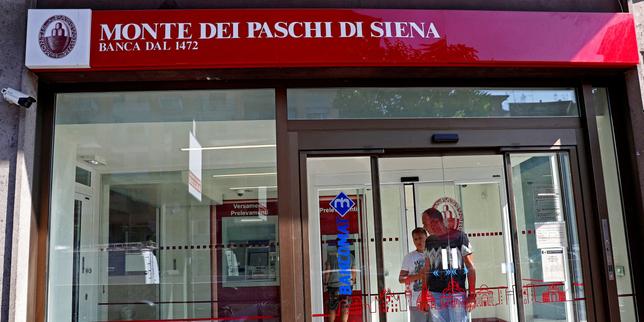
The consolidation of the Italian banking sector has shifted from structural survival to aggressive scale optimization. The dual maneuvers executed by Banco BPM and Intesa Sanpaolo for Banca Monte dei Paschi di Siena (MPS) demonstrate that scale in the eurozone is no longer merely an shield against non-performing loans (NPLs); it is a weapon for capital efficiency.
The battle lines are explicitly drawn around structural cost optimization, capital-light revenue generation, and regulatory arbitrage. Banco BPM’s initial multi-billion-euro merger proposal sought to construct a €50 billion national heavyweight capable of rebalancing the domestic market hierarchy. Intesa Sanpaolo countered with a €30.6 billion cash-and-share hostile takeover bid, valuing MPS at €10.09 per share—a 12.5% premium over market pricing.
This corporate warfare highlights the underlying mechanisms driving European bank valuations. By mapping the strategic assets at stake, evaluating the distribution of risk, and modeling the regulatory constraints, we can chart the precise operational architecture governing this consolidation cycle.
The Tri-Party Asset Mechanics
To evaluate the strategic rationale behind these competing bids, the target asset profile must be unbundled. MPS is no longer the distressed institution rescued by the Italian state in 2017. Following its complete reprivatization between 2023 and 2024, its structural transformation under current management included an aggressive clean-up of the balance sheet and a merger with Mediobanca. This structural transformation converted MPS into a highly integrated financial asset holding three key mechanisms:
- The Mediobanca Engine: Through its prior combination, MPS holds control over Mediobanca, which acts as Italy’s premier investment banking boutique.
- The Generali Footprint: Through the Mediobanca ownership architecture, the acquiring entity gains a 13% cornerstone stake in Assicurazioni Generali, Italy’s largest insurance asset.
- The Core Retail Funding Base: A highly sticky domestic deposit base spread across a legacy branch network, providing defensive liability pricing in an environment where central bank liquidity is tightening.
Banco BPM: The Defensive Scale Frontier
For Banco BPM, which currently commands a market capitalization of approximately €20 billion, an MPS merger is an existential scale play. A successful combination yields an entity with a projected market value of €50 billion. This scale leap shifts Banco BPM from a mid-tier regional operator to Italy's second-largest banking group, effectively overtaking UniCredit in domestic market share.
The strategic imperative for Banco BPM is driven by defensive asset protection. When UniCredit launched its unsuccessful €10 billion non-solicited takeover bid for Banco BPM in late 2024—a transaction that dragged on before collapsing in July 2025—it exposed Banco BPM’s vulnerability to capital depletion by larger competitors. Acquiring MPS builds a corporate fortress. It also grants Banco BPM immediate optionality to monetize or restructure the strategic 13% stake in Generali, creating an internal capital generation mechanism that can fund future digital transformation.
Intesa Sanpaolo: The Monopoly Efficiency Play
Intesa Sanpaolo’s counter-offensive is driven by a different economic logic: market dominance and absolute margin optimization. Intesa’s all-equity-and-cash exchange ratio—offering 16 newly issued shares for every 10 MPS shares, supplemented by €1 in cash—deploys its premium equity valuation as a highly effective acquisition currency.
[Intesa Sanpaolo Share Premium Currency]
                 │
                 ▼
     [Acquisition of MPS Asset]
                 │
      ┌──────────┴──────────┐
      ▼                     ▼
[Retained Assets (80% NI)] [Divested Retail Net (Unipol)]
  • Mediobanca Boutique      • 635 Legacy Branches
  • 13% Generali Stake       • MPS Retail Brand
  • 625 Core Branches        • Operational Redundancy Risk
The underlying operational plan is highly asymmetrical. Intesa has zero structural interest in absorbing the entirety of the MPS retail footprint, which would trigger immediate antitrust blockages and dilute its efficiency ratios. Instead, Intesa structured a side-car divestment agreement with Unipol Assicurazioni, the dominant shareholder of BPER Banca.
Under this framework, if the acquisition succeeds, Unipol strips away the legacy risk: it absorbs the MPS brand name, 635 retail branches, and the backend operational infrastructure required to run them independently. Intesa retains the premium infrastructure: Mediobanca, the 13% Generali holding, and 625 high-yielding core branches.
This optimization ensures that the businesses remaining within Intesa account for approximately 80% of the combined MPS-Mediobanca projected net income. The financial architecture of this transaction drives Intesa's projected group net income beyond €16 billion by 2029, compared to its standalone trajectory of €11.5.
The Efficiency Frontier and Synergies
The financial logic governing both transactions relies on two primary variables: the optimization of the Cost-to-Income (C/I) ratio and the expansion of Fee and Commission Income.
Italian financial history proves that banking mergers succeed or fail based on the speed of post-merger integration and the reduction of operational redundancies.
Cost Synergies: The Cost Function of Redundancy
The primary cost benefit of these transactions is derived from the closure of overlapping branch networks and the elimination of duplicate corporate overheads. The cost-saving function can be modeled through the optimization of the combined entities' operational cost bases:
$$C_{\text{combined}} = C_A + C_B - \Delta C_{\text{synergies}}$$
Where $\Delta C_{\text{synergies}}$ is a function of headquarter consolidation, IT platform migration, and branch rationalization.
Intesa's structural outsourcing of 635 branches to Unipol radically accelerates this cost reduction function. It shifts the execution risk of headcount rationalization and branch closures onto a third party, allowing Intesa to extract immediate infrastructure savings without long-term labor friction. Banco BPM, conversely, would need to internalize these restructuring expenses, putting short-term pressure on its Common Equity Tier 1 (CET1) capital buffers before achieving long-term scale economies.
Revenue Synergies: The Capital-Light Transition
With the Bank of Italy noting a normalization of monetary policy and a subsequent compression of Net Interest Margins (NIM) from their 2023–2024 peaks, net interest income is declining across the eurozone. Growth must therefore be extracted from fee-generating wealth management and insurance distribution networks.
[Monetary Policy Normalization] ──► [Net Interest Margin Compression]
                                                │
                                                ▼
                                    [Structural Shift Required]
                                                │
                                                ▼
                             [Wealth Management & Fee-Income Expansion]
                                 • Generali Insurance Distribution
                                 • Mediobanca Corporate Advisory
                                 • Cross-selling to Sticky Deposit Base
The integration of MPS allows the acquirer to cross-sell asset management, private banking, and insurance products across a combined customer base. This shift optimizes the Return on Equity (ROE), which hovered near 14% across the Italian banking sector in late 2025.
By scaling capital-light revenue streams through Mediobanca’s corporate advisory desk and Generali’s insurance distribution network, the combined entity insulates its profit and loss statement from fluctuating central bank interest rates.
Regulatory and Geopolitical Friction Points
No banking consolidation of this scale occurs in a vacuum. The transaction designs are heavily shaped by two regulatory frameworks: the European Central Bank’s (ECB) prudential supervision and the Italian government’s evolving "Golden Power" legislation.
The Capital Treatment: The Danish Compromise Factor
A technical bottleneck for Banco BPM is the regulatory treatment of insurance holdings under ECB supervision. Historically, when a bank acquired a significant stake in an insurance company, it was forced to deduct the value of that investment directly from its core capital, severely damaging its CET1 ratio.
The application of the "Danish Compromise" (Article 49 of the Capital Requirements Regulation) alters this dynamic. This regulatory mechanism allows banks to risk-weight their insurance investments rather than deducting them completely from capital, provided specific supervisory thresholds are met.
- The Advantage: If the ECB grants Banco BPM the full application of this compromise regarding the Generali/Mediobanca assets, it prevents a multi-billion-euro capital drain, allowing the bank to maintain its capital distribution policies.
- The Risk: If the ECB applies stringent, conservative interpretations, Banco BPM's capital buffers will compress, forcing either a dilutive capital increase or the immediate liquidation of the Generali stake under fire-sale conditions.
The Relaxation of Golden Power Arbitrage
The geopolitical framework governing Italian M&A underwent a profound transformation leading into 2026. Historically, the Italian government deployed its "Golden Power" regulations as an interventionist tool to block, stall, or impose severe non-economic conditions on corporate transactions within strategic sectors to protect national champion status. This mechanism was used to impose restrictive conditions on UniCredit’s 2024 approach to Banco BPM, ultimately killing that transaction.
However, following a formal infringement procedure initiated by the European Commission in late 2025, Rome has reformed its Golden Power framework. The updated 2026 legal standard dictates that state interventions on national security or financial stability grounds can only occur after the ECB and the European Commission complete their respective prudential and antitrust reviews.
This legislative retreat removes a major source of political risk. It provides international capital markets and domestic consolidators with a transparent, predictable timeline, shifting the battle from political backrooms to pure corporate finance execution.
The Strategic Playbook
The current market architecture leaves no room for passive management. To maximize shareholder value and secure long-term market relevance, corporate boards must execute a precise three-stage strategy.
Step 1: Execute Asymmetric Asset Carve-Outs
The traditional model of full-scale banking mergers is broken; it creates massive operational friction and triggers prolonged antitrust blockages. Financial institutions must adopt the Intesa Sanpaolo playbook by designing pre-arranged asset carve-outs with non-banking financial partners prior to launching public offers.
Identify legacy retail branch networks that introduce geographic overlap or operational inefficiencies. Simultaneously, structure side-car agreements with domestic insurers or regional cooperative banking groups to absorb these assets upon deal closing. This mechanism isolates the high-margin corporate advisory, asset management, and private banking units while offloading structural overhead and labor liabilities to partners seeking pure scale footprint expansions.
Step 2: Transition Capital Allocation to Wealth Management Integration
Corporate treasuries must aggressively reallocate capital away from credit-risk-heavy corporate lending portfolios toward capital-light wealth management platforms. As net interest margins compress under normalizing central bank policies, banks must lock in sticky fee-and-commission revenue streams.
[Identify Asset Capital-Intensity]
                 │
                 ▼
[Divest/Scale Down Low-Yield Corporate Lending]
                 │
                 ▼
[Reallocate Capital to High-Velocity Fee Assets]
  • Accelerate IT platform integration for asset cross-selling
  • Deepen captive bancassurance distribution channels
  • Maximize ROE via capital-light revenue generation
Accelerate the integration of acquired asset management pipelines into legacy retail distribution networks within 180 days of transaction closing. This rapid deployment neutralizes the margin erosion of standard lending products and drives Return on Equity profiles toward the mid-teens.
Step 3: Secure Regulatory Arbitrage via Structural Compliance
Maximize capital efficiency by proactively structuring transaction perimeters to qualify for the Danish Compromise. Banking executives must engage early with ECB joint supervisory teams to demonstrate structural risk separation between banking operations and acquired insurance assets. Ensure that insurance holdings are treated via risk-weighting mechanics rather than direct CET1 capital deductions.
By maintaining robust capital ratios through advanced regulatory compliance, institutions preserve their ability to execute share buybacks and maintain high dividend payout ratios, keeping their equity priced at a premium. This premium equity then serves as a powerful acquisition currency for the next wave of consolidation.