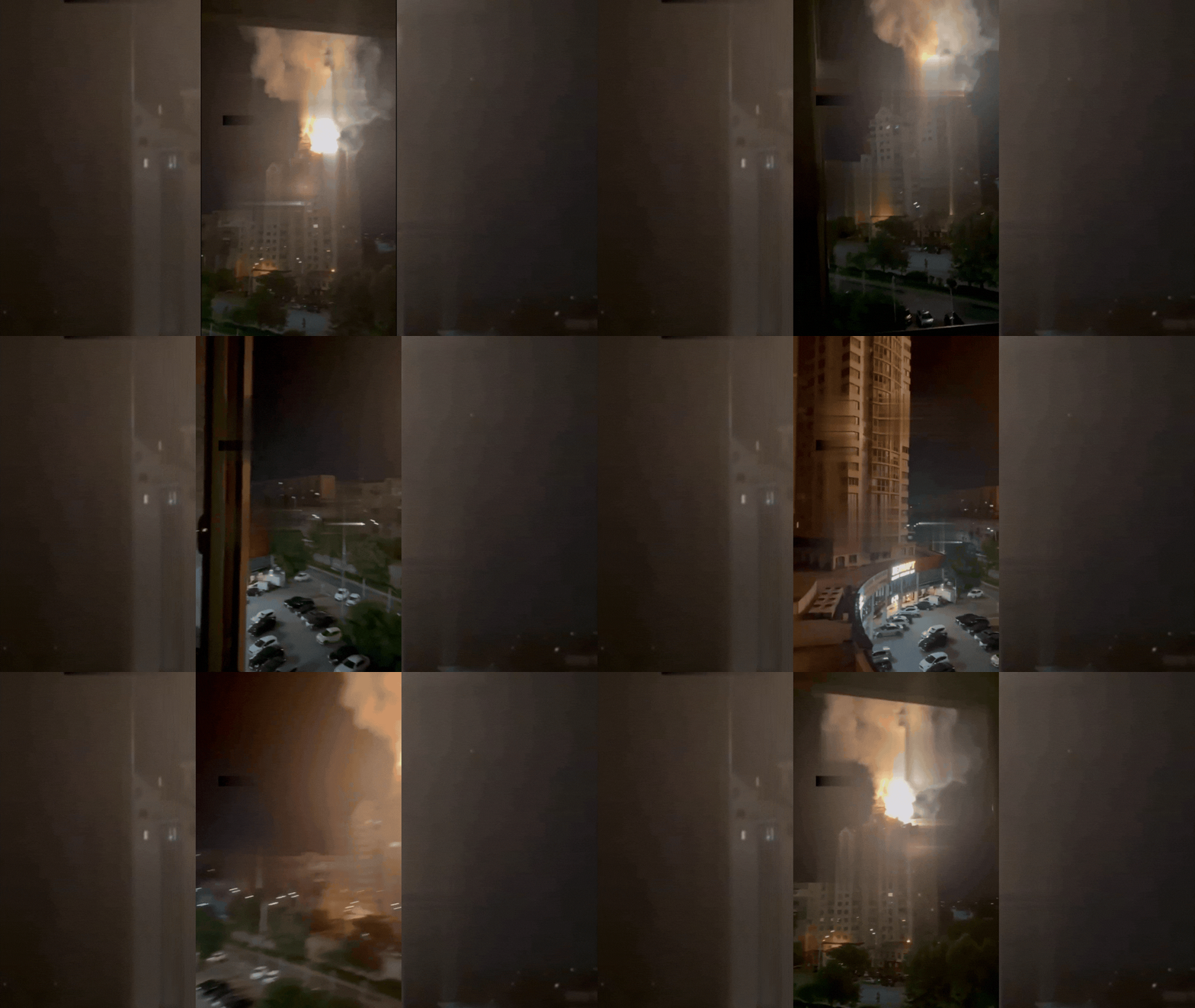
The teakettle was just beginning to whistle when the sky ripped open.
In Kyiv, you learn to measure time not by the ticking of a clock, but by the spacing of the sirens. You learn the difference between the low, rumbling thud of air defense intercepting a threat miles away and the sharp, metallic crack of a direct impact. This was the latter.
It is a nine-story residential apartment block. Or rather, it was. In a fraction of a second, a structure built to hold generations of birthdays, quiet Sundays, and ordinary human lives was violently reconfigured into a vertical graveyard of shattered concrete, pulverized drywall, and twisted rebar. The upper floors collapsed downward in a cruel cascade, pancaking into the lower levels.
Dust. That is the first thing that swallows the survivors. Not a fine powder, but a thick, choking gray fog made of atomized walls and old insulation. It gets into your teeth. It blinds your eyes. It turns the bright morning sun into a sickly, diffused twilight.
Somewhere on what used to be the seventh floor, a phone is ringing. It rings and rings, its cheerful default chime cutting through the groans of shifting rubble and the distant, panicked screaming from the street below. No one answers it.
The Geography of a Bedroom
To understand the scale of this horror, look closer than the wide-angle drone shots broadcast on the evening news. Look at the exposed wallpaper of a third-story apartment, now laid bare to the open air like a dollhouse with its front torn off. There is a framed picture of a smiling couple still hanging askew on a scrap of blue wall. Two feet to the left, the floor simply ceases to exist. There is only a sheer drop into a smoking crater.
Consider a resident we will call Hanna. She is a retired schoolteacher who has lived in this specific neighborhood for forty years. When the missile struck, she was not in a bunker; she was in her hallway, following the "two-walls" rule that has become the desperate survival math for millions of Ukrainians. The first wall takes the blast; the second wall stops the shrapnel.
It is a gamble played with concrete. Today, Hanna won the gamble, but her neighbors upstairs did not.
Above her, three floors of the building have vanished into a chaotic heap of debris. Below her, the stairwell is gone, replaced by a jagged void. She is trapped on a concrete island, suspended between a burning roof and a shattered ground. The air smells of scorched iron, ruptured gas lines, and the distinct, sickening odor of burning plastics.
She cannot go down. She cannot go up. She can only wait, pressed against the remaining wall, listening to the heavy thud of emergency machinery arriving below.
The Weight of the Silence
Outside, the first responders are already moving. They do not run blindly into the smoke. They move with a terrible, practiced efficiency born of years of practice.
Firefighters pull thick hoses through the glass-strewn mud, targeting the stubborn pockets of orange flame licking at the exposed innards of the building. Crane operators position massive yellow arms against the sky, trying to stabilize sections of the facade that threaten to peel off and crush the rescue teams working at the base.
Then comes the command. It is passed down the line from the search commanders, shouted through bullhorns and echoed by the volunteers.
"Silence!"
Everything stops. The heavy diesel engines of the fire trucks drop to an idle. The chainsaws cut out. The hundreds of volunteers clearing bricks by hand freeze in place, holding their breath.
For sixty seconds, an entire city block holds its breath.
They are listening for the scratching. They are listening for a muffled sob, a weak tap against a pipe, or the rasping cough of someone buried deep beneath six feet of compacted masonry. In these moments of forced quiet, the true stakes reveal themselves. The war is not a matter of geopolitical strategy or shifting front lines on a map. It is the sound of a human fingernail scraping against a fallen slab of Soviet-era concrete, hoping someone on the outside can hear.
A faint cry is detected. The silence shatters into frantic, deliberate motion.
The Arithmetic of Rescue
Rescuing someone from a collapsed nine-story building is a delicate, agonizingly slow process. You cannot simply bring in heavy excavators to dig through the pile; one wrong move, one displaced beam, and the entire unstable mountain of debris shifts, crushing anyone still alive inside the air pockets below.
Every brick must be moved by hand. Volunteers form human chains, passing chunks of wall, broken furniture, and shattered floor tiles from one person to the next, bucket by bucket.
The physical toll is immense, but the psychological weight is worse. Every volunteer knows what they might find beneath the next layer of plaster. They find the remnants of morning routines interrupted mid-gesture: a half-sliced loaf of bread, a child’s open schoolbook, a pair of eyeglasses sitting intact on a bedside table that no longer has a bed next to it.
As the hours drag on into the afternoon, the numbers begin to crystallize. The local authorities release updates to the huddle of journalists and anxious relatives gathered behind the police tape. Dozens injured. Multiple people confirmed trapped. The death toll is a number that stays fluid, ticking upward as the diggers reach deeper into the core of the collapse.
Behind the tape, a woman stands wrapped in a foil thermal blanket, her eyes locked on the window of a fifth-floor apartment. Her daughter lived there. She has been calling her mobile phone every five minutes for four hours. Each time, it goes straight to voicemail. She does not cry. She just stares, her knuckles white around the cheap plastic of her phone, waiting for the rescuers to reach that specific coordinate of the wreckage.
The Fractured Normal
This is the reality of modern conflict. It does not look like trenches and muddy fields; it looks like your living room being turned inside out in the middle of a Tuesday morning. It is the total annihilation of the domestic sanctuary.
The people who lived in this building were IT professionals, store clerks, pensioners, and toddlers. They had grocery lists on their refrigerators and weekend plans written on calendars. Now, their private lives are strewn across the asphalt for the world to see: intimate letters, family photo albums, and single shoes, all coated in that universal gray dust.
The neighborhood surrounding the strike area tries to absorb the shock. Neighbors bring hot tea in thermoses for the rescue workers. A local bakery opens its doors to serve as a makeshift triage center, its tables cleared of pastries to make room for medical supplies and bandages.
There is no panic. There is only a grim, heavy resolve. It is a collective stubbornness that has become the defining characteristic of the city. They have repaired buildings before, and they will repair them again, but the spaces left behind by those who do not walk out of the rubble can never be patched over with fresh plaster.
Shadows on the Wall
As night begins to fall, massive floodlights are wheeled into place, casting long, dramatic shadows across the ruined face of the apartment block. The work will not stop when the sun goes down. The first twenty-four hours are the golden window for survival; after that, the chances of pulling anyone out alive drop precipitously.
The crane lifts another massive slab of concrete away from the center of the collapse. A cheer goes up from the crowd as a young man is pulled from a void near the third floor, covered in dust but walking on his own power. He is quickly swaddled in blankets and led to an ambulance, his eyes wide and unblinking, reflecting the glare of the emergency lights.
But a few yards away, the rescue workers stop. They lower their tools. They call for a black body bag.
The crowd behind the tape goes silent again, a different kind of silence this time. The woman with the foil blanket does not drop her phone, but her head falls forward against the metal barricade.
The nine-story building stands like a broken tooth against the Kyiv night sky, smoke still drifting lazily from its hollowed center. The sirens will likely wail again before morning comes, calling the city back to its basements and hallways, leaving the rescuers under the bright floodlights to keep digging through the ruins of yesterday.